
View from above: the ‘virtual fence’
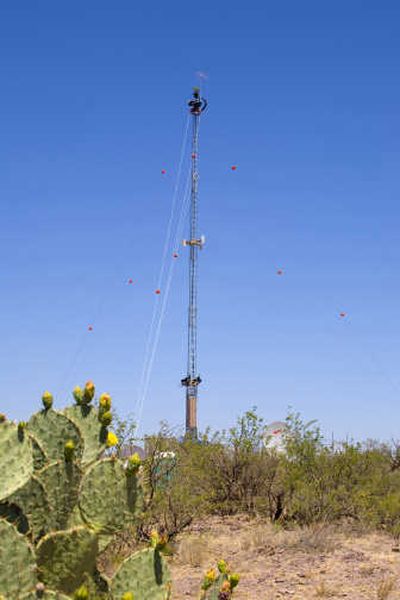
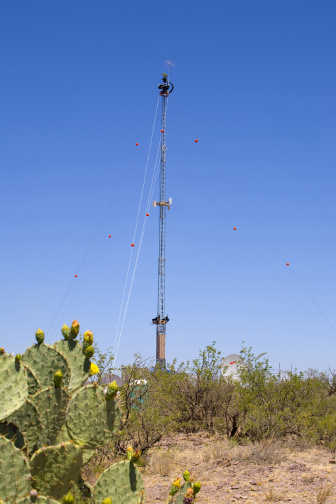
With a price tag that could stretch into the billions, the Homeland Security Department’s planned “virtual fence” along the border with Mexico is attracting considerable attention. The idea is to install cameras, radar, ground sensors and satellite communications that will help agents halt any unlawful border crossings. But will it secure the border? Will it help policymakers with immigration reform? More to the point, will the electronics work? With the “fence” set to be in the news for months to come, the Associated Press spoke with U.S. Customs and Border Protection to find out more about the electronic barrier – what it is, what it can do, and how it is limited.
Q. What is it?
A. Currently, nine 98-foot towers have been installed along a 28-mile stretch of desert around Sasabe, Ariz., on the border with Mexico. The towers are to be equipped with cameras, radar and computer equipment, with data that can be accessed wirelessly. There will also be unattended ground sensors. The project’s official name is SBInet.
In areas with the camera towers, there is no actual wall or fence.
“It gives the agents a clearer picture of their surroundings and what is happening on the border,” said Michael Friel, a spokesman at U.S. Customs and Border Protection.
Q. How will it work?
A. At present, the plan is for border agents’ vehicles to carry laptops that will display information from the cameras, radar and sensors, along with GPS satellite positioning. The idea: If a ground sensor picks up suspicious activity on the border, the agent can click on that point on a screen to call up camera images of that same location and identify whether it’s, say, a four-legged coyote or a people-smuggler.
Q. When will it be operational?
A. The first leg has already been delayed by technical issues, and there is no target date for completion, according to the Department of Homeland Security.
Q. Will the “virtual fence” eventually replace all existing physical barriers?
A. No. There are still vehicle barriers at Sasabe’s port of entry, Friel said. “The technology piece is part of a comprehensive strategy and that strategy includes infrastructure and personnel along the southwest border. There will be the right mix.”
Q. Is there a plan detailing how much of this “virtual fence” system will be used along the 6,000 miles of the U.S.’s borders with Mexico and Canada?
A. No. Right now, the program is focused on the initial 28 miles in Arizona. “Once we complete that task, we’re going to move on and address another stretch of the border,” Friel said.
Q. Computers crash all the time. Or, worse, they get hacked. Does this plan rely too much on technology working right all the time?
A. Said Friel: The agents who patrol the border – and who will interpret the data – are still the most important facet. “The goal here is to equip the agents with the tools they need to secure our nation’s borders.”
Q. What about privacy concerns among Americans living in that part of Arizona? Will the cameras peer into their living rooms?
A. “Our focus is border security,” Friel said. “This is all about border security.”