
Backyard show-stoppers
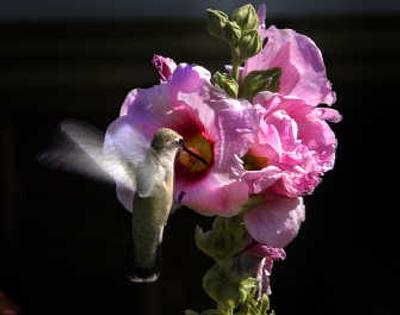
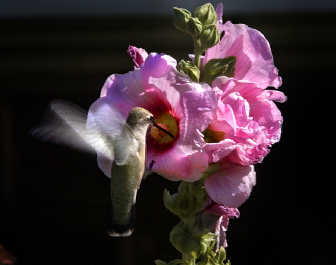
Summer’s officially here, and it’s time to get to know your hummers. Sorry guys, not the GM models, but stay tuned — if you like speed, this is for you.
In your backyard you may have some aerial acrobats. Hummingbirds maneuver like no others. They hover, fly backward, dive bomb and can go from zero to up to 60 mph faster than you can say “Wow.”
During courtship, males perform spectacular aerial displays for their mate; for some species it looks like dive-bombing and for others, like swinging back and forth at full speed. They may dive-bomb you if you appear to be a threat, but usually they’re showing off for their partner. She sits on a limb or at a feeder, watching his crazy antics until she’s ready to say yes. He can lose up to 20 percent of his body weight during the mating season.
Hummingbirds’ aerial ability is due to a unique wing movement. Their wings beat at least 50 times per second and sweep back and forth in a figure-eight motion. This allows them to fly up, down, forward, backward, sideways and even upside down for a short time. Each time their wings change direction, they twist 90 degrees, which produces equal power upward or downward. Their flight muscles comprise 30 percent of their body weight. Because of their high-velocity appendages, hummingbirds need to consume a tremendous amount of nectar. They can eat from more than 1,000 flowers in one day, while feeding on insects and spiders for protein. Their body temperature is usually between 104-111 degrees, but they can lower that to 55 degrees to conserve energy. They also have the ability to lower their heart beat from 1,250 beats per minute to 50. This is life-saving during cold nights.
Hummingbirds are of the Trochilidae family and are the world’s smallest birds. There are a number of species in the Inland Northwest, the most common being the Rufous, Calliope and Black-chinned. The Calliope is the smallest of the three, only 3 ¼ inches long. The Rufous and Black-chinned are close to 4 inches long. The males gleam with iridescent colors. The colors on their backs and/or throats (gorgets) are dazzling in the sun, but are most visible during territorial spats. You’ll never see more colorful fights than tiffs between hummers.
The best way to distinguish between the species is to view a male through binoculars. The females look so similar that it is difficult to tell them apart. Start with the males and focus on the head, bill, wings and tail for differences in color and size. This will help you determine the species. Keep a bird book handy for reference, visual clues and additional identification tips.