
Lawmakers tour East Side
PULLMAN – Special interest groups from around the state regularly visit Olympia when the Legislature is in session to lobby for help with a particular program, law or appropriation. This week, just like the mountain that came to Mohammed, some of the Legislature came to see the special interests in southeastern Washington.
From the dams along the Snake River to the wheat research fields at Washington State University to Main Street in Palouse, two busloads of legislators and their staffers got up close and personal with Eastern Washington issues.
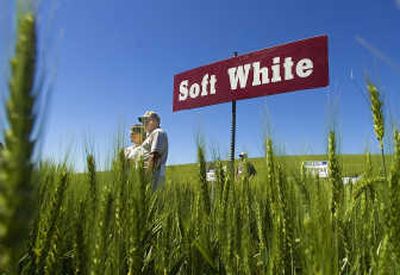
They rode through the locks to Clarkston, ran their hands across the tops of different wheat varieties like they were stroking prickly-haired cats, and learned about the problems of getting grain from the farm to West Side ports.
“The Spokane Chamber of Commerce comes to Olympia every year to discuss their projects,” Sen. Mark Schoesler, R-Ritzville, said as some of his colleagues and their aides stood among dozens of small plots of different varieties of wheat at WSU’s Spillman Agronomy Farm.
“How do you bring this research plot to Olympia? How do you explain garbanzo beans in the field, rather than at the salad bar?”
For several legislative cycles, Western Washington legislators and staff have come east for tours like the one sponsored this week by the Washington Association of Wheat Growers. They come in odd-numbered years, which means no one has an election hanging over their head. They get guest speakers from the universities, towns, businesses and government agencies that have a major presence in rural parts of the state.
It’s not really a chance to teach city dwellers and suburbanites that produce doesn’t come from the back room at the supermarket. No one in the Legislature is that naïve, both Democrats and Republicans agreed.
“This business is like anything else: It’s about relationships,” said Rep. David Buri, R-Colfax. If WSU is asking money for research, touring the laboratories “makes it real to them.”
“We’re not going to agree on everything, but we can find things to work together on.”
Agriculture is a huge part of the state’s economy, said House Speaker Frank Chopp, D-Seattle, and right now, “it’s all about the economy.” So agricultural research isn’t just helping WSU, it’s helping one of the state’s biggest industries, which is helping the economy.
It also gives legislators a chance to see how all the pieces interact, said Rep. Judy Clibborn, D-Mercer Island, who serves as chairwoman of the House Transportation Committee. They learned about the connections between roads, rails, barges and ports, and how the problems might be different in different parts of the state.
In Western Washington, the concern is congestion, in Eastern Washington, it’s access, she said. The Legislature has to be careful that it doesn’t cause a new problem on one side of the state when it tries to fix an old problem on the other side.
The trip may also dispel some misconceptions that East Siders have about their West Side counterparts, Clibborn said. The group spent Tuesday morning on the Snake River, where the underlying message was saving the federal hydroelectric dams from proposals to breach the structures to protect endangered fish.
“I bet there isn’t a single legislator here who would ever support breaching a dam,” she said. “On the bus we asked if we knew any, but we couldn’t come up with one.”