
Same-sex rights pass
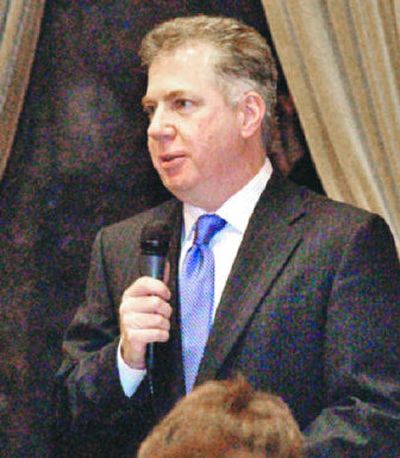
OLYMPIA – In an emotional debate, the Senate voted Thursday to set up a statewide registry that would allow gay and lesbian couples, as well as some senior citizens, to get many of the legal protections that married couples get automatically.
“You have prevented us from marrying,” Sen. Ed Murray, D-Seattle, told the Senate. “Please do not prevent us from caring for each other.”
Same-sex couples in Washington have been denied the right to hold each other’s hand while one is dying in a hospital room, he said, or to be buried next to each other.
“Justice demands that we take a small step on a longer journey to end that hurt,” he said. That longer journey, he said, is the right for gays and lesbians to marry – something that this bill doesn’t do.
The bill that passed Thursday would make Washington the fifth state to give some spousal rights to same-sex partners.
The bill was blasted by critics, mostly Republicans.
“We have watched this incremental movement as it has slowly eroded the sanctity of marriage,” said Sen. Val Stevens, R-Arlington. She said the Senate is “acquiescing to gay rights” and “giving away the building blocks of society” one at a time.
The bill passed 28 yes to 19 no. It now goes to the state House of Representatives, where it is widely supported. If it passes there, it heads to Gov. Chris Gregoire for a signature. The governor has repeatedly said she supports such an approach, rather than legalizing same-sex marriage.
Critics tried unsuccessfully to tack on an amendment to force a November public vote that would either uphold or kill the bill.
“I’ve never been afraid of the citizens making decisions, and this is certainly one that they should be allowed to make,” said Sen. Don Benton, R-Vancouver.
Sen. Mark Schoesler, R-Ritzville, predicted a public backlash. The bill contains no emergency clause, he pointed out, so it’s vulnerable to a voter referendum if critics can gather enough signatures to put it on the November ballot.
“Ultimately, I think the public will have a say,” Schoesler said.
Under current state law, spouses automatically get a long list of rights and powers. They can consent to medical procedures for a spouse who can’t. They can get and disclose medical information. They can consent to autopsies, oversee funeral and burial arrangements. If a spouse dies without a will, the surviving spouse automatically gets certain inheritance rights.
The bill, Senate Bill 5336, would allow the secretary of state to launch a registry for unmarried domestic partners. To qualify, they must:
“live together,
“be at least 18 years old,
“not be married or in a domestic partnership with someone else,
“not be close blood-relatives,
“be the same sex, or at least one of the partners must be at least 62 years old.
The senior citizens provision is aimed primarily at widows and widowers who are in committed relationships with someone else, but who cannot marry because they would lose pension or other payments linked to their deceased spouse.
The registry would grant the partners numerous rights, including:
“visitation rights at health care facilities,
“the ability to consent to medical procedures for an incapacitated partner,
“rights to cemetery plots, autopsy decisions and organ donation,
“inheritance rights if the domestic partner dies with no will.
At hearings earlier this year, lesbian and gay couples said they must spend hundreds or thousands of dollars on legal work to get the same rights and protections that married heterosexual couples get the day they marry. Some described heart-wrenching cases of being turned away from hospital rooms of sick or dying partners, or of not being able to make funeral decisions for longtime loved ones.
Critics included the state Catholic conference and several other religious groups. Among the arguments: that this is the first step toward same-sex marriage, that the bill discriminates against younger heterosexual couples who choose not to marry, and that the bill waters down the reasons for getting married.
The debate Thursday was wide-ranging and emotional, including the ideals of the American revolution, bomb-wielding terrorists, gay and lesbian troops and firefighters, and mentions of necrophilia and bestiality.
Stevens said she resented Murray’s suggestion that religion calls for justice – and passing the bill.
“Some people worship money,” she said. “Some people worship what they do in their bedroom. Some people even worship witchcraft.”
Sen. Dan Swecker, R-Rochester, said the change would be “a devastating blow” to marriage, and predicted that further expansion of it in coming years would reduce part of the reason for straight couples to get married.
“I’m very concerned about the future of marriage,” he said.
Benton said that gay couples can get virtually all the rights in the bill by drafting a will and filling out other legal paperwork.
“The rights are there. They’re available,” he said. “They’re not available automatically unless you’re married.”
Democrats said they’re perplexed by the resistance.
“What does this legislation do that threatens anybody else in this state?” said Sen. Jeanne Kohl-Welles, D-Seattle.
“These are real people with real, live issues that are not so different than the kinds of issues that any of you can imagine,” said Senate Majority Leader Lisa Brown, D-Spokane, who has a lesbian sister. “… I’m voting for people like my sister and her partner.”