
Fantasy fishing hooking fans
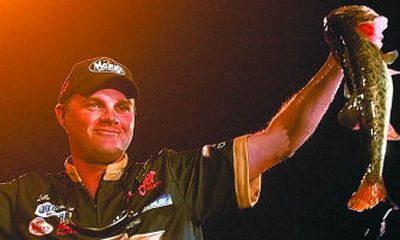
Under an enormous tent in Rogers, Ark., at a Wal-Mart parking lot last year, some of the country’s top fishermen hoisted their freshly caught largemouth bass. Fans and television cameras looked on as the anglers competed for a $200,000 check.
Standing near the back was another fishing champion, Bob Fowler. But the contest he won didn’t require him to land any fish or even get anywhere near the water. Fowler is among the growing number of Americans hooked on a pastime known as “fantasy fishing.”
Before each professional fishing tournament, Fowler spends hours on the Internet researching the pro anglers and considering factors such as weather forecasts and the depth of lakes where they’re competing. Fowler, 46, then picks the fishermen he believes will catch the biggest fish in real life. He enters his picks on a free fantasy-fishing Web site owned by pro fishing organizer FLW Outdoors and competes for prizes based on his predictions.
“It’s harder to pick a top-five finisher here than it is to pick the winner of a football or baseball game,” said Fowler. In 2004, he won a model boat valued at $200 for a first-place finish in a fantasy-fishing contest
First came fantasy baseball, in which enthusiasts put together make-believe dream teams of real-life players and compete based on those players’ performances. Fantasy football and other variations followed. Now fantasy fishing is one of the more unlikely extensions of the concept.
ESPN runs a fantasy-fishing league with prizes that include outboard boat motors. It says it has tens of thousands of participants. FLW Outdoors had about 40,000 fantasy players last year and a $5,000 prize for the top fantasy finisher in each of its seven tour events.
Like other fantasy sports players, fantasy fishermen put together virtual teams of professional anglers and earn points based on their team members’ real-life performances. Players scrutinize statistics from anglers’ past showings, trying to assess whether an individual fisherman might do better in shallow or deep-water lakes, for example. They look for anglers on a roll and for previous victories on any given body of water. They also factor in other minutiae and myths, such as the “home-lake curse” said to afflict pros on water they know best.
Some of the fantasy-fishing organizers aim to expand the statistics, a nod to the culture of numbers around fantasy baseball. The fantasy-fishing leagues’ sites already provide detailed records of anglers’ performance in past tournaments. Now FLW is starting to provide a series of other stats about anglers, including “average weight per fish over careers,” “largest margin of victory” in pounds and “consecutive limits caught,” which tracks anglers’ streaks of hitting their five-fish daily quota, with data going back to 1996 when the FLW Tour started.