
‘God was smiling on that boy’
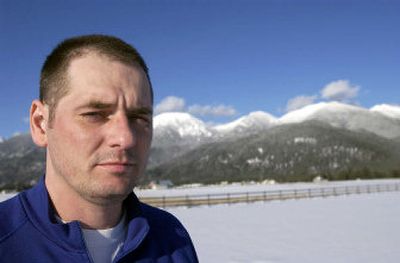
HELENA – After spending eight hours buried face up in the snow, a snowmobiler is facing six months in jail and a $5,000 fine for traveling in an area off-limits to motorized travel.
Ryan Roberts, 34, who lives near Kalispell, Mont., said Friday he was astonished that he survived the avalanche, which swept over him late Thursday afternoon during a snowmobile trip in northwestern Montana’s Flathead National Forest. He was found shortly before midnight.
“I guess I was just allowed to live another day,” Roberts, a cement worker, said Friday in a telephone interview after his release from Kalispell Regional Medical Center, where he was treated for minor injuries.
Roberts was snowmobiling in the forest’s Jewel Basin with his uncle and a friend. Neither of them was caught in the avalanche.
The Forest Service said signs state the 13,000-acre Jewel Basin is off-limits to snowmobiles.
Roberts said he tried to outrun the sliding snow by driving his snowmobile at about 80 mph, but leaped off the machine as it sped toward trees.
He said he tumbled downhill and was buried face-up by about 4 feet of snow. After it became apparent that he could not move, Roberts said, he tried to remain calm and accept what he thought was his fate.
He said he remembered thinking, “Well, I’m going to die.”
Roberts believes he passed out about five minutes later.
Companions immediately began searching for Roberts, who wasn’t carrying a transceiver, a device that emits a signal that can help searchers locate a person under snow.
After searching for two hours, the companions used a cell phone to call for help.
Dan Root, a distant cousin of Roberts, said that when he reached the scene of the avalanche Friday at about 11 p.m., he did not expect to find the snowmobiler alive. Several other people already had been combing the area for hours.
“I parked my sled, got my probe out and walked up the hill about 5 or 6 feet and hit” Roberts with the probe, Root said. “I probed him the first time.”
Root and several other snowmobilers in the search immediately dug through the snow, removed Roberts and put him near a fire. Root said Roberts regained consciousness but still appeared disoriented.
Roberts credits his survival to a helmet that kept snow out of his face and to a thermal pain-relief pad on his back that provided warmth.
Three men sat by the fire and put their legs beneath Roberts so he would not be on the snow. In addition, members of the rescue group heated their clothes by the fire, then placed them on Roberts for warmth. Roberts said that after about five hours by the blaze, he was able to ride out of the area on his uncle’s snowmobile.
The 20-mile trip in rugged country took about an hour before Roberts got to a road where his wife, friends and an ambulance were waiting.
Robert’s wife, Billie, said his temperature at the hospital Friday morning was 90 degrees.
Dr. Mark Rabold, an emergency physician in Helena who has cared for avalanche victims, called Roberts’ survival “quite extraordinary.”
“God was smiling on that boy,” Rabold said.
An official at Alaska’s Chugach National Forest Avalanche Center estimated at less than 5 percent the odds of surviving under the conditions Roberts endured. About half of the people buried by avalanches die within 30 minutes, said Carl Skustad of the Alaska center.
Ranger Jimmy DeHerrera of the U.S. Forest Service said the agency plans to cite Roberts and his companions for snowmobiling in the prohibited area. The maximum penalty is six months in jail, a $5,000 fine and snowmobile confiscation.
Roberts said he and his companions had tried to stay outside the prohibited area. He added it will most likely be a while before he rides a snowmobile again.
“I’m not even allowed to mention those words around my family,” Roberts said.