
No more brothel apologies, Abe vows
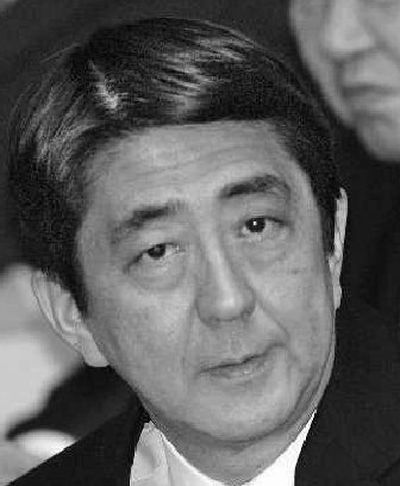
TOKYO – Japan will not apologize again for its World War II military brothels, even if the U.S. Congress passes a resolution demanding it, Prime Minister Shinzo Abe told parliament today.
Abe, elaborating on his denial last week that women from across Asia were forced into sexual slavery in the 1930s and 1940s, said none of the testimony in hearings last month by the U.S. House of Representatives offered any solid proof of abuse.
“I must say we will not apologize even if there’s a resolution,” Abe told lawmakers in a lengthy debate, during which he also said he stood by Japan’s landmark 1993 apology on the brothels.
Historians say that up to 200,000 women – mostly from Korea and China – served in Japanese military brothels throughout Asia during the war and in the years leading up to it.
Accounts of abuse by the military – including kidnapping of women and girls for use in the brothels – have been backed up by witnesses, victims and even former Japanese soldiers.
But right-wing Japanese scholars and politicians routinely deny direct military involvement or the use of force in rounding up the women, blaming private contractors for any abuses.
Abe last week sided with the critics, saying that there was no proof that the women were coerced into prostitution. Today he elaborated, saying there was no evidence of coercion in the strict sense – such as kidnapping – but he acknowledged that brokers procuring women otherwise forced the victims to work as prostitutes. Abe did not explain further.
The U.S. House is considering a nonbinding resolution that would demand a formal acknowledgment and apology from the Japanese government for the brothels. A House committee heard testimony last month from women who described being taking captive by Japanese authorities and repeatedly raped as so-called “comfort women.”
Abe suggested he did not consider such testimony conclusive evidence.
The prime minister, who is slumping in the polls since his election in September, was accused by the opposition of endangering Japan’s international standing as a nation supporting human rights.
“Unless Japan offers an apology … I am afraid the international community will think Japan has not learned the lesson on human rights or from the war, which Japan started,” Democratic Party lawmaker Toshio Ogawa said.