
Rep. Hart to face judge on tax audit
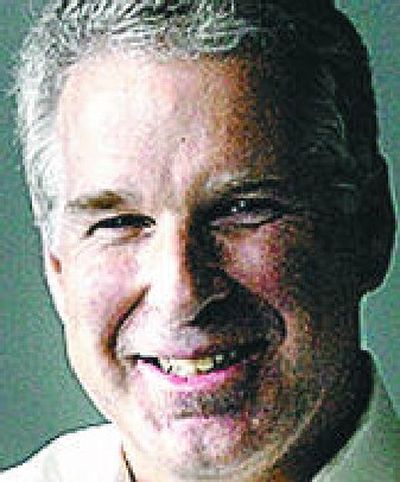
A North Idaho lawmaker who owes thousands of dollars in back taxes is accused of providing inadequate information to the Internal Revenue Service and will face a judge in April to explain why.
Rep. Phil Hart, R-Athol, said during a phone interview Monday from the Idaho House floor that he is trying to get the financial information as part of an audit for the seven years that he didn’t pay income taxes.
Hart is scheduled to appear before U.S. District Court Judge Edward Lodge on April 16 in Coeur d’Alene to explain why he hasn’t obeyed the IRS. The agency wants Lodge to force Hart to provide the information and pay court costs, according to court documents.
Hart has given the agency at least a “box worth” of documents and said he is working to hand over more records for the years he refused to pay income taxes.
“I’m working on it every week,” Hart said, adding that neither he nor his attorney has fully reviewed the petition filed Feb. 12 in U.S. District Court. “I’m busy down here with the hundreds of bills we have.”
Hart objects to how Congress and the IRS interpret the 16th Amendment, which gives the federal government the power to collect income taxes. He stopped paying income tax in 1996 while he filed a lawsuit against the IRS to show that Congress was wrongly applying the 16th Amendment.
In 2003, after losing his lawsuit and failing to persuade the U.S. Supreme Court to review the taxing authority of the Constitution and the 16th Amendment, Hart conceded and began paying his taxes.
Now, he said, the IRS is auditing him to ensure he’s paying the correct amount, which so far has totaled nearly $90,000 in back taxes, penalties and interest.
Hart said he hopes to have the problem resolved before the April court date.
The lawmaker, a former Constitution Party member who switched to the Republican Party before his 2004 run for the Legislature, said that some of the records demanded by the IRS don’t exist and that other information violates the First Amendment and his privacy rights.
Hart said the IRS wants the names of people who bought his book, “Constitutional Income: Do You Have Any?” He wrote the self-published book on the Constitution and the 16th Amendment while he was suing the IRS.
Court documents show that the IRS is requesting PayPal payment records for transactions between January 2002 and August 2005.
The agency also wants the names of people who bought Liberty Dollars – an alternative currency that its maker claims is a hedge against inflation because it’s made of silver. Hart said he is no longer selling the coins that mimic U.S. currency from his Hayden engineering firm but confirmed that he once did.
The U.S. Mint and U.S. Justice Department have determined that the use of the Liberty Dollars, produced by the Indiana-based National Organization for the Repeal of the Federal Reserve Act and the Internal Revenue Code (known as NORFED), is a crime.
Hart referred specific questions about the case to Houston-based attorney John Green, who wasn’t available for comment. He has a second attorney handling the First Amendment concerns about handing over book purchasers’ names to the government.
Michael Rosman, of the Washington, D.C.-based Center for Individual Rights, said he isn’t involved in the latest IRS case but said the same principle applies to similar cases he’s handled for Hart in the past.
“Why do they need to know?” Rosman said. “If we show he sold to 100 people, what difference does it make who the names are?”
Rosman said Hart is willing to release information on the number and proceeds of the sales, just not names or other personal information.
The IRS also wants information about two trusts, one that owns Hart’s Athol home and the other that owns his Alpine Engineering business.
The court records show that Hart refused to disclose information about the Sarah Elizabeth Hart Trust, which is in his daughter’s name and owns his home.
Hart is a trustee of the Alpine Northwest III Trust, which the IRS alleges provides both engineering services and sells Liberty Dollars. Court documents show that for 18 months Hart “refused to voluntarily respond.”
The IRS says it needs the information to determine Hart’s income tax liability for the seven years he refused to pay.
When contacted Monday, U.S. Justice Department spokesman Charles Miller said he would look into the case. IRS Revenue Agent Kate Lopez didn’t return calls.
In court documents, Lopez states that she is conducting the investigation into Hart’s tax liability. She alleges that Hart and his attorney failed to appear for a Dec. 12 interview. Lopez said that the wife of Hart’s attorney left a voice message the day before canceling the meeting – but left it at the Idaho Falls IRS office, not her office in Twin Falls.
Lopez said she traveled to Coeur d’Alene before learning of the cancellation.
The meeting was rescheduled for Dec. 19. That’s when Hart allegedly declined to provide information, including details about the trusts. Hart told Lopez he would provide the information by Jan. 8.
Lopez said he never did produce the information. Court records also show that Hart and his attorney failed to provide requested information during a Nov. 9 meeting with a different IRS agent.
During his campaigns, Hart doesn’t mention his tax debt or court battles with the IRS. As a state lawmaker, Hart said he has no power to influence the IRS or federal tax laws. He doesn’t campaign on the subject because he said it is too complicated for most people.
Hart said he accepts other taxes including taxes on business profits, investment income and property. He said that taxes pay for a civilized society. Hart never advised others not to pay their federal income taxes, he said.
In June 2005, the trust that owns his home owed $7,236 in property taxes for 2003 and 2004. Kootenai County Treasurer Tom Malzahn said that Hart paid off his tax debt in 2006 and remains current.
At the time, Hart declined to talk about his involvement with the trust or the property tax bill other than to say that the payments were “just behind” and that the reason had nothing to do with a tax objection.
Hart’s business, which is overseen by the Alpine trust, owes the county $35 for personal property taxes on business equipment, Malzahn said.