
Razor-thin ‘04 election part of federal hearings
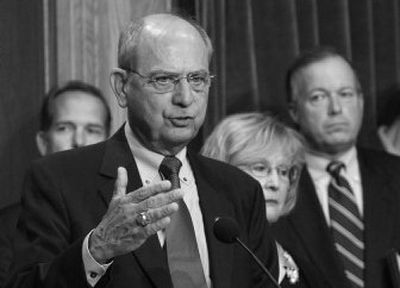
The controversy over Washington’s razor-thin 2004 gubernatorial race was resurrected briefly Tuesday in congressional hearings over the politics of firing federal prosecutors.
The chief of staff for Rep. Doc Hastings called the federal prosecutor in Seattle to ask what was happening about allegations of vote fraud in the 2004 election, John McKay, former U.S. attorney for Western Washington, told congressional panels Tuesday.
The call came in late 2004 or early 2005, McKay said, and bordered on being an improper contact over an investigation.
At the time, Hastings, the representative from central Washington’s 4th District, was the No. 2 Republican on the House Ethics Committee. The state had been through two recounts of the November election. Republican Dino Rossi had won the first official count of ballots, and the first recount, which was by voting machines. Democrat Chris Gregoire won the second recount, conducted by hand, and was inaugurated.
The results were controversial, McKay told the House Judiciary Committee on Tuesday. Both the FBI and his office received reports of problems with the election, which they looked into.
“There was no evidence of voter fraud or election fraud, so we took nothing to the grand jury,” McKay said during the hearing, which was shown live on the committee’s Web site.
He said he told Hastings aide Ed Cassidy that the FBI was taking any information the public had on the election. When Cassidy began to ask about the investigation, “I cut him off,” McKay said, because federal prosecutors are not allowed to discuss ongoing investigations with anyone.
After discussing the conversation with two of his deputies, they concluded Cassidy’s inquiry stopped short of “crossing the line,” McKay said. He didn’t report it to the U.S. attorney general’s office, which would be required if a member of Congress or his staff were trying to pressure a federal prosecutor about an ongoing investigation.
In a written statement later in the day, Hastings defended the call as “entirely appropriate.”
“It was a simple inquiry and nothing more, and it was the only call to any federal official from my office on this subject matter either during or after the recount ordeal,” Hastings said.
In July 2005, Hastings said his office was contacted by an executive for the building industry, asking him to urge the White House to replace McKay. “And I flat out refused to do so, which Ed Cassidy told him in the bluntest of terms,” Hastings added.
McKay was the U.S. attorney in Western Washington from 2001 through the end of 2006. Eastern Washington is a separate district with its own U.S. attorney, but McKay’s office did investigate allegations of public corruption against former Mayor Jim West because of local conflicts of interest.
He was one of six former U.S. attorneys who testified before House and Senate committees looking into allegations that they were replaced for political reasons. A Justice Department official told the committees McKay was asked to resign because of “policy differences” over a system to share information between law enforcement agencies.
But McKay said he’d never been told of any policy differences on that system, known as Law Enforcement Information Exchange. He was the head of a task force of U.S. attorneys testing the system and Seattle was one of five districts conducting pilot projects. In January he received an award for public service from the U.S. Navy for his work on the system, he added.
U.S. attorneys serve at the pleasure of the president, McKay and other prosecutors said, so they can be dismissed at any time without explanation. Most refused to comment on their dismissals after news accounts questioned whether the firings were politically motivated, and only testified before Congress because of subpoenas.