
Australian to face U.S. war-crimes court
GUANTANAMO BAY NAVY BASE, Cuba – Amid days of secret Pentagon proceedings against reputed al-Qaida arch-terrorists, the U.S. military is reopening its war-crimes court today with a single charge against an alleged war-on-terror foot soldier with no explicit links to the Sept. 11 attacks.
Australian David Hicks, 31, is slated this afternoon to become the first Guantanamo captive to appear before a newly constituted Military Commission in what would be the first war-crimes tribunal since World War II.
Fourteen so-called high-value detainees could eventually appear before a similar commission, including alleged al-Qaida kingpin Khalid Sheik Mohammed, who according to Pentagon transcripts admitted in a secret hearing here to orchestrating the 9/11 attacks and beheading Wall Street Journal reporter Daniel Pearl.
In a nine-page charge sheet, Hicks is accused of providing material support for terrorism. It casts the former kangaroo skinner as a Christian convert to Islam who wandered the world as a soldier of fortune and joined an international anti-American jihad.
If convicted, officials say he would serve out any sentence – a maximum of life imprisonment – in Australia under an earlier diplomatic deal.
“On or about Sept. 9, 2001, Hicks traveled to Pakistan to visit a friend,” says his charge sheet. “While at this friend’s house, Hicks watched television footage of the Sept. 11, 2001, attacks on the United States, and expressed his approval.”
Earlier, while being trained in an al-Qaida camp, it claims, he personally complained to Osama bin Laden about a lack of English-language training material. By the time the U.S. invaded Afghanistan, he had rejoined bin Laden’s forces, it is alleged, mostly guarding a Taliban tank with an AK-47.
In an earlier court hearing, in November 2004, Hicks appeared as a mild-mannered, stocky, 5-foot-5 man in suit and tie, declaring his innocence and saying little but “yes, sir” to the military judge.
Since then, the U.S. Supreme Court has ruled those earlier proceedings illegal, sending the Pentagon back to Congress, whose Republican-led majority last year enacted a revised Military Commissions Act.
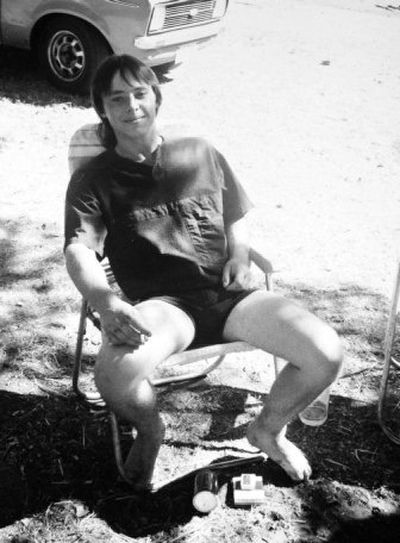
Sunday night, one of his Australian attorneys described him as disheveled – with a furry beard and stomach-length hair, which he wraps around his face to shield against the light in his cement block cell.
Lawyers were trying to arrange a shave and a haircut before today’s hearing.
It comes as the Bush administration is considering charges against the 14 more-prominent prisoners who arrived at this remote outpost in southeast Cuba six months ago after years of secret CIA interrogation.
Mohammed’s secret Guantanamo status hearing was held here on March 10, a prelude to any future Military Commission.
Also, the U.S. Supreme Court could decide as early as today whether to fast-track review of the federal law that created the framework for Hicks’ latest charges. Justices could hear new arguments surrounding the rights of detainees at Guantanamo before Hicks ever goes to trial, starting this summer.
“I think there is some symbolic value in actually charging him and proceeding with a Military Commission against a national of our ally Australia,” said University of Richmond law professor Carl Tobias.
To Tobias, Monday’s hearing demonstrates the Pentagon’s commitment to its war court even as such fundamental issues as civilian review through habeas corpus petitions are likely to reach the high court.
Other experts, however, say this week’s proceedings have a been-there, done-that quality.
“I think the historic moment passed us back in 2004, when they got it wrong the first time and refused to learn from their mistakes,” says Miami defense attorney Neal Sonnett, who is in Guantanamo as an observer for the American Bar Association. The ABA has advocated the scrapping of special commissions altogether, calling for the use of time-tested courts-martial or civilian courts instead.