
Iran suspends U.N. cooperation
TEHRAN, Iran – Iran announced Sunday that it was partially suspending cooperation with the U.N. nuclear watchdog while President Mahmoud Ahmadinejad said the latest U.N. sanctions would not halt the country’s uranium enrichment “even for a second.”
Iranian state television quoted Ahmadinejad as saying the additional Security Council sanctions imposed on Saturday “stem from the hostility by some powers against Iran.”
“It is not a new issue for the Iranian nation. Enemies of the Iranian nation have made a mistake this time, too,” he said.
Meanwhile, government spokesman Gholam Hossein Elham said the Cabinet on Sunday decided to suspend “code 1-3 of minor arrangements of the safeguards” with the Vienna-based U.N. nuclear watchdog, the International Atomic Energy Agency.
The suspension would “continue until Iran’s nuclear case is referred back to the IAEA from the U.N Security Council,” Elham said.
Tehran’s scaling back of cooperation with the IAEA was in apparent retaliation for the sanctions unanimously approved by the Security Council over Tehran’s refusal to stop enriching uranium, a process that can be used in the production of nuclear weapons.
The West strongly suspects Iran’s nuclear activities are aimed at producing weapons though Tehran says they are exclusively for the production of energy.
The U.N. sanctions are meant to send Tehran a strong message that its defiance will leave it increasingly isolated and open to even tougher penalties.
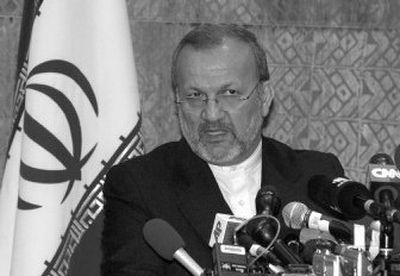
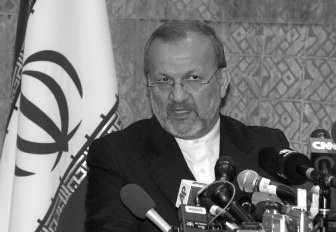
In New York, Iranian Foreign Minister Manouchehr Mottaki said “a few select countries don’t have the right to abuse the Security Council” and described the new sanctions as “illegal, unwarranted and unjustified.” He said they undermine the credibility of the Security Council.
Mottaki said Iran has repeatedly sought negotiations with the powers that drafted the resolution against his country: the five permanent council members – the United States, Britain, France, Russia and China – and Germany. But he said they lack the political will to reach a breakthrough.
“If this political will existed, the other side wouldn’t have imposed preconditions on the talks,” Mottaki said, referring to demands by the United States and its allies that Iran first halt enrichment before they engage in negotiations on its nuclear program.
Mottaki said the world has two options to proceed on the nuclear issue: continued negotiations or confrontation and the resolution was the wrong choice.
“Of course, it will have its own consequences,” he said.
In Tehran, citizens brushed off news of the latest sanctions.
“Why should we care about sanctions?” asked Ali Reza, a 21-year-old shopping for a digital camera Sunday with his girlfriend. “We’ve become accustomed to this kind of news. As long as I can remember, there have been such reports in the air.”