
Chrysler sale raises questions
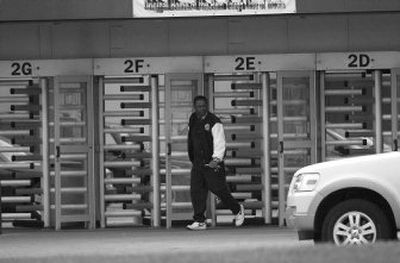

DETROIT — Billy Boyd, a Chrysler worker for almost 34 years, is so skeptical about Monday’s sale announcement that he might not stick around much longer.
Like many of Chrysler’s roughly 80,000 employees, Boyd, 51, a machine operator at the automaker’s Kenosha, Wis., engine plant, isn’t sure what to make of the unusual deal. Parent company DaimlerChrysler AG is paying as much as $650 million to walk away from Chrysler by turning over the keys to his company to Cerberus Capital Management LP, a New York private equity firm.
“It sounds good,” he said before work Monday afternoon. “Are they buying us to help us out or to suck the blood? It’s kind of scary.” Boyd plans to speed up his retirement.
At many Chrysler plants, workers also worried about what it will cost them as word spread about the $7.4 billion sale. Many are fearful of private equity buyers, which in the past have sold off companies in pieces to make a fast buck.
The skepticism remained even after Cerberus Chairman John Snow, a former U.S. Treasury Secretary, tried to reassure workers that his company would be with Chrysler for the long haul, and that it had faith in the company’s management.
And it continued after Chrysler Group Chief Executive Tom LaSorda said there are no major plans are under discussion to cut jobs beyond the 13,000 announced in a February restructuring plan.
The deal, which severs a stormy nine-year relationship between what was once Daimler-Benz AG and Chrysler, also renewed workers’ fears about pensions, health insurance and what life will be like under the new owner. Daimler bought the company in 1998 for $36 billion in a marriage designed to create the ultimate global automotive powerhouse.
United Auto Workers President Ron Gettelfinger said Monday that after his pitch to keep Daimler and Chrysler together failed, it became clear that Cerberus was the best option for workers.
“So once that decision’s been made, then you’ve got to deal with the cards that you’re dealt,” he said Monday afternoon, adding that he did not think the sale would have an impact on upcoming national contract talks.
Buzz Hargrove, president of the Canadian Auto Workers union, which represents 11,000 Chrysler workers, said he had “enormous concerns,” noting that many private equity groups have a long-standing history of “job cuts as opposed to job creation.”
The sale also raised questions of what car buyers should do, although one industry analyst said consumers had little to fear from the company that makes Jeeps, Chryslers and Dodges.
Jeremy Anwyl, president of the Edmunds.com automotive Web site, said warranties and spare parts requirements must be honored by law.
“From a consumer perspective, in the practical sense, there’s no real downside. I think consumers are pretty well protected,” he said.
Investors also liked the news. DaimlerChrysler’s shares rose $2.12, or 2.6 percent, to close at $84.12. They have traded in a 52-week range of $45.98 to $84.90.
Industry analysts said the likelihood that Cerberus would cut more jobs is low, but many said the company would be far tougher at the bargaining table when talks between the Detroit Three automakers begin this summer.
Gerald Meyers, a former chairman of American Motors Corp. who now teaches leadership at the University of Michigan, said Cerberus will need concessions from the UAW to turn a profit on its investment, something that may be difficult.
“I think their hopes of negotiating with the UAW are at best speculative,” he said. “Ron Gettelfinger is a very tough and smart and well-educated negotiator. He knows he holds the keys to this kingdom. I think there are going to be some difficult days in this upcoming negotiation.”
Cerberus and Chrysler, he said, likely will set the pattern for the other two Detroit automakers, Ford Motor Co. and General Motors Corp.
Meyers and other industry observers said it’s likely that Cerberus will hold onto the money-losing Chrysler long enough to turn it around, then take it public again to make a handsome, fast profit.
“That’s their business: to get their hands on companies that are faltering, undervalued, clean them up and then take them back public again,” Meyers said. “You can expect that’s what they’re going to try to do with Chrysler.”
Yet Cerberus’ Snow said at the news conference that he and his company respected organized labor.
“I think Cerberus has a good record of working successfully with companies that are organized, and we respect the role of organized labor, and we greatly appreciate the support the UAW has given to this transaction,” he said.