
Filling a comfortable niche
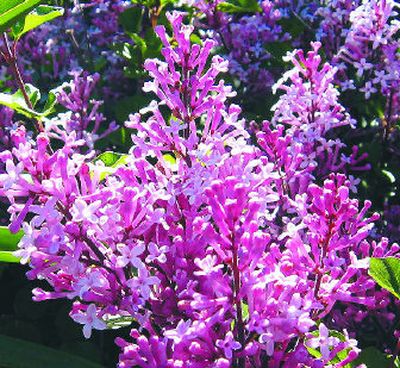
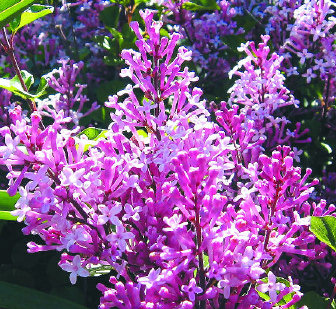
Since Spokane is the “Lilac City,” it only makes sense to grow one.
But if you have limited space, a 12-foot lilac shrub might be too big.
The nursery industry has solved the problem.
Dwarf lilacs are widely available both at local nurseries and by mail order. Many of them grow to only four or five feet when mature.
They are ideally suited as foundation or border plantings. A single specimen could be used to anchor a small island planting bed.
Most of us are familiar with the common lilac – Syringa vulgaris, which normally is a very large treelike shrub.
But the lilac genus has so many species that botanists have created hundreds of varieties with a wide range of colors and shape. Some species are cross-bred and manipulated to produce diminutive plants compared with the common lilac.
For example, a cultivar called ‘Charisma’ tops out at a little over three feet in height.
‘Miss Kim,’ another dwarf, could reach five feet in time.
‘Palibin’ is a popular selection also available locally.
Northland Nursery at Highway 41 and Prairie Avenue north of Post Falls carries at least three varieties of dwarf lilacs, including ‘Miss Kim,’ ‘Minuet’ and a Korean dwarf.
Because a lot of newly constructed houses don’t come with big yards, the dwarfs are finding a new market, said Lika Hubof, a plant expert at Northland.
“They are gaining popularity with the sizes of landscapes being smaller,” she said. The nursery’s Korean dwarf has been as good as a billboard when it blooms in May. The flowers give off an intense fragrance that captures customers’ attention. “When it’s in bloom, it sells like crazy,” she said.
Alan Tower at Tower Perennial Gardens at Jamieson Road and Palouse Highway southeast of the city said some of the dwarfs are being grafted onto upright trunks, or standards, to produce a treelilac specimen. He said he’s sold quite a few and can order more if customers want.
Some of the oldest dwarf lilacs I’ve seen in Spokane are in Riverfront Park next to a few of the bridges over the river.
According to the Gardener’s Network Web site, lilacs have been cultivated in the U.S. since colonial days. Both George Washington and Thomas Jefferson grew them, the site says.
Highland Park in Rochester, N.Y., has about 500 different kinds of lilacs. Closer to home, the University of Idaho Arboretum and the Hulda Klager Lilac Gardens in Woodland, Wash., are other places where their diversity is on display.
Lilacs are considered a low-maintenance shrub. They don’t like to be planted in overly wet soil but prefer good drainage, even a sloping site. Pruning is recommended right after a lilac drops its blooms in order for the shrub to set new flower buds for the next year.
Topping or shearing the bush is discouraged. Small suckers or shoots should be cut off at ground level. The shrubs should be shaped to look full but not crowded. It’s best to remove the innermost branches, according to Gardener’s Network.