
Smiley-Lyle murder trial opens

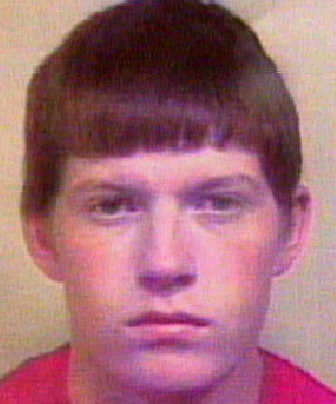
Two men who allegedly strangled a Spokane man and threw his body in the Spokane River in a dispute over a Beatles poster met as teenagers while living at Morning Star Boys’ Ranch, practiced martial arts together and fantasized about creating their own militia.
Robert A. Entel, who was 18 when 45-year-old Robert “Bud” Johnson was murdered in March 2006, pleaded guilty and is serving 25 years in state prison in exchange for a deal with prosecutors to testify against his former friend, Donald L. Smiley-Lyle, in a first-degree murder trial that started this week in Spokane County Superior Court.
Entel, now 20, is expected to testify today in the courtroom of Spokane Superior Court Judge Neal Q. Rielly. In opening statements to the jury Wednesday, a fuller portrait of the lives of the two troubled young men emerged.
Spokane County Deputy Prosecutor Steve Garvin portrayed them as equals who plotted to kill Johnson as a favor to Entel’s cousin Kathryn B. Kelly, 31, who had lived briefly with Johnson. Their romantic relationship ended with Johnson asking Kelly to return the “Hard Day’s Night” Beatles poster he’d given her for Valentine’s Day in 2006. When Kelly refused, Johnson and a friend, Butch Glidwell, drove to Entel’s house on March 5, 2006; Johnson entered and took the poster.
“The next night, Glidwell’s vehicle was burned by Entel in retaliation,” Garvin told the jury.
A Spokane jury acquitted Kelly of first-degree murder charges in June.
Following the seizure of the Beatles poster, Entel and Smiley-Lyle mapped out Johnson’s apartment and jointly planned the murder, Garvin said.
The black-clad duo pretended to be police officers when they entered Johnson’s apartment, zip-tied his hands behind his back and choked him until he lost consciousness. Entel directed Smiley-Lyle to continue to choke Johnson and Smiley-Lyle was “banging his head on the floor like a coconut,” Garvin said.
“At the conclusion of this case, the evidence will prove conclusively that it was Entel and Smiley working together” that led to Johnson’s death, Garvin added.
The violent partnership was not one of equals, Spokane County Deputy Public Defender Douglas Boe countered in his opening statement.
Entel was older and stronger than Smiley-Lyle and dominated the relationship, taking advantage of a “disturbed 17-year-old” who came from an unstable family, had struggled in several schools and craved acceptance, Boe said.
Smiley-Lyle was placed at Morning Star in October 2003. Shortly afterward, Entel was placed there as well, and the two became friends. Entel taught his new friend martial arts and sometimes choked and slapped him, according to Boe.
“Entel was the boss and Donald did what he was told,” Boe said.
Entel joined the Marines in March 2005 but was kicked out within two months after a psychological screening turned up a childhood history of fire-starting and other problems. He joined the Washington Army National Guard, but was ousted when Guard officials learned he hadn’t informed them of his Marine discharge, according to Boe.
With his military career in shambles, Entel returned to Spokane and resumed his friendship with Smiley-Lyle. Entel talked about creating a militia, and Smiley-Lyle referred to himself as a “Druid king.” The two men were “getting lost in their out-of-control fantasy life,” Boe added.
In October 2005, Entel choked Smiley-Lyle in a dispute over a girl; Smiley-Lyle fled, stumbled into the Spokane River and was treated at a hospital emergency room, according to a police report on the incident.
The day of Johnson’s murder, Entel had consumed more than a dozen beers and many shots of liquor and said to Smiley -Lyle, “Suit up corporal, we’re going on a mission. … We’re going to teach Johnson a lesson.”
“This is the story of a senseless, impulsive murder … perpetuated in anger by a drunk and a bully, Robert Entel,” Boe told the jury, asking them to return a not guilty plea for Smiley-Lyle.
Nina Pereira, 18, one of the state’s first witnesses who had dated both men, testified that they told her a couple of days after the murder that they’d killed Johnson and dumped his body in the river after she inquired about an “animal-like” stench in their car.
“They were kind of macho acting,” she said, noting that they drove with her in the car to Boulder Beach and mockingly said “Bye-bye Bud, I hope you can swim.”