
You can MAKE it right
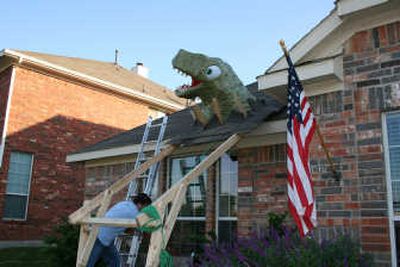
In three years, a small magazine has ridden the do-it-yourself wave and produced a huge boom in backyard hobbying and product tinkering. Dale Dougherty and his pal, Dan Woods, were in San Francisco back in late 2004. Dougherty told Woods, “It would be cool to start a magazine that appeals to digital do-it-yourselfers.”
Woods said he was ready to sign on as associate publisher for the effort, dubbed MAKE Magazine. Dougherty became the editor, and the first issue came out in February 2005.
“He said the idea would be to develop something like a Martha Stewart magazine for geeks,” Woods recalled Dougherty telling him.
Today MAKE magazine has more than 100,000 readers, half of them subscribers and the others buying the publication on newsstands.
Its online site at makezine.com garners more than two million visitors each month, Woods said.
Woods said MAKE’s success derives from the current American mood in which millions of men and women use the Web to find ideas but also prefer to dive in with both hands and tackle a challenging project.
“You can always buy a great pie for a good dinner. But it’s not yours,” Woods said. “There’s something very special in approaching a project and tackling it and putting your ingenuity and skill into it.”
Hundreds of other sites have similar approaches, focusing either on home projects (houseblogs.net), crafts projects (etsy.com), crochet and knitting (ravelry.com) and general how-to (wikiHow, eHow and many others).
Woods said MAKE is not all about building robots or miniature spycams to add to a ceiling fan, a la MacGyver. Much of the contents of the quarterly magazine and the Web site deals with quirky, fairly simple projects that let people have fun with everyday items. An early issue showed how to make a three-string guitar out of a cigar box, string, and other parts.
Another issue provided a quick guide in learning to take photographs from a kite.
“We know we skew heavily toward males,” Woods said. But the numbers show a gradual change; where it used to be 95 percent male readership, MAKE is now closer to 90 percent, he said.
And the readers are not all cheapskates, said Woods. “About 78 percent of them, according to our surveys, have college degrees,” he said. The average age is about 35. Moreover, most have enough money to buy toys and electronic gear, but many believe in a “let’s open up that electronic device and poke around inside with the wiring” mentality, said Woods.
One of MAKE’s popular categories for projects is hacking iPods or other mp3 players, just to tweak them and add cool features.
Most of MAKE’s readers live in or near the larger tech centers such as New York, Austin, Texas, Seattle and San Francisco, said company spokesman Mark Ballard.
The Northwest has a fair share of the paid magazine subscribers. Woods said Oregon, Washington and Idaho account for about 7,000 paid subscribers out of roughly 50,000 worldwide.
One Spokane faithful MAKE reader is Thomas J. Brown, who operates a Web design site at pacificzendesign.com.
Brown said he includes makezine in his daily Web reads.
And he’s tackled at least two do-it-yourself projects he found. “One was the $14 Steadicam (a video camera stabilizer) and the other was a pop (noise-filter) screen for a microphone that I built for about $6. I actually managed to complete those and they work quite well,” said Brown, via e-mail.
The success of MAKE inspired O’Reilly, the company that operates both MAKE and CRAFT magazines, to launch the immensely popular Maker Faire events that bring together hobbyists and geeks, said Woods.
The first Maker Faire, in San Francisco in 2006, drew about 21,000 people.
The second Bay Area Maker Faire drew 45,000, he said.
Woods said the fairs become “a combination science fair, craft fair and Burning Man festival for geeks.” It’s become so popular, he noted, that images from Maker Faires have become one of the largest event categories on flickr, the free photo-sharing site.