
Apricot’s texture may be misleading
We have two burning bushes we bought from a local nursery about 20 years ago that have never turned red. One is in south-facing full sun, and the other gets afternoon sun on the west side of the house. What is wrong?
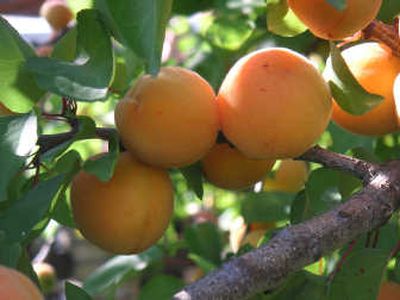
We also have an apricot tree that has nice fruit, but the inside pulp near the seed is stringy and has to be removed before we eat it.
Paul Hasson
Nothing is wrong other than you happened to get two plants that genetically don’t turn as red as other burning bushes. Your conditions are fine for them to turn if they could. This isn’t uncommon in plants. Scientists sometimes called these biotypes to indicate that they are a little different from other plants in their genus but not different enough to be labeled as completely different. So enjoy your green burning bush and know that you just have something a little different in your landscape.
You don’t say what variety of apricot you have, but likely the stringiness is typical of that tree. It is not listed as a condition for any known disease or insect problem so there really is no way of changing it. But I bet the rest of the fruit is tasty.