
Extra cash enhances learning
Last spring, Mike Uphus had to do something most bosses cringe over: tell his staff they would need to cut spending this school year because of budget constraints.
But the principal at Seltice Elementary School in Post Falls had a savior. Thanks to a new “classroom enhancement” package in the state Department of Education budget, each teacher in Idaho has $350 to spend on school supplies.
It’s up to the schools how the money is used. Some pooled the cash and will use it for schoolwide purchases. Uphus gave it directly to the teachers.
“That $350 really was a godsend,” he said. “It was very, very well received.”
Purchases have included basics, such as construction paper, staples, pens and pencils, as well as bigger items such as document viewers that allow teachers to display anything on a wall – no clear plastic film required.
Not everyone has spent their dough yet. Some teachers are saving for extra expenses likely to crop up over the year.
The additional money stopped the classroom supply cuts teachers were warned of and prevented teachers from digging into their own pockets for classroom necessities, Uphus said.
“I can’t think of a teacher who hasn’t done that over the years,” said Colleen Kelsey, principal at Prairie View Elementary School in Post Falls. “It’s a huge help.”
The state Education Department plans to make the $350 supply allowance a permanent part of its annual budget request to the Legislature, spokeswoman Melissa McGrath said.
The extra money comes at a time when students are increasingly being asked to bring basic classroom supplies. Parent-teacher organizations often supplement classroom purchases with fundraising money. The cash from the state lessens the pressure on those groups and increases morale among the teachers used to spending their own money on their classrooms, Kelsey said.
The money comes with restrictions. Teachers can’t buy food, copy paper, postage stamps or printer cartridges, and they can’t squirrel the money away for a larger purchase next year. But supplies such as notebooks, cameras, markers, chalk or storage units are OK.
“There was a lot of latitude in what they could use it for,” said Mary Havercroft, principal of Twin Lakes Elementary School. “It gave them a little more ownership in what the expenses look like.”
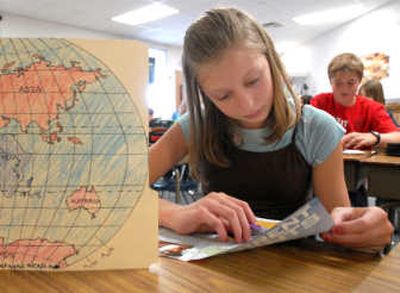
The extra cash allowed Nick Edwards, a sixth-grade teacher at Coeur d’Alene’s Canfield Middle School, to buy small school supplies to hand out as incentives for good behavior and classwork. At his previous teaching job in Billings, teachers didn’t get money for classroom supplies. They took what the school had and spent their own money on the rest, he said.
Edwards estimates he personally spent about $500 on supplies last year. “It adds up quickly,” he said.
The $350 allowance recognizes that not all teachers need the same supplies, he said.
While Edwards bought file folders to use for a mapping project unique to his classroom, Canfield music teacher Doug Wood bought extra strings for instruments and other equipment.
The extra money has been a huge help, he said.
“Mr. Wood actually has Kleenexes for runny noses this year,” he said. “It’s just little stuff that actually makes school bearable.”