
Bozeman celebrates flying predators

B-52 bombers. That’s what golden eagles look like. Raptors, which include eagles, hawks and owls, are on the top of the food chain, preying on other birds and many small animals. They are graceful birds, beautiful in flight, and are efficient predators. Each year the Raptor Festival in Bozeman, celebrates raptors by educating participants about these important birds while they soar past as they migrate south.
It all started with a pesticide called DDT. A few persistent researchers and birders sat on mountaintops and ridges where migrating raptors follow migration paths. They keep track of the kinds and the number of eagles and hawks that passed by their platforms. Year after year they kept records of the migration. During the 1960s it became very obvious that the bald eagle migration numbers were decreasing sharply.
More research revealed that bald eagles were eating animals that had high levels of DDT in their bodies. The pesticide caused the eagles to lay eggs with shells that were very thin. The shells were so thin that the young did not survive. The federal government banned the use of DDT, and now the once-rare bird is making a very good comeback around the nation.
Today, after that success story, researchers and birders climb even more mountains and ridges during migrations to identify and count raptors. Near Bozeman, Bridger Ridge (above the Bridger Bowl ski resort) was chosen by HawkWatch International, which conducts or co-sponsors 14 long-term migration counts in 10 states. Bridger Bowl acquired a helicopter platform specifically to count golden eagles. Without knowing it, the migration was their little secret. They were seeing the largest concentration of golden eagles in the lower 48 states with up to 200 eagle sightings a day. Each season they count 1,200 to 1,900 birds. Also, they count up to 1,500 other kinds of raptors, 17 additional species.
The community of Bozeman was hardly aware of what it had. The public relations manager of the ski resort suggested a festival to increase awareness and to promote the community. Now the event is a four-day festival with other activities throughout October. You don’t have to be a card-carrying Audubon Society member to enjoy this event and destination.
Golden eagles are awesome to watch. They are so big. At the festival, you will learn that they are almost entirely brown with a golden head hood similar to the bald eagle’s white head. They soar, meaning they don’t flap their outstretched wings any more than they have to. They somehow sense updrafts on the prairies as the sun heats the air and along ridges like what is found at Bridger Bowl. So they soar south rather than fly. They would use too much energy to flap their wings all the way. They circle on the updraft to gain elevation and then glide to the next updraft. Other eagles, some hawks and the turkey vulture use the same updrafts for transportation. So it is not unusual to see a variety of birds soaring past while on the ridge.
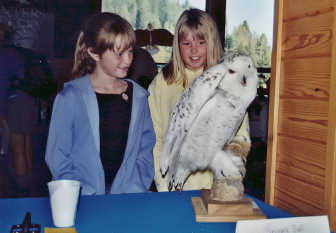
Attend the festival and you can witness this annual, natural event. Most of the activities are held at the Snow Bowl. There are talks where expert birders discuss the identification features of the various raptors along with a slide presentation. Live birds that are in captivity for rehabilitation are on display. That might include great horned owl, rough-legged hawk, redtailed hawk and American kestrel. Inside, the ski lodge tables are set up with raptor-related materials like silhouette charts of soaring raptors for identification as well as bird exhibits by taxidermy. Posters are given away; hats and shirts can be purchased. Saturday afternoon Native American students attending the local university give a drumming and dancing demonstration.
Of course by now everyone wants to see the soaring birds. There is only one way to the top of Bridger Ridge – hike. That requires a strenuous two-mile hike with a 2,000-foot climb. Hopefully, as the fest increases in numbers and safety concerns can be overcome, the ski operator will be able to run a lift during the weekend.
There is another place to find the birds. The birds can’t soar and glide all the time during a migration. They have to eat and rest. Between mountain ranges in Montana there are valleys and prairies where they can find food to hunt. If you drive north out of Bozeman and Belgrade during migration, you will find hawks and eagles on the power poles and in the trees looking for food. In the afternoon, you may see them catch an updraft as they soar in a circle above you as they head over the mountains. If you can find one close by on a pole, you will often be able to see them better there than when they are soaring along the ridge.
There is yet another way to see raptors in the Bozeman area, but this option costs money. There are professional guides who can provide an exceptional way to find and identify raptors. If you have an interest in birding or want to be introduced to a very interesting group of birds found in the Bozeman area, the money will be well spent. Hiring a guide for half a day or more will get you someone who knows where to look and is trained in identifying birds. Guides are equipped with binoculars and spotting scopes, and some have specially-designed vans with roofs that open up. Besides learning about birds, the guides will point out animals found in the area and provide their natural history. Also, Lewis and Clark passed through here at the Three Forks, and the guide can show you the location and give details of that history.
The community has taken hold of the festival. During October the Museum of the Rockies and Bozeman Public Library sponsor speakers. The International Wildlife Film Festival Tour is offered in the community.
Anyone who travels to Bozeman and takes in the Raptor Festival will most likely learn to appreciate and get hooked on these beautiful, but deadly efficient, interesting birds and have a good time in the process.
This year various motels in town offer special rates during the festival. Inquire at the Bozeman Chamber of Commerce at (800) 228-4224 or on the Web at www.bozemancvb.visitmt.com. There are other attractions in the Bozeman area to fill up the weekend including the Museum of the Rockies, American Computer Museum and Lewis and Clark at Three Forks. Yellowstone National Park is about an hour away.