
Shiite cleric endorses tripartite division of Iraq
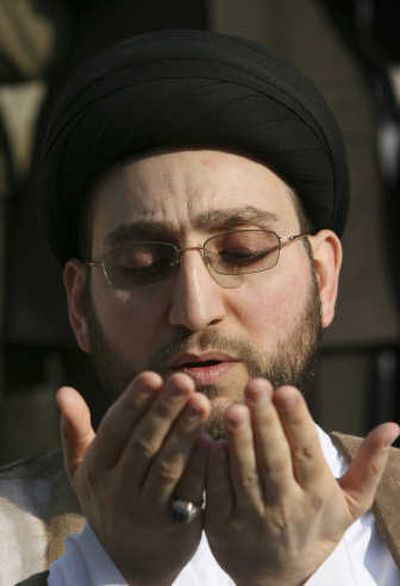
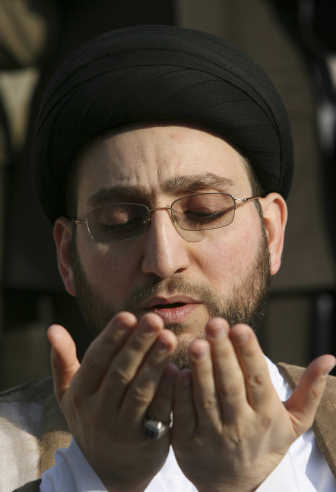
BAGHDAD, Iraq – The Shiite heir apparent to a key U.S. political ally added his voice Saturday to calls for the division of Iraq into semi-autonomous regions based on sect and ethnicity, throwing down a gauntlet on an issue that has stirred fierce emotions in Iraq.
Ammar al-Hakim’s appeal before hundreds of supporters gathered for prayers marking the end of the Muslim holy month of Ramadan came just weeks after passage of a nonbinding U.S. Senate resolution calling for a devolution of power to three self-governing regions for Shiites, Sunnis and Kurds.
Iraqi politicians responded angrily to the resolution, which was sponsored by Sen. Joseph Biden. Iraqi Prime Minister Nouri al-Maliki, a Shiite, called the measure an infringement on Iraqi sovereignty. Others accused officials in Washington, D.C., of plotting to partition Iraq.
But the idea of building strong regions has the support of Kurdish leaders, including President Jalal Talabani, and the Supreme Islamic Iraqi Council, one of the two largest Shiite formations, led by al-Hakim’s father, Abdul-Aziz al-Hakim.
The Kurds have a self-governing state in the north, which they hope to expand by annexing the oil rich city of Kirkuk and other disputed areas. Abdul-Aziz al-Hakim has called for uniting the nine provinces in the south with a Shiite majority into a similar region.
“I call on this holy day for the people of my country to form the (self-governing) regions, starting with the region south of Baghdad,” al-Hakim’s son said in a sermon delivered outside the party headquarters in Baghdad, the capital. “It is an Iraqi interest, wish and decision.”
But he also stressed the need to preserve Iraqi unity and said federalism was the best way to achieve this.
The principle of federalism is enshrined in the Iraqi constitution, but politicians have yet to agree on a bill outlining the relationship between central and provincial authorities, one of the benchmarks for continued U.S. support.