
Program looks at home air quality

Air.
It is odorless, tasteless and invisible to the naked eye.
Understanding the importance of air quality is what the American Lung Association advocates, and it provides a free service to help people identify possible dangers in their home through the Master Home Environmentalist program.
The program incorporates all aspects of indoor air quality and identifies possible hazards by performing a free Home Environmental Assessment (HEAL). The assessment identifies hazards known to cause respiratory illnesses such as radon, lead, dust, household chemicals, mold, smoke and other air pollutants in the home.
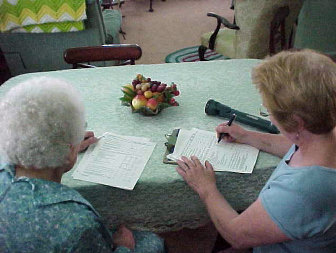
A trained volunteer walks through the home with the resident and identifies problem areas utilizing an extensive 20-page assessment list. The list covers questions about flooring, indoor heating, ventilation, pets and other problem areas.
After the assessment, the volunteer suggests an action plan using low-cost or no-cost solutions to improve the home’s air quality. The whole process takes between 90 minutes and two hours.
The action plan incorporates solutions such as using “green clean” recipes for cleaning. These recipes are an inexpensive, less toxic alternative to using name-brand cleaners posting a danger label.
“Any household chemicals that have a danger label on the back should be avoided,” said Larisa Hook, Clear Corps member and trained volunteer. “Chemicals with caution and warning labels are also harmful.”
If harsh chemicals are used, Hook recommends thoroughly ventilating the area.
Wood stoves, fireplaces, and candles also pose a serious health threat by creating particulate matter. The particles emitted from wood burning devices can trigger asthma attacks and respiratory illnesses.
Children and the elderly are more susceptible. According to Hook, long-term exposure to these particles could lead to lung disease.
The home environmental volunteer undergoes an extensive six-week training course. Volunteers perform no air testing.
They only assess the quality of air by identifying problem areas and offering solutions.
“Some people have a misconception we will clean their air,” said Hook. “We do offer a resource sheet if residents want to conduct further testing.”
People with allergies, asthma or other respiratory illnesses benefit from the program as well as families with small children.
“I think there is so much we don’t know about what’s in our homes,” said Allison Gray, who had a home assessment done in April. “I was impressed. The home assessment was extremely thorough.”
Gray moved into a new home in 2005, developed asthma and scheduled an appointment.
During the assessment, the volunteer identified the heating system as a problem area because Gray noticed her respiratory symptoms returning every winter. This year, she plans to clean out all the ducts before colder weather.
The program is available to anyone living in the Spokane County. Anyone living outside the area can request a ‘Do It Yourself HEAL.’
The form guides residents on how to identify problem areas themselves.
The program is funded through a grant from the Clear Corps and the National American Lung Association.