
Tribe struggles to secure border
CUT BANK, Mont. – When Robert DesRosier looks north into Canada and east toward the Blackfeet Indian Reservation, he admits that if he were a smuggler, or perhaps a terrorist, he would take advantage of the reservation’s lack of security.
DesRosier, a tall and easy-speaking man, is one of just two tribal members working to secure the reservation’s 65 miles of international border. It’s a daunting task and one DesRosier says goes largely unsupported by the federal government.
“The things that come through here could affect the rest of the nation,” he said after a scouting flight over the border. “But one of the things that affects us the most with Homeland Security is that we don’t often get the money to operate or maintain a good border protection program.”
DesRosier took on the Blackfeet Nation’s Homeland Security mission one week after the terrorist attacks on Sept. 11, 2001. He and his partner – a Blackfeet man who asked that his name not be used – represent the sum total of the reservation’s effort to secure the border.
The program has made progress since its inception. Relationships have been forged with nearby law enforcement agencies, including the Glacier County Sheriff’s Department and the U.S. Customs and Border Protection. Even the Blackfeet Tribal Council supports the mission, helping out in a pinch if DesRosier needs it.
But DesRosier admits that his program has taken small steps backward. It hasn’t grown much during the past six years, and that leaves him frustrated. What’s more, he said, it continues to struggle for funding.
“We’d like to have a full-time program that puts Blackfeet people to work on the northern border,” he said. “I’d like to see 10 to 12 people who are full-time employees working Homeland Security for the Blackfeet Nation. I’d like to do rotating shifts, and that means vehicles and equipment.”
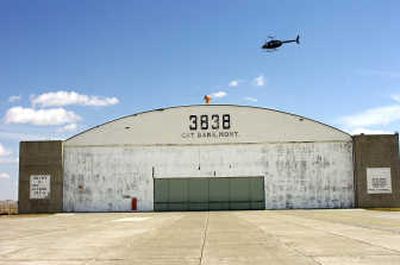
DesRosier and his partner, along with a host of Native American agents from southern Arizona, have gathered in Cut Bank to fly the border with a drug interdiction pilot from the Montana National Guard. Doing so, DesRosier hopes, will reveal the illegal crossing points that are invisible to those on the ground.
Knowing where the roads and trails lie will help his team devise a better plan, one he may deploy with limited staff.
“It doesn’t take a rocket scientist to know that funding isn’t going to the reservations like it is to the rest of the country,” he said. “If I was a smuggler, I certainly wouldn’t go through the Port of Sweetgrass or the Port of Piegan. It’s common sense. The smugglers aren’t dumb. They know what’s going on.”
DesRosier’s words mirror those spoken by Hill County Sheriff Greg Szudera two weeks earlier. The 14 ports of entry dotting Montana’s northern boundary are well-secured. But the 545 miles between them are lonely, open miles with only farmers and a handful of Border Patrol agents keeping watch.
“Putting myself in the shoes of doing criminal activity, it’s a toss-up whether I’d try to cross at a busy station or at a location with limited personnel,” Szudera said at his Havre office. “I personally would take the risk of doing it in a location with a smaller amount of traffic.”
That’s what has DesRosier concerned. Aside from the weather and expansive terrain, there’s little to stop smugglers and illegal immigrants from crossing the reservation and reaching the highway, where they may disappear into the Montana population.
Smugglers have been known to fly drugs across the border and drop them for collection. Others move on four-wheeler or foot. They set their package by a trail or road, marking it in some unsuspecting way for future collection. In land this big and rugged, catching them, says one Native American agent, is a game of good intelligence, planning and luck.
DesRosier fears that smugglers and illegal immigrants who want to cross the international border will do so on the reservation.
Others agree. Up here, tucked against the rise of Glacier National Park, law enforcement is thin at best. What officers there are keep busy with crisis management. As DesRosier puts it, tribal police don’t even have time to work traffic.
“I think the criminal element will target a reservation because there’s not adequate law enforcement,” he said.
While DesRosier remains hopeful that funding will someday come his way, he knows how the game is played. He admits that the northern border is nothing like the southern border, at least when it comes to the level of activity streaming across it. He called the difference significant and one he can’t compete with.
Still, he wants to spread the word to smugglers and illegal immigrants – if you’re looking to enter the U.S. through Montana, the Blackfeet Indian Reservation isn’t the place to do it.
“By far the most important thing to me is the Homeland Security mission,” DesRosier said. “It’s important for the Blackfeet Nation that we maintain our identity as far as our northern border. We’re one of the most unique tribes in the nation because we have 65 miles of international border. We try to remain very observant.”