
In U.S., cheers for China
Immigrants say games important for home country
Some Chinese immigrants in Spokane say it will be tough having to choose between their native and adopted countries in the Olympic Games under way in Beijing.
Anyway, they say, the Olympics are about sportsmanship and international cooperation. It’s an event that transcends politics or nationalism.
But what they really want is for China to annihilate the United States in badminton.
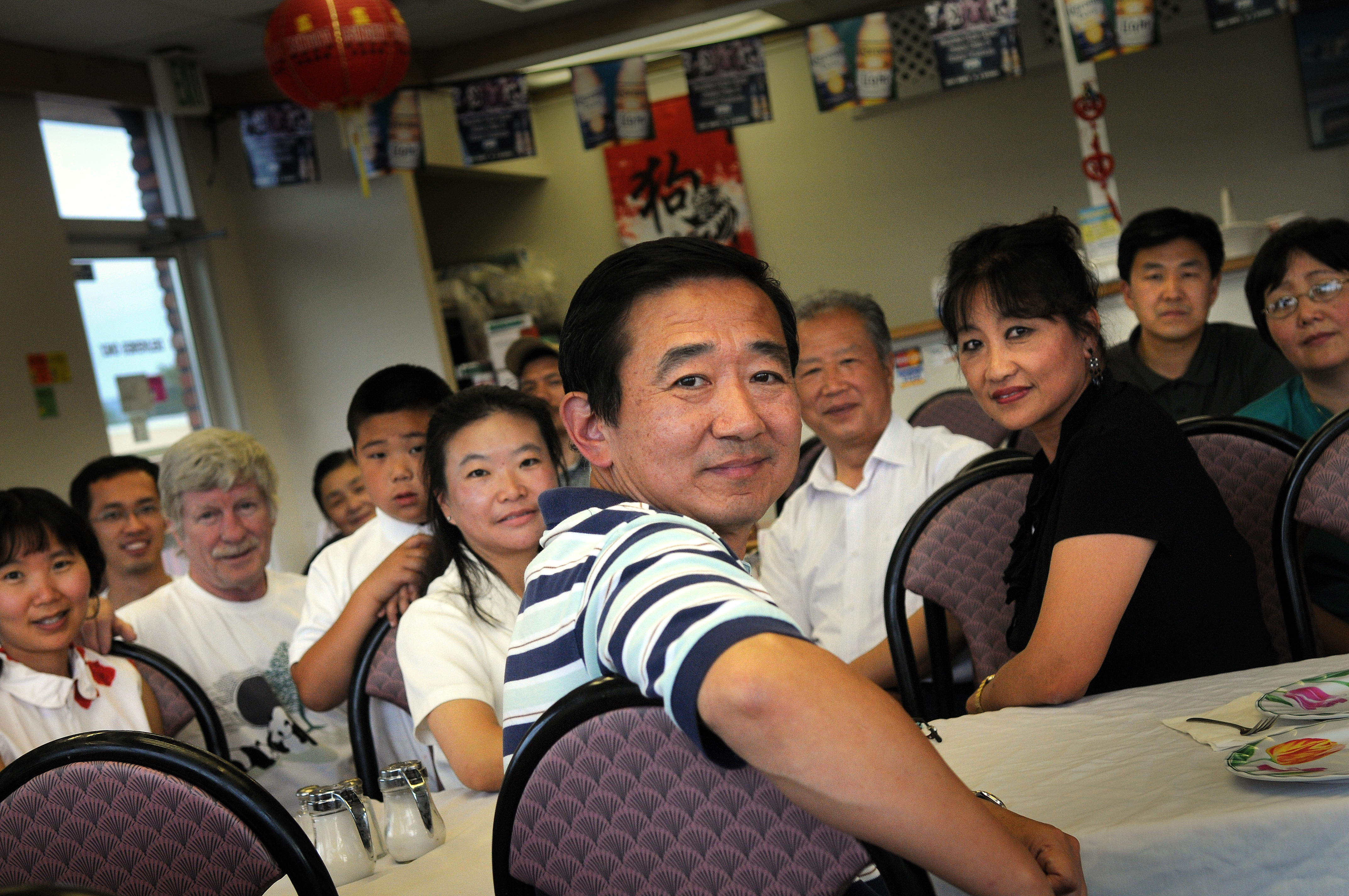
Several members of the Spokane Chinese Association gathered this week at the Hong Kong Café in Spokane Valley to discuss the pride they feel as the world’s attention turns to China.
“It’s not so much about who wins,” said Jane Gong, president of the association. “It’s the beauty of the games.”
Weiling Zhu, a member of the association who works for a local asset management company, said she sees the games as a celebration. Whatever your race or origin, she said, “whoever wins, we celebrate it.”
But just ask who will win the gold medal race, and the truth comes out. They each know that the United States won 36 and China 32 four years ago in Athens.
“This time we have possibilities,” said Lijun Bai, Gong’s husband and a research scientist for ReliOn Inc., a fuel cell technology company in Spokane Valley.
The way Bai explains it, the sports China is strongest in, there’s no competition. Table tennis comes to mind. He feels pretty confident about men’s gymnastics and diving, too.
But in the sports where the United States excels, there is a great deal of competition.
“And this time, it’s location, location, location,” said Susan Butler, a Spokane Falls Community College instructor from Xian, China. Imagine a home field advantage of 1.3 billion fans.
The association members became more and more animated at China’s prospects in the Summer Games when the subject was changed to politics.
All agreed it was bad manners for President Bush to bring up Chinese human rights violations this week.
Bai, however, said Bush was under political pressure to make his remarks about China. Actions speak louder than words, Bai said, and the fact the U.S. president was on his way to Beijing sent a clearer message about international cooperation.
Bai, who like many of the other association members is a naturalized U.S. citizen, believes China is making progress on human rights.
“Understanding human rights in China is different than the American view,” Bai said. He cited great strides his native land has made in providing food, employment and health care.
“But the U.S. thinks it’s more important to have the right to speech,” Bai said.
Bringing the conversation back to sports, Yuanxin Wen, a Chinese citizen visiting his son Bo Wen in Spokane, said a ticket to the Beijing Games is affordable.
Tickets are no more than 1,000 yuan, about $150, but seats can be had for as little as 5 yuan, about 75 cents.
The 2007 average annual salary of urban workers was 24,932 yuan, or about $3,600, according to the Chinese National Bureau of Statistics.
Most Chinese think the Olympic Games are very important to China’s place in the community of nations, Bai said.
“If you look at history, the games were a turning point for Japan and Korea,” he said. Their economies took off after they were the host of the games in 1964 and 1988 respectively.
“It’s also important for Chinese confidence,” Bai said.