
Father of Sept. 11 victim on quest for understanding

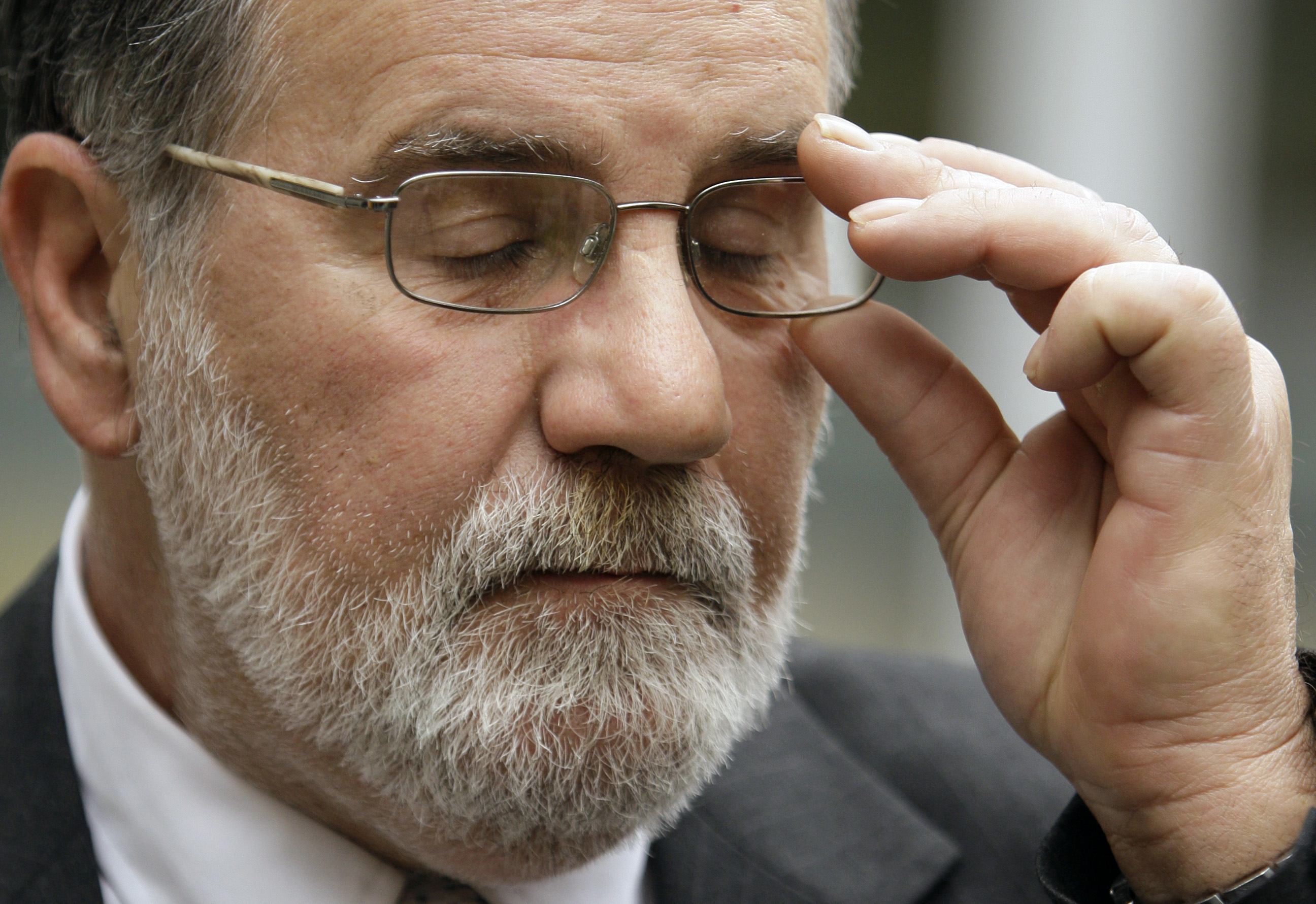
SEATTLE – Gordon Haberman’s grim journey began seven years ago amid the ruins of the World Trade Center, where the heat of the fires was such that it melted the soles of his shoes and they stuck to the ground.
“I put my arm around my wife and I said, ‘I’m going to find out why they did this,’ ” he recalls.
Since then the former restaurant owner has traveled thousands of miles, in dozens of trips, trying to understand the terrorist mentality responsible for his daughter Andrea’s death on the 92nd floor of the north tower. Andrea was 25, engaged to be married, on her first business trip.
Haberman has flown to meetings of the 9/11 Commission in Washington, D.C., and traveled to Virginia to see a jury sentence Zacarias Moussaoui, the so-called “20th hijacker,” to life in prison. He has driven through the night from his home in Farmington, Wis., to Minnesota, to see an FBI whistleblower announce a run for Congress.
The latest stop on his bleak itinerary was Seattle, where he came to see Ahmed Ressam sentenced Wednesday to 22 years for plotting to bomb Los Angeles International Airport on the eve of the new millennium. Haberman wrote Ressam a letter and presented it to U.S. District Judge John C. Coughenour, who made it part of the court record.
“I am here today because it is important for me to see you despite your not being directly involved with the events of Sept. 11, 2001,” he wrote. “It is important to me because you are representative of the organization with intentions which were the same as the animals who perpetrated the atrocity of 9/11.”
Haberman sat in the front row of the courtroom, dressed in a pinstriped suit, as First Assistant U.S. Attorney Mark Bartlett cited his letter in asking the judge for a life sentence.
“Think of all the Gordon Habermans this defendant wanted to create,” Bartlett said.
Coughenour did not budge from the 22-year sentence he issued to Ressam in 2005, a sentence that was vacated by an appeals court, prompting Wednesday’s hearing. The judge largely credited cooperation Ressam provided after his conviction in 2001.
Haberman was dismayed. He slipped out of the courthouse and paced the streets downtown to collect his thoughts before returning to speak with reporters.
“I was just thinking, you know, this isn’t enough,” he said in a deep, gravelly, even voice. “It’s not right.”
He was careful to say he understood the judge’s rationale, but he couldn’t help but wonder: These terrorists don’t work alone. If Ressam had cooperated earlier, maybe some information he provided could have led to a contact of a contact of a contact that could have prevented the Sept. 11 attacks.
Have Haberman’s travels brought him any understanding or solace?
“Solace and closure are words I don’t even use,” he said. “For me, it’s been an attempt to understand.”