
CV tracking buses with Zonar
New system combines GPS, paperless inspections
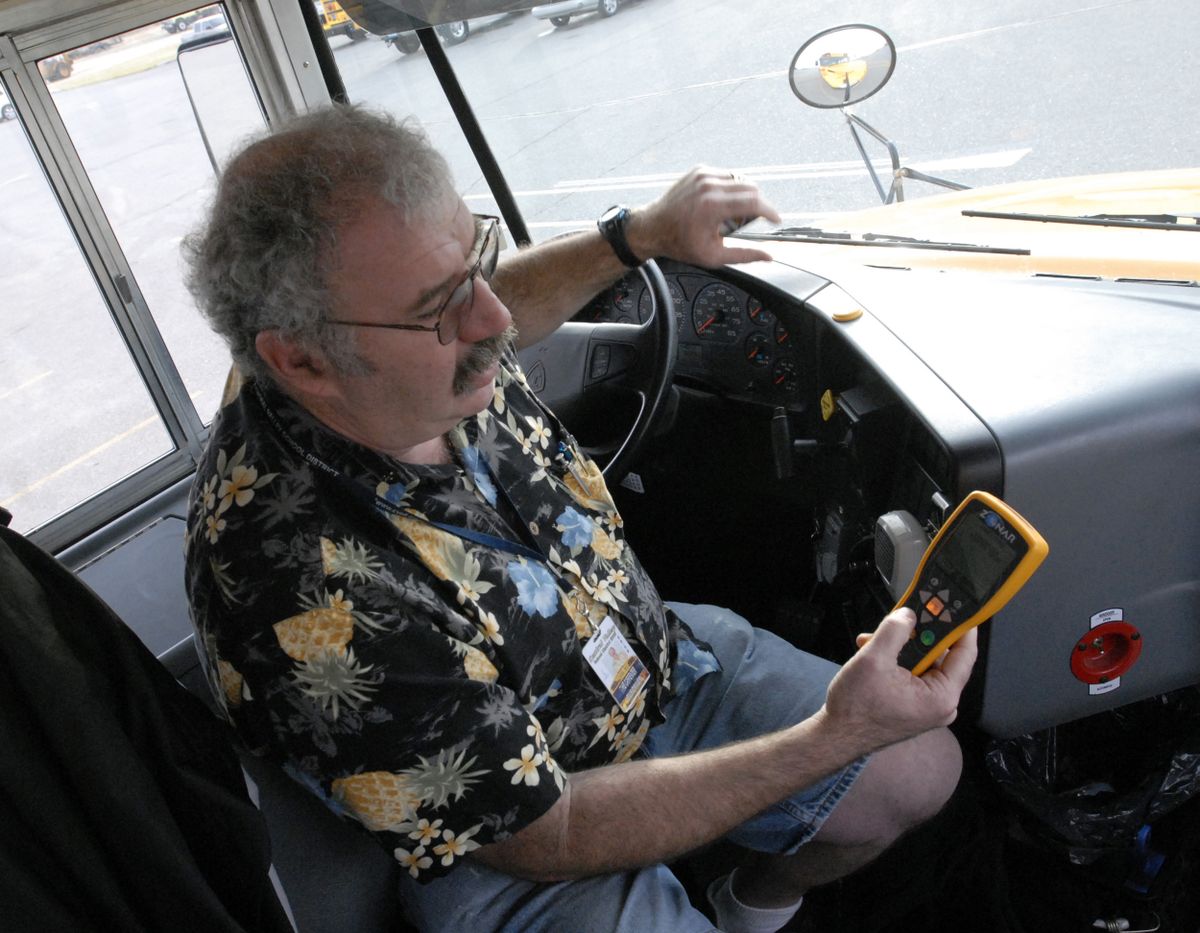
Santa Claus knows if local school bus drivers have been bad or good, and so does the Central Valley School District. Nearly the entire fleet of buses is being equipped with a system called Zonar, which combines a GPS system with a paperless bus inspection process.
The district began the year with the system on 24 buses, and is now working to expand it. The system logs where buses are at all times and how fast they are going. If a bus is parked, the system can tell if the engine is idling or not. The goal of the system was to make transportation more efficient.
So far most of the problems discovered by the system have been minor. One driver was caught letting his bus idle for two hours. “We had a bus that was taking the scenic route,” said transportation supervisor Gene Marsh. The route was redone to eliminate 10 minutes each way on a route that was being repeated several times a day.
So far, drivers spotted doing something wrong haven’t been disciplined. “We use it as an observation tool,” he said. “Unless we run into something that’s pretty blatant, I don’t want to start out using it as a disciplinary tool.”
The system can also be used to protect drivers against unfounded claims that they’re doing something wrong. “People call frequently to say the bus is speeding down the road,” Marsh said. “I can see exactly how fast it was going.” Zonar also logs exactly where buses stop, what time it stops and how long the bus stays there.
Bus drivers are required to do a pre-trip bus inspection and post-trip inspection each day. They have to check under the hood, see if the lights are working, inspect the brakes and more. Now the inspection can be done with a handheld electronic device stored in each bus. The drivers must physically touch the device on 12 separate buttons located inside and outside the bus to verify that a long list of items has been checked. Any problems can be noted and the report is sent directly to the district’s head mechanic. “We’re saving another tree or so,” Marsh said.
One of the buttons is in the back of the bus high up on the wall, requiring drivers to walk the length of the bus at the end of each day. “No more kids sleeping on the bus,” Marsh said.
Most drivers like the system, said Marsh, but it’s not a universal feeling. “There’s always going to be a few that don’t like it because Big Brother is watching.”
Bus driver Mike Carpenter said he likes the system. “Anything that saves a little bit of paperwork,” he said.
He doesn’t mind that his boss has access to a computer database that tracks his every move, but confesses that he pays a bit more attention to speed limit signs now. “Knowing that it’s on there, you become more conscious of the speed limit,” he said. He also likes that the system can prove to parents that he wasn’t speeding or didn’t forget to stop and pick up Junior on Tuesday last week. “It’s protection for me,” he said. “The only time they look something up is when a question comes up. If I’m not doing something wrong, it’ll protect me.”
The district now has Zonar on 35 buses and plans to install it in a total of 65, but the original funding set aside in the budget only had the 24 pilot buses in mind. The system costs $895 per bus to install and there’s a $22 per month fee per bus to maintain the records online. “We had some money in the bus fund to purchase new buses,” Marsh said. “I ordered one less bus to pay for this.”