
Panhandle Animal Shelter moves to new home
Refuge for lost, abandoned animals donated by White Rose Foundation
If every dog has its day, then Nov. 30 was a historic date for our four-legged friends in Bonner County.
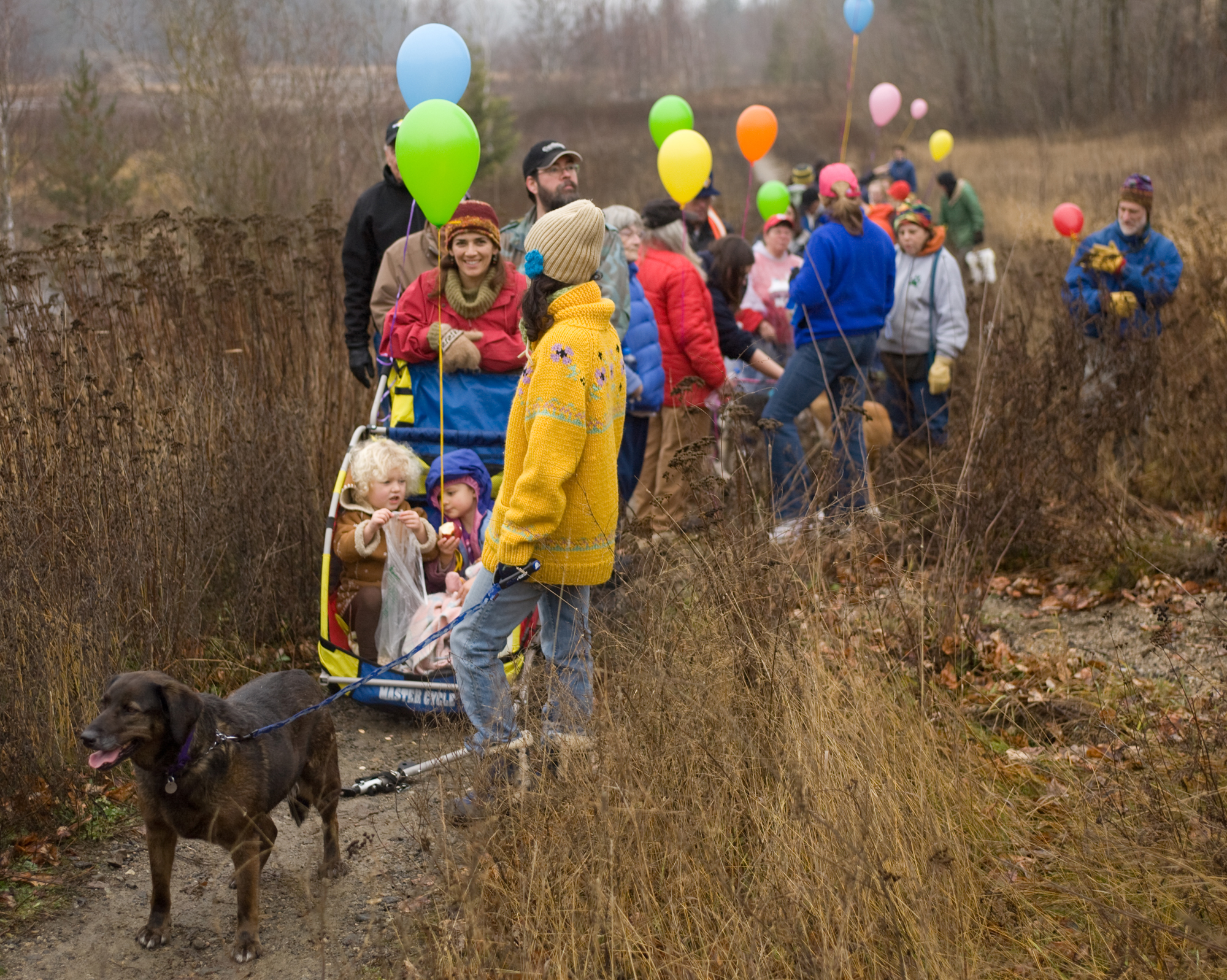
Under a gray and gloomy sky, roughly 300 rain-soaked volunteers gathered at the former address of the Panhandle Animal Shelter in Sandpoint, where 45 enthusiastic canines greeted them. The group – and their leashed companions – embarked on a 3-mile trek with police escorts to the new 27,000-square-foot home for lost, abandoned, neglected or abused animals throughout the county.
“It was phenomenal,” recalled Diana Dawson, a Panhandle Shelter board member and dog-walk attendee, adding that the day resulted in several animal adoptions. “Everyone arrived soggy, soggy but in good spirits. We had a blast.”
Located on Kootenai Cutoff Road in Ponderay, the sprawling, L-shaped facility, was donated by the Wild Rose Foundation, an organization created and run by the founder of Coldwater Creek. The only provision was that the shelter generate funding for operating costs.
It is a striking improvement from the 3,000-square-foot, dilapidated building the shelter and its many inhabitants used to call home. Featuring 100 kennels in eight separated dog wards, a puppy pen, six cat habitats, a state-of-the-art sanitation system and rooms for holding events such as pet training classes, the Panhandle Animal Shelter is better prepared to handle the roughly 1,300 animals it takes in every year.
Also in the building is the thrift shop, which is the animal shelter’s primary revenue source through sales of everything from discounted clothes and appliances, to books and furniture.
“The old building, it was absolutely overwhelmed and rundown,” said Panhandle Shelter president Kris Contor, adding that the old site had low public visibility since it was away from main thoroughfares. Built in 1988 and solely through community support, the original shelter was only meant to house about 25 dogs and 25 cats, which quickly filled up as Bonner County’s population grew through the years.
With the new facility, built adjacent to Wal-Mart and along a well-traveled road, Contor said, “This is an incredible gift. We’re on a prime retail corridor.”
The building, which sits on several acres and will eventually be neighbored by a new City Hall and a city park, is essentially a gift to the community by the Wild Rose Foundation, Dawson said. Construction began last spring and was wrapped up on budget just in time for the dog walk.
“They’ve been just an incredible contributor to our community,” Dawson said. “They made the commitment to build this when the economy was good, and we were worried for a little while, but they really followed through with it … All of our funds are totally self-generated or come from the community, so to have this donated is remarkable.”
In addition to the foundation, the support from the community, both in sales numbers and volunteer hours, has made a huge impact on the sanctuary’s ability to care for the animals.
For example, when the Thrift Shop opened in the early ’90s, it generated about $60,000 a year. Now, it generates upward of $200,000 annually, though that still falls short of the roughly $440,000 annual budget to operate the shelter and store, Contor added.
While the move into a spacious new home is evident on the faces of those who work at the shelter, Dawson said she’s seen a similar improvement in the attitudes of the building’s other inhabitants. “I noticed a difference the first day,” she said, referring to the dozens of cats and dogs currently in the facility. “They were so happy.”
A number of improvements went into the expanded shelter, which was designed by Spokane-based ALSC Architects and built by Spokane Valley company Lydig Construction. There are several sanitation hook-up stations throughout the building that a hose can be attached to and spray soap or sanitizers at the flip of a switch.
The building has isolation and intake wards for incoming animals, 24-hour “surrender cages” for animal drop-offs, expanded outdoor play areas, and a socialization room where prospective adopters are introduced to a potential pet before they take it home. That way it decreases the chance of someone taking in an animal that doesn’t work out in the long run, Dawson said.
“What was happening at the old shelter was people were dropping off their animals in the parking lot, or tying them up to the fence at night,” she explained.
About the improved sanitation systems, grooming rooms and laundry services, Contor added, “We didn’t put a lot of money into the building; we kind of put it into the systems that are going to help care for the animals.”
Regrettably, the amount of animal drop-offs has steadily increased over the past few months, with more animal owners unable to afford their pets, Dawson said. While the shelter adopts out roughly 800 animals each year and returns another 400 lost pets, the number of incoming animals has skyrocketed. “Unfortunately that’s increasing with the economy,” she said.
With construction complete on the building and the moving-in process well underway, the task of maintaining the facility falls on those with the Panhandle Animal Shelter, the president said, adding that they hope to raise an additional $100,000 above the shelter’s normal revenues. “(The Wild Rose Foundation) built us a new home and now it is up to us to take care of it,” Contor said.