
It’s satellites, scat in whale probe
Scientists studying decline trying new techniques
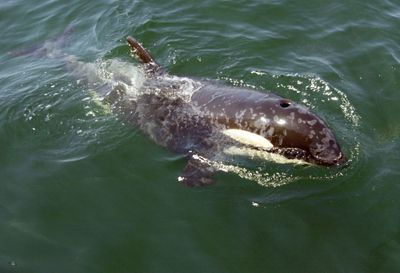
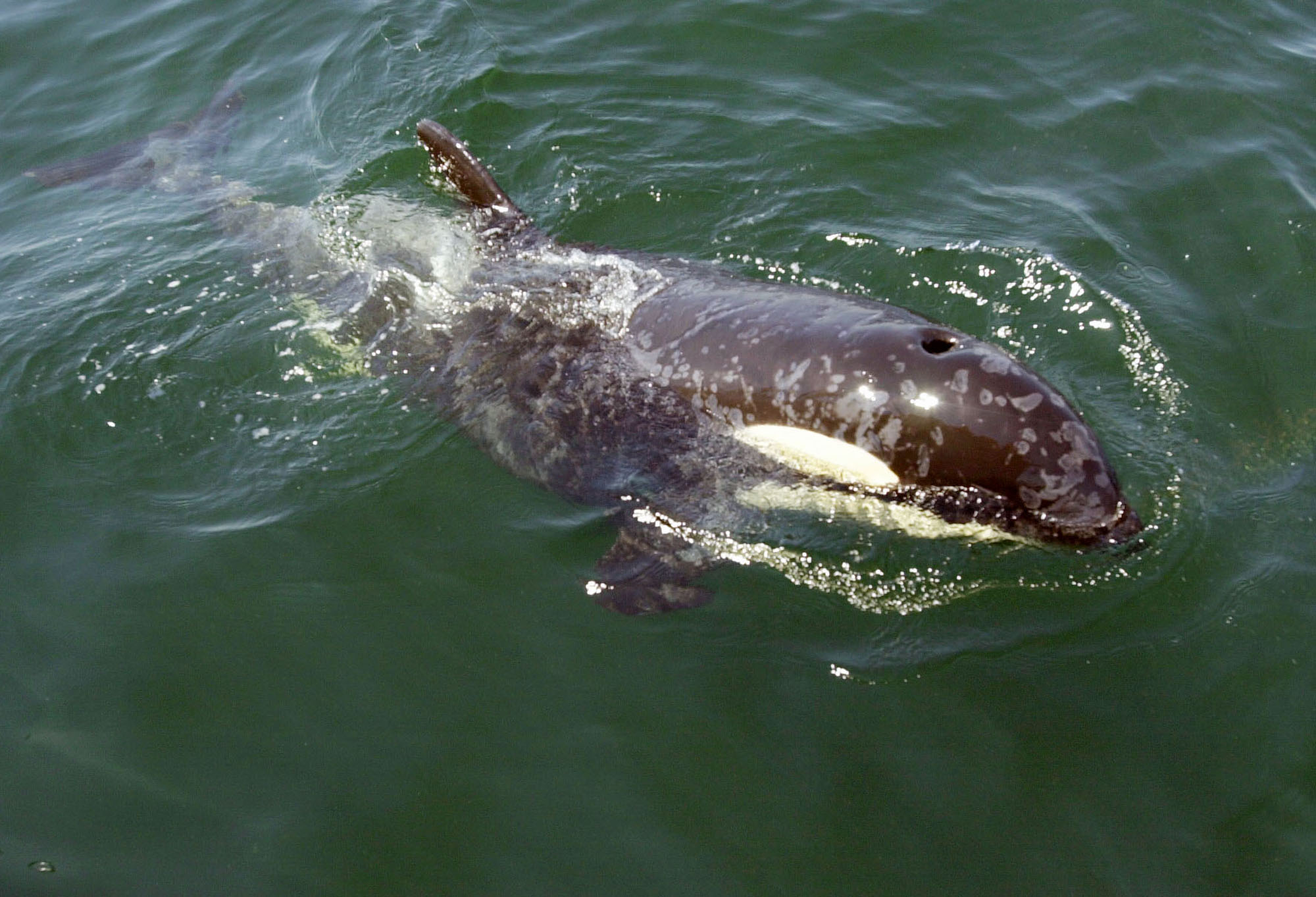
SEATTLE – When seven resident killer whales that frequent inland waters of Washington went missing this year, there was no shortage of suspects.
Are the orcas starving because of dwindling salmon runs? Is a toxic brew of oil, sewage and pollutants putting them at risk? Or is vessel noise disrupting their ability to find food?
“We’re losing animals and we don’t exactly understand why,” said Brad Hanson, a wildlife biologist with the National Oceanic and Atmospheric Administration Fisheries Service.
Scientists are turning to new techniques to solve the question of the endangered species’ decline, using satellite tracking and analyzing whale scat, breath samples and fish scales.
For the first time, the Center for Whale Research on San Juan Island will tag the southern resident population of killer whales to track their winter migration.
While the region’s signature whales have been studied for more than three decades, it’s a mystery where they go and what they eat when they leave the Puget Sound.
Starting next year, researchers will attach 2-inch satellite tags on the dorsal fins of the orcas – two from each of the J, K and L pods, or families.
Scientists wonder what risks the whales face in the open ocean and what other factors limit their population.
For the past seven years, the K and L pods have been showing up in central California, an indication they may be foraging farther for salmon.
“We’ve got to think bigger about the whole food issue,” said Joe Gaydos, a wildlife veterinarian and regional director of the SeaDoc Society.
What the whales eat when they leave Puget Sound has implications for salmon harvest in other areas like California and Alaska, he said.
University of Washington researchers analyzing whale scat have found signs that the mammals were “nutritionally stressed” this year.
Using a trained dog to sniff for poop and a 2-liter bottle on a telescoping pole, they’ve been collecting and analyzing stress hormones and toxins in the whales.
After three years of study, UW researchers have found a link between whale mortality and low levels of thyroid hormone, which partly controls metabolism. When whale deaths are up, thyroid levels are down, suggesting that the whales are starving.
The results are still preliminary and unpublished, but Sam Wasser, director of the UW Center for Conservation Biology, said they show a consistent nutritional problem.
When whales don’t eat much, they draw down their fat reserves, where toxins are stored, said Katherine Ayres, a graduate student doing work under Wasser. When that happens, toxins enter the circulation system and could cause health problems, she said.
It’s unclear whether the whales are strictly starving or whether they’re becoming more susceptible to disease, but it all goes back to food, she said.