
Choosing to cruise
When Don and Sandy Breckon of Parkville, Mo., were approaching their 40th anniversary a few years ago, a cruise seemed like a good way to celebrate.
So they gathered their four daughters and their husbands from various points around the country and set sail for the Bahamas.
The family liked it so much that the Breckons are going to do it again – this time with seven grandchildren, too.
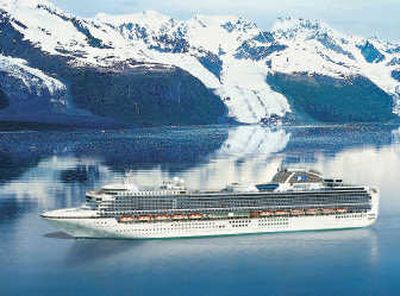
For their 50th anniversary in 2009, the Breckons and 15 family members are planning an Alaskan cruise.
“The great thing about cruise ships is that there are so many activities for all the different people that you don’t have to worry about keeping everybody busy all the time,” says Don Breckon.
Wherever cruise ships sail from, extended families are aboard, celebrating anniversaries, gathering for family reunions or just trying to get away and find a little time together.
Multigenerational gatherings have become an important part of the cruise industry, says Mark Comfort, owner of Cruise Holidays and Comfort Tours and Travel in Kansas City.
“Cruising has becoming a very strong option of choice because it has something for everybody,” Comfort says. “From potty-trained on up there’s something for them.
“The ships have been so wonderful about putting on children’s programs, where children can be entertained no matter their age, and Mom and Dad can have some relaxing time and Grandma and Grandpa can have a good time, too.”
“Family reunions and the family cruise market in general is the fastest-growing segment of our industry,” adds Vance Gulliksen, public relations manager for Carnival Cruise Lines, the world’s largest.
“This (past) year alone we’re expecting to carry 575,000 children under the age of 18 … that’s roughly six times what we carried a decade ago.”
Dean and Ginny Trenter of Kansas City have become firm believers in cruising as a way of getting their far-flung family together.
The Trenters have been on three cruises with the families of their adult children, who live in Charlotte, N.C., and St. Louis.
“You get on the ship and you absolutely relax,” says Dean Trenter, a retired accounting supervisor. “You want to get in the pool? Fine. You want to watch a movie? Fine.
“Everybody can do their own thing in the daytime, but whatever we do we always get cleaned up and meet for dinner. We have a big table and sit all 11 of us together.”
So just how do you get a family of 11 or 17 or 35 together?
“The first thing I tell people is that one person has to make the decisions,” says Susie VanderKamp, co-owner of the Cruise Connections travel agency in Kansas City. “One person has to decide when they’re going to go and where they’re going.
“You will never get everybody to go agree. So one person has to say, ‘This is when we’re going to go, and this is where we’re going to go. If you’d like to go along, here’s the price. Love to have you.’ “
The larger the group, the more conflicts there will be in vacation schedules, destination preferences and cruising styles.
As harsh as it might seem, VanderKamp says, “Never try to please everybody because it just doesn’t work. One person has to be the planner and that person cannot buckle.”
Of course, in some cases the person who’s paying for the cruise gets to make the decisions. So if Mom and Dad or Grandma and Grandpa are footing the bill for all or a large part of the cruise, they’re the deciders. End of discussion.
Once you’ve selected a decisive family spokesman, he or she can start winnowing the many choices in cruise lines, ships and destinations.
The first decision: when to go. Veteran travelers and cruise counselors advise that you begin planning nine months to two years ahead.
For one thing, planning far in advance increases the odds that everyone will be able to participate.
“You certainly have to let the kids know so they can protect their calendars,” says Breckon, who was about to embark on his 40th cruise and had already booked three more after that.
Early planning is essential for several other reasons:
“Better prices.
“If you’re planning to go during spring break, over the holidays or in the summer, those are the most popular times to go, and they tend to be expensive,” VanderKamp says.
“If you book them when they first come out or close to that, you’re going to get a better deal. … As the cruise fills up I’ve seen the price go way up.”
Alternatively, if the cruise line drops its price, the agency also will drop its price, she says.
“Getting the best rooms.
“If you want to get certain kinds of rooms, balconies or whatever, they tend to sell out first,” VanderKamp says.
“Some people want be in the middle of the ship. Some people want to be on the end of the ship. Booking early ensures you will be able to get what you want.”
For some families, it’s important to get rooms close to one another.
“We get three balcony cabins right together, one for each family,” says Dean Trenter, a veteran of 14 cruises.
“Making payments.
“The farther out you go, the more people are able to make payments on a monthly basis,” says travel agent Comfort. “That gives them an even better chance of going if finances are important.”
Every year brings new itineraries for cruise lines. Some ships sail to exotic destinations in the Pacific, like Tahiti, Vanuatu or Fiji. In fall, some lines ply the coast of New England to Canada.
Some cruisers prefer Mediterranean ports or European capitals.
“You can never go wrong with the Caribbean,” Comfort says. “That’s why it garners so much of the family reunion business.”
However, he adds, “When Grandma and Grandpa are making the decision and paying for it solely, Alaska is very definitely the destination of choice.
“Statistically the Caribbean is where a good 65 percent to 75 percent of multigenerational families go. Alaska is about 30 percent. The rest go to Europe or Hawaii.”
Another thing to consider is the cost of shore excursions.
“If you do someplace like Alaska or Europe, the shore excursions are going to get expensive,” says VanderKamp. “The Caribbean will be the cheapest place you’re going to get, unless you can do a 14-day cruise to Hawaii.”
But there’s plenty of fun to be had aboard ship as well.
“Traditionally, destinations have been the deciding factor,” says Harrison Liu, manager of brand communications for Royal Caribbean Cruises Ltd.
“But with these larger and larger ships with all these things to do,” he says, “the ship is becoming more of a destination than all of these geographical destinations.”
Royal Caribbean boasts the world’s largest cruise ships, Freedom and Liberty of the Seas, whose attractions include the FlowRider surfing pool, rock-climbing walls, inline skating tracks, ice skating rinks and basketball courts.
Some Princess ships have huge movie screens on pool decks. Norwegian Cruise Line’s Norwegian Pearl has a bowling alley.
“The thing you have to remember is the age of the people who are cruising with you,” VanderKamp says. “Do we need to have good children’s programs? Are the majority of the people seniors?
“Look at your demographics to see what’s going to work best. If you put people on a ship that’s mostly for seniors and you have a lot of kids, they’re going to be unhappy and their parents are going to be unhappy.”
Groups with children should ask about the variety and range of children’s programs. Royal Caribbean, for instance, offers activities for children in five age groups, Liu says.
“Kids from one age group to the next don’t necessarily want to hang out with each other,” he says.
Adults count, too. On the Carnival Fantasy and other Carnival ships in that class, the former children’s pool areas are being redesigned just for adults, with hot tubs, teak decks and drink service.
“It’s nice and relaxing,” Gulliksen says. “It’s a quiet area.”
One advantage of group cruising is that the more people who cruise, the cheaper it can be.
Although policies vary among cruise lines, the general rule is that for every 15 people who cruise together, the 16th person sails free, based on bookings of eight cabins or more.
“Holland America has come out with a program for family reunion groups,” Comfort says. “They will upgrade the family member of choice, which is usually Grandma or Grandma, with a cabin upgrade.”
On cabins that can accommodate three or four persons, the third and fourth passengers in the cabin also pay substantially lower fares.
Groups get other perks, too. A good travel agent can work with the cruise line to arrange special events just for the group.
“We can have wine sent to the room, or we can get chocolate-covered strawberries,” Comfort says.
“We think of things you don’t think of,” adds VanderKamp. “It makes a big difference. If people want to have a cocktail party, or a pastry party in the morning, we think of those things and make them work.”
Once the cruise starts, just remember: Don’t complain (at least out loud).
“It’s not good to complain because if one person does, there’s a domino effect,” VanderKamp says.
Besides, big family cruises, just like other family gatherings, are about making memories.
“One of the things the kids still talk about is snorkeling in the coral reefs,” says Don Breckon. “It was spectacular, and for some of them it was the first time. It was amazing.”
Ginny Trenter remembers the dinners.
“I just got a big kick out of our 12-year-old grandson, who eats anything and everything,” she says.
“He would order New York steak, duck, everything. Then our other little grandson would say, ‘I’ll have the same thing.’ “