
Mortgage giants stay afloat
Meanwhile, depositors pull funds from IndyMac Bank, and WaMu’s shares plunge

WASHINGTON – Now that the federal government has thrown a lifeline to mortgage giants Fannie Mae and Freddie Mac, taxpayers could be on the hook for billions more if the crisis of confidence spreads.
There were encouraging signs Monday for the rescue plan, but also signs of concern – notably on Wall Street, where shares of the two companies slumped further – that the plan won’t be enough.
Other banks are already teetering: National City Corp. shares fell nearly 15 percent on rumors of financial trouble, even though it said it was experiencing no unusual depositor or creditor activity. Washington Mutual Inc.’s shares fell 35 percent, to a paltry $3.23 amid worries about whether it had enough cash to handle the mortgage market downturn. WaMu said that it did.
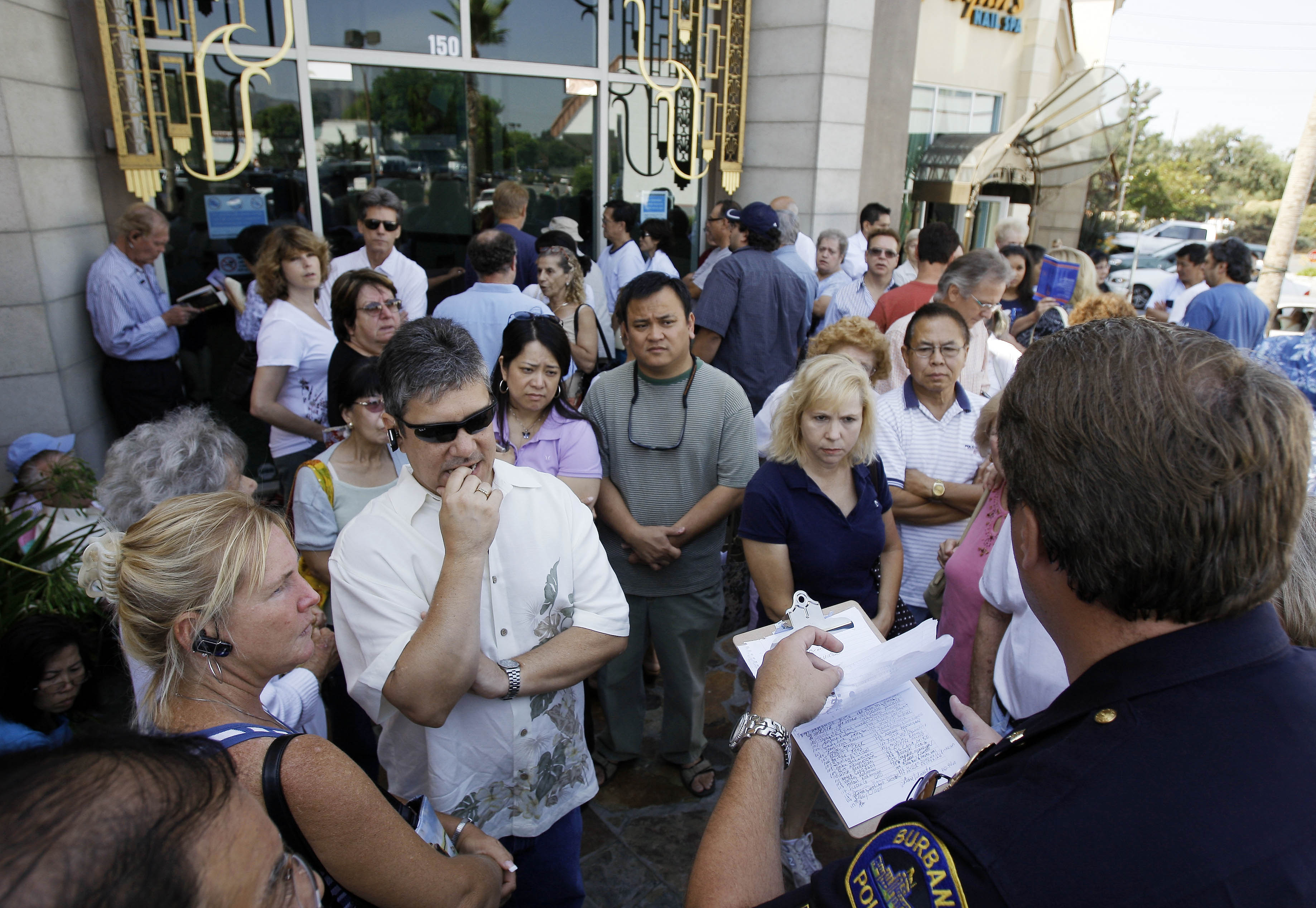
And worried customers lined up Monday to pull cash out of their accounts at IndyMac Bank, seized on Friday by the federal government in the second biggest bank failure in U.S. history.
Critics of the government response said they fear the Fannie-Freddie rescue effort will make more bailouts inevitable by sending a message that some institutions are too big to fail. The result could be more risky behavior, said Joshua Rosner, managing director of research firm Graham, Fisher & Co. in New York.
“It sends the wrong message to the world,” Rosner said.
Other analysts said the economic risks of doing nothing are just too great.
“If the government hadn’t moved and Fannie and Freddie failed, the cost to taxpayers and the overall economy would be enormous,” said Mark Zandi, chief economist at Moody’s Economy.com.
D.A. Davidson analyst Jeff Rulis said mortgage markets could freeze up if Fannie and Freddie were not in the market buying and reselling mortgage loans.
Banks forced to keep the mortgages would raise rates and limit availability, which would further depress housing prices.
“It’s only going to keep buyers out of the market,” Rulis said.
Northwest banks will begin to report quarterly earnings later this week, he said, which will give analysts a better idea of how severely mortgage problems are weighing on institutions other than WaMu. But, he noted, the region has not experienced the collapse in home values plaguing banks elsewhere, and the economy continues to do relatively well.
“This is not Detroit,” Rulis said.
Sung Won Sohn, an economics professor at The Smith School of Business at Cal State Channel Islands, said soaring oil costs, a weakening economy and an unstable housing market will only get worse.
“I don’t think these steps are enough to arrest the deterioration,” he said.
As long as more homeowners default on mortgages, losses to financial institutions will mount. Those losses already exceed $400 billion, and some analysts believe they will top $1 trillion before the housing carnage is over.
The Bush administration and the Federal Reserve announced an emergency rescue plan Sunday to bolster Fannie Mae and Freddie Mac, which hold or guarantee more than $5 trillion in mortgages – almost half of the nation’s total.
The plan would temporarily increase a long-standing Treasury line of credit that could be provided to either company. Treasury also said it would, if necessary, buy stock in the companies to make sure they have enough money to operate.
The Fed also announced it would allow Fannie and Freddie to get loans directly from the Fed – a privilege previously granted only to commercial banks until this March.
Fannie and Freddie stock rose early in the day but gave up the gains. Fannie closed down about 5 percent, at $9.73, and Freddie closed down about 8 percent, at $7.11.
The Federal Deposit Insurance Corp. estimated the IndyMac failure would cost between $4 billion and $8 billion out of the agency’s $53 billion insurance fund.
Analysts do not expect the volume of bank failures that happened from 1990 to 1992, when 834 of them folded. But the FDIC does plan to review whether to raise the fees it charges banks to beef up its insurance fund.