
Milfoil treatment planned
Liberty Lake will receive herbicide Wednesday
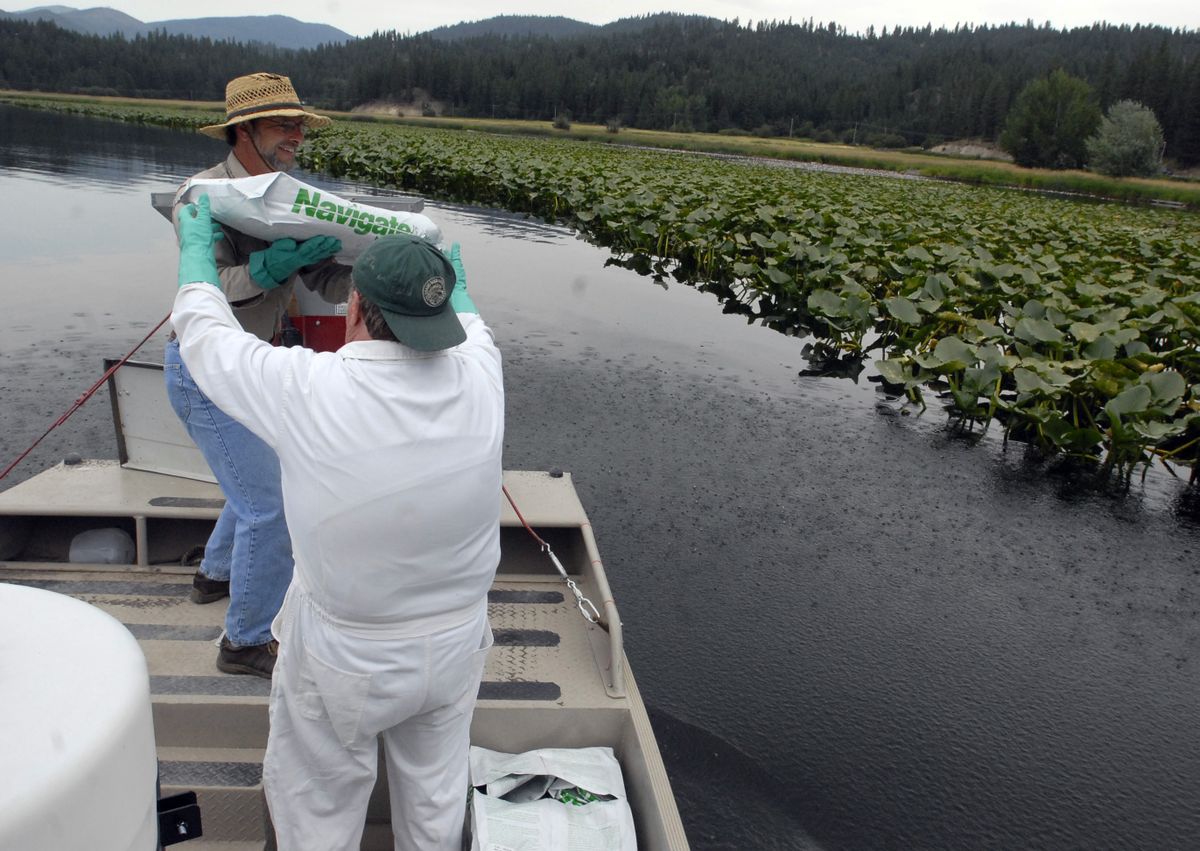
When the invasive Eurasian milfoil plant was found in Liberty Lake in 1995, it was initially controlled by a diver hand-plucking each plant from the ground.
Since then the hard-to-kill plant has spread along the eastern and southern shores of the lake, and herbicide must be put in the lake every year to keep the plant in check.
The lake will be treated again on Wednesday, said BiJay Adams, Liberty Lake Sewer and Water District lake protection manager. A total of 13 acres will be treated with a liquid version 2-4-D, a common herbicide often used to kill dandelions in lawns.
The plant first made its appearance in Dreamwood Bay on the southwest edge of the lake. Like most milfoil infestations, it probably began with a small sprig of the plant attached to a boat. The plant reproduces by fragmentation, allowing the smallest bit of plant to take root in lake shallows. The plant requires sunlight, so it prefers shallow or exceptionally clear water.
This year the district is using the liquid form of the herbicide, though it has used the granular version in the past. The liquid version requires a 24-hour swim advisory, while the granular form mandates a 24-hour swim ban. “We want to keep the lake open for swimming,” Adams said. “It disperses more rapidly than the granular.”
Spokane County has taken the opposite tack with Newman Lake, treating 60 acres last week with the granular form of 2-4-D. Environmental programs coordinator Jacob McCann said the county used the liquid form last year after hearing good things about it. “We tried it out last year on some pretty large areas with mixed results,” he said. “In small areas with little wind, it works well.”
McCann switched back to granular this year and is hoping for better results. “It costs a little bit more, but it seems like it’s been a bit more effective for us.”
Normally about 30 acres of lake are treated, but clear water this spring led to the discovery of more patches. The plant is mostly found along the shoreline, but there’s a large concentration in open water on the south end of the lake that was treated with herbicide twice this year. That area has been treated aggressively since it was discovered, McCann said. “It’s so far offshore, we didn’t notice it at first,” he said.
The plant was first discovered in Newman Lake in 2002 in the outlet gate area on the southeast side of the lake. The treated areas vary from year to year depending on the growth and spread of the plant. “It seems like it’s stayed about average,” he said. “We do notice that in some of the areas we’ve concentrated heavily on, it’s pretty much gone.”
Milfoil infestations are heavier in other local lakes and rivers. “Because we caught it early, we’ve never had large beds of it like in the Pend Oreille River,” Adams said.
Adams said the only body of water he knows of that is milfoil free is Hauser Lake. Boaters there are required to rinse their boats before putting them in the water.
Both McCann and Adams say they’d like to eliminate milfoil in area lakes, but admit it’s probably not possible. “It’s a goal of ours to eradicate milfoil, but it’s hard to eradicate it,” Adams said.
If left unchecked, Milfoil can completely choke a lake, forming dense mats that make swimming and boating impossible, and kill local plants and fish. “It’s definitely something you need to maintain and keep in check,” McCann said. “Maybe a more conservative estimate is that we’ll have it under control.”
Milfoil was originally an aquarium plant that has slowly spread across the country, carried by boat trailers and boat props. It can even be caught in fishing tackle and hitch a ride on migrating birds. The plant sheds its leaves in the fall just like trees, but each leaf has the potential to become a new plant.
But there are other things other than milfoil that make Adams shudder. “There are other plants and animals that are much more invasive,” he said, citing zebra mussels and Brazilian elodea, another water-choking plant.
Adams recommends that boat owners wash their boats thoroughly when moving their craft from lake to lake, both to reduce the spread of milfoil and keep other problem species at bay. “Milfoil is not our worst enemy.”