
Bus, train seats get scarce
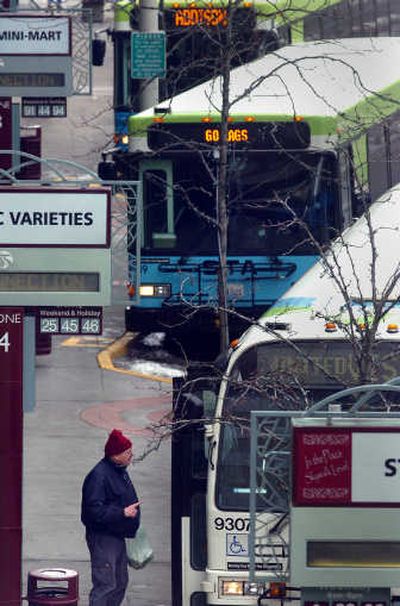

More people are riding the nation’s buses and trains, breaking records for the first quarter of the year. Transit operators expect the increase will be greater in the second quarter as gas prices soar.
A report released Monday by the American Public Transportation Association (APTA) shows the number of trips on public transit from January through March rose 3 percent to 2.6 billion rides compared with the same period last year. Travel on light rail systems saw the biggest jump: 10 percent to 110 million trips.
Early figures for April show ridership going even higher as gas hovers near $4 a gallon, says association president William Millar.
In 2007, Millar says, “we had higher numbers than we’ve seen in 50 years, and the trend is continuing in 2008.”
Still, only 5 percent of workers commute by public transit, according to a U.S. Census survey in 2006. Millar says no more than 20 percent of households have easy access to buses or trains.
Rising gas prices present an opportunity for the transit industry to beef up service, says Anastasia Loukaitou-Sideris, chairwoman of the Urban Planning Department at UCLA. She says cities have not done enough to provide a viable alternative for people to leave their cars at home – safe, reliable and convenient service.
“We’re starting to see it, but we have not seen the full effects yet,” she says. “In many places, they are not reaching capacity. But if gas prices keep rising, we’ll see it more and more.”
Transit managers say systems are underfunded.
The South Florida rail system, which runs from Miami to Fort Lauderdale and Palm Beach, had a 13 percent increase in riders during the first quarter. In April, travel jumped 28 percent, says Joe Giulietti, executive director of the South Florida Regional Transportation Authority.
Yet his agency faces an $18 million budget hole that may mean cutting train service by more than half, he says. The system is funded mainly through grants from the state and the three counties it serves, and he says Palm Beach County is considering reducing its funding.
“So at a time that ridership is at an all-time high and people are desperate to use mass transit, we are in a terrible spot,” he says.
The APTA ridership report covers 262 transit systems. It shows the biggest increase in rail travel in Oceanside, Calif., Seattle, and Harrisburg, Pa.
Gainesville, Ga., and Pompano Beach, Fla., saw some of the biggest gains in bus ridership.
“There are a number of factors. An obvious one is high gas prices,” says Linda Robson, spokeswoman for Seattle’s Sound Transit, which runs lines north and south of Seattle. “We’re still in a growth phase.”
She says the system has added trains.
“We’re hearing from riders that gas prices got them to consider riding the system,” she says. “But what keeps them coming back is service and convenience