
Smith ‘critical vote’ on climate
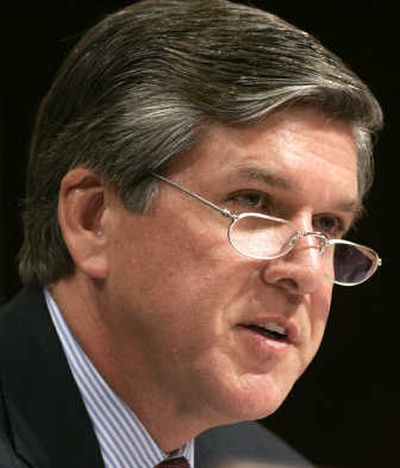
WASHINGTON – Oregon Sen. Gordon Smith is hearing from all sides as the Senate takes up a bill that would require dramatic cuts in climate-changing greenhouse emissions.
Smith, a Republican up for re-election this fall, is among a handful of senators who remain undecided on the most far-reaching environmental bill to come before Congress this year.
The so-called Climate Security Act would fundamentally change the way Americans buy and use energy, requiring a 70-percent cut over the next four decades in emissions of carbon dioxide from burning fossil fuels and other greenhouse gases. The bill targets power plants, refineries, factories and transportation.
Environmental groups, hunters, fishers, health professionals, business owners and religious leaders have sent Smith thousands of postcards, letters and e-mails supporting the bill, which they call crucial in the fight against global warming.
But many business groups, including the U.S. Chamber of Commerce, the American Farm Bureau and representatives of the oil and coal industries, criticize the measure as too costly. They, too, have targeted Smith as a potential vote to help block the bill, which they say could cost consumers hundreds of dollars a year in higher electric bills and more expensive gasoline.
“Sen. Smith is a critical vote,” said Doug Howell, regional executive director for the National Wildlife Federation, which has led a coalition of Northwest groups supporting the climate bill. “There are a number of undecideds (in the Senate) but Smith is on the short list of critical votes” to help reach a filibuster-proof 60-vote majority.
Smith joined three other Northwest lawmakers Monday in voting to continue debate on the bill, but he remains undecided on the overall legislation. Sens. Mike Crapo, R-Idaho, Maria Cantwell, D-Wash., and Patty Murray, D-Wash., also voted to move the bill to the floor but are undecided on the bill itself.
Sen. Larry Craig, R-Idaho, opposes the bill and voted against bringing it to the floor.
Sen. Ron Wyden, D-Ore., was absent Monday, and a spokesman declined to say how he would vote on the bill.
Still, Smith is attracting the most attention. The two-term senator has opposed past climate bills but faces a tough re-election fight in a state where global warming concern runs high.
“What is perplexing to us is there’s clear support for the bill in the state, and a clear economic reason to support this bill,” yet Smith is reluctant to embrace it, Howell said.
Gov. Ted Kulongoski, a Democrat, has made climate change a key issue, and previous Republican senators from Oregon “had long records of supporting good environmental issues,” Howell said. “All we are asking (Smith) is to follow in that strong Republican environmental tradition.”
Smith declined to be interviewed, but said through a spokeswoman that he was closely monitoring the climate change bill.
“Global climate change is a serious issue that requires a global response – both by government and the private sector to pursue clean, renewable energies,” Smith said in a statement. “It is also time for America to debate the merits of a new system to regulate carbon, but the real economic impact must be considered. This is a debate Congress must have, and I am engaging in it closely and thoughtfully.”
A spokeswoman for Crapo said her boss was still reviewing the climate bill.
Craig called the bill “a phenomenal micromanagement of the U.S. economy” that would cause “a catastrophic increase in energy costs” for businesses and consumers.
“It’s a lot of politics and very little conception of how we get to the need obviously of reducing greenhouse gas emissions in a way that will not impact the economy,” said Craig.
Spokeswoman Ciaran Clayton said Cantwell considers the bill important but has concerns about the hydropower provisions, which she said discriminate against hydropower providers that predominate in the Northwest.
Murray called the bill a step forward and said she is committed to passing climate change legislation that will bring about real, achievable reductions in greenhouse gases. “In the coming days, I will be working to ensure that Washington state is treated fairly and that this bill protects our state’s best interests so we can remain a leader in conservation,” Murray said in a statement.