
Commentary: Befuddled Belmont

After Big Brown finished last in the Belmont Stakes, almost everyone in the sport expected to hear that a physical problem had caused his dismal performance. Good horses don’t run so badly without a reason. Perhaps X-rays would reveal a hairline fracture. Perhaps blood tests would disclose an illness. Even if the tests didn’t reveal an ailment or injury, cynics expected that the Big Brown camp would invent one. When a horse is valued at $50 million or more, owners are usually eager to offer an excuse for a bad performance.
But four days after the ignominious end to Big Brown’s bid for the Triple Crown, neither trainer Rick Dutrow nor the colt’s veterinarians have offered any medical explanation for the debacle. If the horse was healthy, why did he run so poorly?
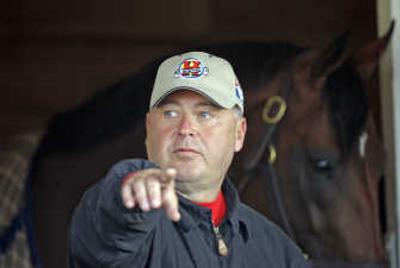
Dutrow blamed jockey Kent Desormeaux’s ride, and his criticism was well founded. Desormeaux’s tactics were absurd, considering the circumstances of the race.
Big Brown was the fastest colt in the field, by far. (Of his rivals, only the eventual winner Da’ Tara had taken the early lead in any of his races.) The Belmont racing strip favored speed – front-runners won the majority of Saturday’s dirt races. With Big Brown breaking from post position No. 1, it was imperative that Desormeaux hustle from the gate and take the early lead into the first turn. If he didn’t, he risked letting a rival get in front of him, slow down the pace and put him in a box. That, of course, is what happened. After failing to hustle early, Desormeaux had to put on the brakes as he found himself encircled. Big Brown was bumped as the jockey fought his way to get clear running room on the outside.
Though it violated every precept of Race Riding 101, Desormeaux’s strategy was understandable. Big Brown had won the Kentucky Derby and the Preakness by securing a position on the outside and stalking the leaders. (Dutrow preferred such tactics.) Moreover, Desormeaux carried some personal baggage into the Belmont. He had missed a bid for the Triple Crown in 1998 when Real Quiet lost by a nose, and for the last decade he has been hearing that he was to blame for moving too soon. Desormeaux was never going to risk criticism Saturday for going to the front too early.
If Big Brown had lost the Belmont by four or five lengths, I would have said that Desormeaux bore complete culpability for the defeat. But the colt didn’t lose by a measurable number of lengths. He was routed. He appeared lifeless, and this was not the doing of his jockey.
Journalists, horsemen, fans and the Big Brown camp itself have offered a variety of theories for the colt’s collapse, but many of the most popular ideas appear invalid.
“Big Brown had a much-publicized hoof problem before the Belmont, so many people assumed that the foot was responsible for his defeat. But even after Desormeaux pulled him up, Big Brown was walking normally, not favoring the troubled foot. An examination after the race disclosed no injury.
“Dutrow said before the Belmont that he had stopped giving Big Brown his normal monthly treatment of Winstrol, an anabolic steroid, and many commentators wondered if the horse needed his drugs to perform well. There is no certainty that Dutrow was telling the truth, but if he was, Winstrol was not the key to the colt’s loss. A top vet told me that taking a horse off steroids might have gradual effects, ones that a trainer would notice, but they would not account for a sudden and drastic reversal in a horse’s form.
“Owner Michael Iavarone offered the theory that the racing strip at Belmont might have been to blame, that it became too dry in the high heat and Big Brown didn’t like the surface. That’s the hoariest excuse in the big book of racing excuses, and it is hard to believe that the best 3-year-old in America couldn’t handle conditions with which most of the other 115 horses on the card were able to cope.
There is probably not a simple explanation for Big Brown’s loss, but part of it surely involves the hoof injury and the way Dutrow trained his colt before the Belmont.