
Keeping the flow
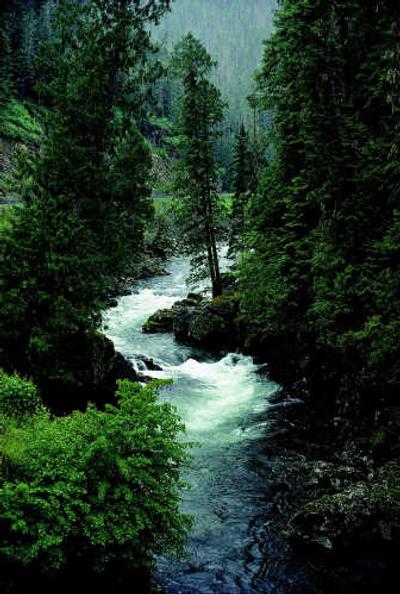
Local conservation groups, with the help of an Oregon-based photographer, are celebrating 40 years of The Wild and Scenic Rivers Act this week, and promoting work that’s still undone.
Tim Palmer, author of “Snake River: Window to the West,” “The Columbia,” and most recently, “Rivers of America,” will present a 200-photo slide show on wild rivers at two locations:
Monday, 7:30 p.m., Magic Lantern Theatre in Spokane.
Tuesday, 6:30 p.m., Meyer Health & Science Building, Room 106, at North Idaho College in Coeur d’Alene.
Cost is $5 to benefit Idaho Rivers United.
“I’ll start with my story, how I became involved with rivers, came to understand them and be passionate about protecting them,” Palmer said. “The program will focus on the Wild and Scenic Rivers System.”
The Wild and Scenic Rivers Act, championed by Sen. Frank Church and signed into law by President Lyndon Johnson in 1968, has protected the special characters and the quality of free-flowing waters in many of our nation’s most spectacular rivers.
So far the National Wild and Scenic Rivers System includes more than 11,000 miles of 165 rivers in 38 states and Puerto Rico – roughly ¼ of 1 percent of the rivers in the United States.
By comparison, more than 60,000 large and small dams across the country have modified at least 600,000 miles, or about 17 percent, of the country’s rivers.
Oregon has the highest number of designated wild and scenic rivers with 48. Alaska has the most mileage, with 3,210 miles of protected waters.
Overall the northwestern states of Alaska, Washington, Oregon, Montana and Idaho hold more than half of the rivers in the National Wild and Scenic Rivers System.
Portions of great rivers that played significant roles in our nation’s history are guaranteed preservation under the act. For example, the Missouri River explored by Lewis and Clark, the Tuolumne River loved by John Muir, and the Delaware, Sudbury, Assabet and Concord rivers, which cradled the American Revolution, are protected by the law.
Idaho has some of the country’s most celebrated wilderness rivers, including the Salmon, Snake and Selway.
In 2002, President Bush extended the National Wild and Scenic Rivers System to include three exotic rivers in the rain forests of Puerto Rico.
Various agencies manage the wild rivers. For example, the Grande Ronde in Oregon has 43.8 miles protected by the act, with 18.9 under the jurisdiction of the Forest Service and 24.9 managed by the U.S. Bureau of Land Management.
Generally, only certain stretches of a river might qualify for wild and scenic status. The St. Joe River in Idaho was named to the system in 1978, but only the 66.3 miles of river upstream from the confluence of the North Fork near Avery to the source at St. Joe Lake.
The first 39.7 miles of the St. Joe upstream from the North Fork are classified as “recreational,” which allows some development, such as campgrounds and boat access. The remaining 26.6 miles are designated “wild,” a strict classification allowing little new development other than trails along its shores.
Portions of more than 100 rivers continue to be explored for wild and scenic status.