
Arson at ‘green’ homes highlights split
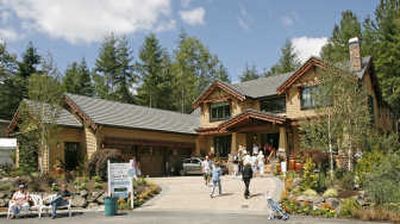
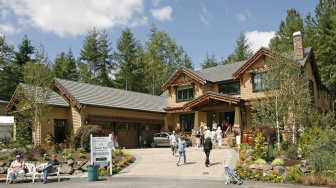
ECHO LAKE, Wash. – The carbon footprint of the big house on 214th Street is no longer a matter of chatty conjecture. Black ash defines the perimeter of the $2 million home, “built green” as a showcase in this emerald corner of America that has long set the pace for the environmental movement. Last week the home burned to the ground in an arson fire that threw new light on the competition to be greener-than-thou.
“Built green? Nope, BLACK!” read the spray-painted bedsheet firefighters found draped over a fence in the cul-de-sac where two other model homes were also burned, each 4,000 square feet and dubbed green.
“McMansions and RCDs r not green,” the sign said, referring to rural cluster subdivisions, the zoning that preserves open space while allowing more houses. The signature was also an acronym: “ELF,” recognized as the Earth Liberation Front, a shadowy group that aims to bring the absolutism of animal liberation extremists to the cause of the environment.
As investigators waited for the three homes in Snohomish County to cool, a jury downstate was convicting a 32-year-old violinist for serving as a lookout on the day in March 2001 that ELF burned down a horticulture research building at the University of Washington.
Yet no one seems quite sure the latest fire was the work of ELF. Many people in mostly rural Snohomish County are angered by the blitz of new construction moving north from Seattle.
The burned houses had stood unsold for months, having been built on spec by companies calculating on one more Puget Sound area millionaire with deep pockets and a “think-green” outlook to emerge from the thousands of people who trooped through the homes in an annual tour known as the Street of Dreams.
“I’m doing one now two blocks from Bill Gates’ home,” said Jim Jensen, referring to Gates’ lakeside estate that occupies 48,000 square feet and is billed as environmentally friendly. “I think it really all started with the Microsoft people,” Jensen said of the boom that is still lifting home prices 10 percent to 15 percent annually and has filled most of King County. “So we’ve made a living off those guys for a few years. And now they’re coming out here.”
With them come the usual debates over development, with every side claiming the mantle of green, as so much does these days.
It starts with the question of whether only small is beautiful. The five homes that made up the 2007 Street of Dreams were half the size of the mansions showcased in previous years. “And it was a conscious effort,” said Grey Lundberg – who built the Urban Lodge, the house that burned to its foundations – to showcase what the building industry calls “Built Green.” The label is awarded on a sliding scale, from three stars to five, according to the checklist published by the Master Builders Association. The list is long on recycled materials, energy efficiency and grace notes such as gaps between paving stones so water can be absorbed by the soil.
“I call it basically a scale of light green to dark green. It’s not an all-or-nothing thing,” said Aaron Adelstein, who studied environmental policy at the universities of Colorado and Montana and directs the Built Green program for the builders association. “To folks like me, what we’ve seen in the last few years is the best-case scenario: It’s environmentalism becoming mainstream,” he said. “It’s the Faustian bargain of soccer moms driving up in their SUVs to the supermarket with their cloth shopping bag and buying organic food.”
A similar notion of compromise shaped the subdivision where the houses stood. Quinn’s Crossing was plotted on planners’ maps as a “rural cluster development,” an approach that encourages developers to build more homes by snuggling them side by side, and leaving much of the parcel wild. Conservancy groups endorse the cluster approach. But in Snohomish County, resident groups complain that developers dominate a planning process that will bring suburban densities to areas where many people moved for the five-acre lots that clustering strives to avoid.
In a manifesto online, ELF declared: “We are practically invisible. We have no command structure, no spokespersons, no office.”
And, perhaps, no meaningful support.
“The only environmental extremists I know are in prison,” said Angela Smith, who runs a Seattle advocacy group that takes in earth, animals, teen rights and prison reform.
Lana Calton, 25, was sharing the vegan lunch buffet on University Avenue in Seattle.
ELF “might have some pretty good ideas,” she said, “but nobody’s ever going to take you seriously if you destroy stuff.”