
Main Shiite factions make Sadr City truce official
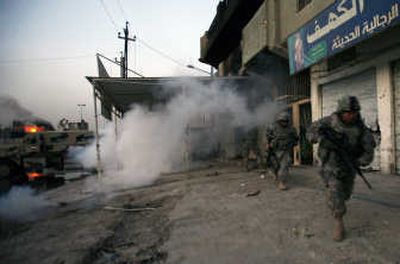
BAGHDAD, Iraq – Representatives of Iraq’s main Shiite Muslim factions signed a deal Monday clearing the way for Iraqi soldiers to operate throughout Sadr City, a vast Baghdad slum that is largely under the control of militiamen loyal to firebrand cleric Muqtada al-Sadr.
The signatures put an official seal to a truce that was brokered over the weekend by al-Sadr’s political representatives and members of Prime Minister Nouri al-Maliki’s governing alliance.
Negotiators said they hoped the deal would mark the close of more than seven weeks of fighting in the district, which has claimed hundreds of lives. But it remained to be seen whether all the groups that have taken up arms in Sadr City would adhere to the accord.
The U.S. military said its troops in the southeastern portion of the district had come under attack at least three times since the deal began to take effect on Sunday and had killed three gunmen. Iraqi soldiers had also traded sporadic fire with neighborhood fighters, residents said.
Some militiamen said they were waiting for orders from al-Sadr himself before setting aside their weapons. But al-Sadr’s chief negotiator, Sheik Salah Obeidi, said Monday the cleric had issued written instructions authorizing his representatives to sign the deal and urging his followers to uphold it.
The fighting erupted in late March when al-Maliki’s government began a crackdown in the southern oil hub of Basra aimed primarily at al-Sadr’s Mahdi Army militia.
The government said the operation was intended to restore order in the lawless city, which generates much of the country’s crucial oil revenue. But al-Sadr’s followers accused factions within al-Maliki’s alliance of using the crackdown to weaken the cleric’s movement ahead of provincial elections slated for the fall.
The fighting in Basra subsided in five days, but the crackdown sparked a fierce uprising in Sadr City and other Shiite neighborhoods in Baghdad that has dragged on for weeks.
The U.S. military says more than 1,000 rockets and mortar rounds have been fired in Baghdad since late March, most of them from Sadr City. The shelling has killed at least 28 people and injured 257, according to military figures.
In April, U.S. forces moved into the southern third of Sadr City, from which shells were being aimed at their bases and the Green Zone, the fortified enclave across the Tigris River that houses the U.S. Embassy and many government offices. The troops are sealing off the area with 3-mile-long concrete barrier that is about 80 percent complete.
Under the deal signed Monday, all sides will suspend military activity for four days beginning Sunday, after which Iraqi forces will have free rein to search Sadr City for weapons and fighters, provided they have a warrant.
In return, the governing parties have pledged to open more roads into the district, increase humanitarian assistance, compensate residents for their losses and help the thousands displaced to return home.