
Dog lover goes to the cats
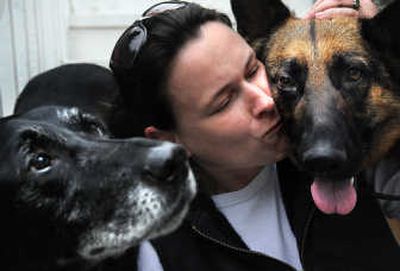
When Kat Biggs found a pregnant cat off Interstate 90’s Liberty Lake exit, she knew she’d have no trouble finding the feline and her kittens a home.
A volunteer with a German shepherd rescue group in Washington, Biggs says she has the connections needed to match stray animals with loving homes in no time. But the Newman Lake resident wanted to make sure the fat and friendly gray-and-white cat didn’t have an owner, so she dropped it off at the Harvard Gentle Care Animal Hospital.
She returned the next day to learn the cat had been taken to SpokAnimal C.A.R.E. the night before. SpokAnimal policy prohibits employees from revealing the fate of cats brought to the shelter, and Biggs fears the worst.
Spokane County, as well as Spokane and other cities, have repealed local ordinances that used to mandate a three-day holding period for unlicensed stray cats. That means cats like the one Biggs found have little chance of survival when they’re brought to the packed shelter.
Had she known that, “I would never have brought her in,” Biggs said. “I’m furious.”
Biggs’ story underscores what officials say is a general lack of community awareness about the feline overpopulation problem across the Inland Northwest.
“We’re all working together to get a handle on this, but we don’t have one right now,” said Gail Mackie, executive director of SpokAnimal.
In Kootenai County, cities don’t regulate cats and lack cat shelters.
There, stray cats have nowhere to go. The Kootenai Humane Society is a no-kill shelter and has a waiting list of about 75 people wanting to drop off cats.
“That list will grow to over 500 by the end of next month,” Executive Director Phil Morgan said. “It’s a huge problem.”
And with cat shelters in Spokane and Spokane County crawling with unclaimed cats, pregnant strays aren’t tops on the list of cats to save, officials say.
“We have problems with bringing more into the world when we’re euthanizing, in our community, thousands of others” Mackie said. “The sad fact is we are adopting less than 50 percent of the cats that come into our care.”
Biggs’ situation stemmed from miscommunication, said Darryl Clark, co-owner of the Harvard shelter. Employees didn’t relay the message to the woman who oversees animal care in Liberty Lake that Biggs had dibs on the cat, so the cat was sent to SpokAnimal.
“It just seemed like the case of ‘here’s another pregnant stray kitty cat, what do you do?’ ” said Bobbi Anderson. “With the info I had, I thought that was the best decision.” The cat hadn’t had its shots and didn’t seem well cared for. Anderson said she knew the chances of it being adopted were slim.
“It’s just kind of a fact of life with this job,” she said. “We have an amazing amount of feral cats.”
Biggs said she doesn’t want to point fingers and knows no one acted maliciously when deciding the fate of the pregnant stray. But she wants to make sure such miscommunication over what could happen to the cat doesn’t happen again. She’s worked with dozens of animal shelters across the region and had never heard of one not having a hold period for stray cats until she called SpokAnimal to inquire about the fate of the pregnant feline.
“Is the public aware that cats pretty much aren’t safe anywhere?” she said. “I just think the epidemic of the overpopulation of cats and the lack of places for them to go in this region is just terrible.”
Mackie said the lack of a hold period for stray cats was driven by the overpopulation epidemic and the need to bring policies in line with the county.
“It’s quite simply the numbers” she said. “We’re handling 5,000 cats a year and less than 300 of them are being reclaimed by the owner.”
Like most shelters, SpokAnimal’s goal is simple, Mackie said: find homes for stray animals, educate the public on solutions to the overpopulation problem and prevent more animals from coming to the shelter.
But the overpopulation epidemic complicates that already enormous task.
“Everybody tries to do their best, but sometimes the problem is so overwhelming,” Clark said.