Primary to decide District 3 contested races
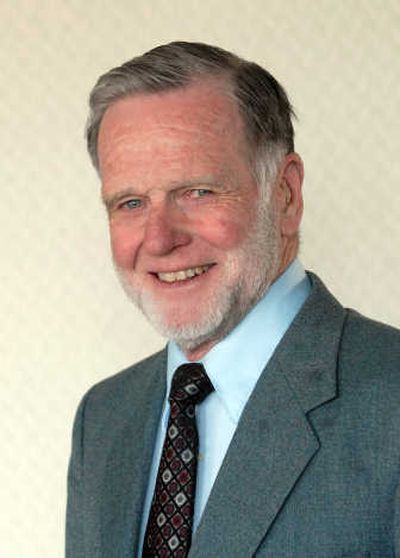
Idaho Legislative District 3’s two contested races will be decided in the Republican primary because no Democrats are running for office.
Republican James W. Clark faces no opposition in his re-election campaign for the District 3 state representative.
The district’s state Senate campaign pits incumbent Mike Jorgenson against political newcomer Jim Connell.
Representative Phil Hart is facing former Coeur d’Alene Schools Superintendent David Rawls in the election for the district’s State Representative, Position B.
Jim Connell
Jim Connell is making his first run at political office.
“I’ve been flunking retirement,” said Connell. “I like to make things happen and be engaged. I’ve missed responsibility,” he said.
He is married, has six children and seven grandchildren.
Connell comes from a military background. He served in the Air Force on B-52 bombers during the Cold War, and said that taught him about teamwork and shaped much of his outlook on the world.
“Had the Soviets attacked I would have been one of the first people there,” he said.
Connell said that the federal government has been intruding too much on states’ rights and that he would work to reverse that trend.
He said one area where states could do more is with illegal aliens, whom Connell refers to as “criminal” aliens. Connell said he would support legislation to penalize companies that employ illegal aliens.
Running for office has been challenging and fun, he said.
“The reality is when you’re a challenger you start at zero and the incumbent starts at 100. It’s up, up, up. However, the incumbent is losing ground,” Connell said.
Connell said if elected he would push for expansion of the state’s technical college offerings to better train people for the workforce.
He said the most important qualities for a state senator are the ability to think outside the box, to take responsibility, to work as a team and to negotiate.
Issues of importance to North Idaho, he said, include protecting the aquifer and Idaho’s interest in its water, education and transportation.
Mike Jorgenson
Mike Jorgenson said he got into politics to give back. In addition to his time in the state senate, he’s also served on the Hayden Lake City Council.
“I believed if you’re not part of the solution, you’re part of the problem,” he said.
Jorgenson is a Boise native who has also lived in New York and Salt Lake City. He has been in North Idaho for the past nine years. He graduated from Eastern Oregon University, is married and has two kids and three grandkids.
Jorgenson said his two terms in the Senate gives him a leg-up when it comes to accomplishing work to benefit North Idaho.
“In getting bills done, it’s not always the factual issues or the cause issues, it’s being able to sit down and work with other people,” he said.
Still, he added, “I’d rather lose an election than compromise a conviction.”
Jorgenson works as a litigation consultant, but said that he treats his Senate work as a full-time job all year long, and he enjoys it.
“I’m kind of like a kid on Christmas morning. I like the stimulation. I like the challenge. I like the variety,” he said.
He described this year’s legislative session as his most productive, saying that he sponsored or co-sponsored about 35 bills.
Of particular importance, he said, was a tax deed bill which prevents counties from profiting from the sale of properties seized to collect overdue taxes. Now any proceeds beyond the money owed to the county must go to the property owner.
Jorgenson said he is also proud of the scrutiny he has focused on the State Board of Education, which he believes will force it to become more responsible with taxpayers’ money.
Top on his list of issues for the next session are addressing illegal aliens in Idaho by penalizing businesses that employ them, tackling methamphetamine use, property tax reform, eliminating the grocery tax and addressing transportation issues.
“I’m a known commodity. I have a very well-established track record,” Jorgenson said. “I think I’ve lived up to what I said when I first ran. I’ve become more effective the longer I’ve been there.”
Phil Hart
“You need to clone yourself five times,” said Representative Phil Hart of the demands of being a state legislator and running his civil engineering business.
Hart has a bachelor’s degree in engineering and a master’s degree in finance. He has one daughter.
Hart authored legislation during this year’s session that will result in a state transportation performance audit. He pushed for the measure after learning that a similar audit in Washington cost $3.4 million but found $217 million in savings.
“We’ve had a lot of turmoil and change in the department,” Hart said. “We in the legislature just are not confident that the $492 million they are getting each year is being spent as wisely as it could be.”
Hart tried to push through legislation to make it easier for Idaho to buy highway project rights-of-way years in advance of funding to construct the roadways – to save money as property values rise – but was unsuccessful in 2008. He said he’ll continue to work on that next year if he is re-elected.
“I’m really concerned about constructing a bypass around Coeur d’Alene,” Hart said, adding that buying right of way for such a project now would save taxpayers money in the long run.
One way to fund such purchases would be to direct sales tax on automotive-related purchases to right of way preservation, he said. Transportation funding could also be enhanced by eliminating the sales tax on tires and charging a special excise tax directed to highways instead.
Hart describes himself as a “pro-life, pro-family and pro-Second Amendment” conservative and said that he grew up discussing politics around the dinner table.
He subscribes to the philosophy espoused by Thomas Jefferson that “The government that governs least governs best.”
As a case in point, he said that early attempts at government-run low-income housing failed. He would, however, like to shore-up state tax credits to developers who build low-income housing.
Hart said he also wants to penalize Idaho companies that hire illegal immigrants because the federal government hasn’t done a good job of keeping them out of the country. “I think it’s unrealistic for the states to do nothing about the problem,” he said, noting that Arizona laws on the issue have been successful.
As for why voters should reelect him, Hart said he has the experience: “I feel after four years I understand the process and can be more effective.”
David Rawls
Former Coeur d’Alene Schools Superintendent David Rawls said he’s running for the state legislature after being encouraged to do so by friends and acquaintances who said his experience managing budgets and employees made him a great candidate.
“When you’re working with the public’s dollars all the time, you never lose sight of the fact that it’s your responsibility to put those dollars to excellent work,” Rawls said. “We have a responsibility to get maximum benefit for them.”
“I would make this a job,” he said of serving as a state representative. “I have a good retirement, so I don’t need an income.”
Though Idaho has done a good job of tackling highway projects using GARVEE bonds, Rawls said more work needs to be done. “Safety should be our number one thought,” he said.
State legislators could have accomplished more on that issue this past session, he said.
Fees on vehicle-related licenses and registrations might be one way to raise more money for transportation projects. “The one who uses the road the most should pay the most,” Rawls said.
“I’ve been watching the votes – this session more than ever. If I were in office I would have voted differently,” Rawls said, adding that he doesn’t think his opponent Hart pays enough attention to education.
“I make no apologies for my background in that area,” Rawls said.
He would like the state to make a greater investment in professional and technical education which he said is critical to North Idaho’s economic vitality.
Rawls comes from a family of elected officials. His paternal grandfather served as a county clerk and his maternal grandfather was a sheriff. Rawls and his mother always talked about politics.
He is married and has two children and four grandchildren. He graduated from Washington State University with a bachelor’s degree and then taught for several years before getting his master’s degree from Seattle University and going into school administration.
While some politicians argue to keep government small, Rawls said that has to be balanced with the complexity of today’s society which requires some help from government to properly function.
People he’s talked to while campaigning are worried about their children learning to become financially independent, paying property taxes as the assessed values of their homes rise and whether impact fees are sufficient to make growth pay for itself.
“I intend to be a forward-thinking, accessible legislator who listens,” Rawls said. “I would like to act on the behalf of and advance the causes most important to the people here in North Idaho.”