
Brain tumor bears bleak prognosis for Kennedy
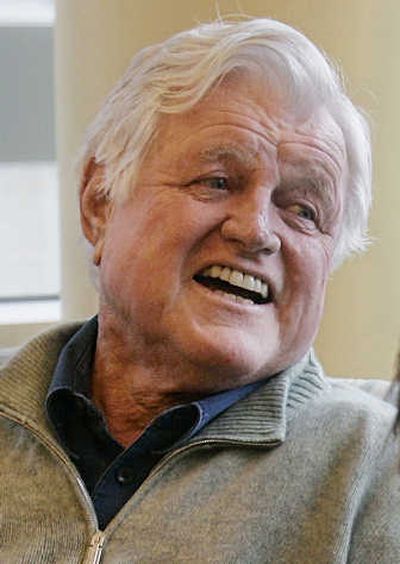
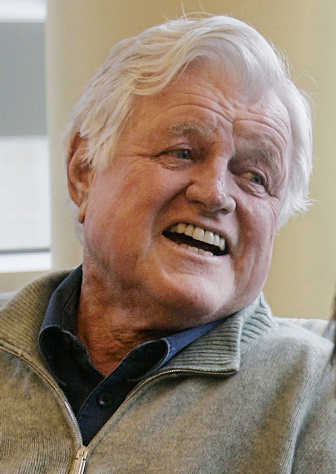
WASHINGTON – The kind of cancer that Sen. Edward Kennedy is fighting is a common, usually incurable form of brain tumor that is very difficult to treat, experts said Tuesday.
A biopsy of a portion of Kennedy’s brain identified a malignant glioma as the cause of the seizure that hospitalized him Saturday, according to a statement released Tuesday by Lee Schwamm, vice chairman of neurology at Boston’s Massachusetts General Hospital, and Larry Ronan, the 76-year-old senator’s primary-care physician.
A glioma is the most common type of brain tumor, accounting for more than half of the 20,000 or so diagnosed each year in the United States. The prognosis for patients is poor, according to the National Institutes of Health. Only about half of those diagnosed with a glioma survive one year, experts said. After two years, perhaps 25 percent are still alive.
“In general, it’s a very grim kind of prognosis,” said Robert Laureno, chief of neurology at Washington Hospital Center. “It’s a bad kind of tumor.”
News of the diagnosis swept through the Capitol on Tuesday as Republican and Democratic senators were attending their respective weekly policy lunches. Some senators later wept as they publicly considered the potential mortality of a man who was at the center of nearly a half century of some of the nation’s most important legislative issues.
Senators had been girding for major fights this week over Iraq war funding, domestic spending and veterans educational benefits ahead of the Memorial Day break, battles in which the Massachusetts Democrat would have taken center stage.
“He’s a strong guy and has great heart, and we’re confident he’s going to be back here,” Sen. Christopher Dodd, D-Conn., Kennedy’s closest friend in the Senate, said before his voice broke and tears welled in his eyes.
Sen. Robert Byrd, D-W.Va., 90, the chamber’s elder statesman and the longest-serving senator in history, wept on the Senate floor. “Ted, Ted, I love you, and I miss you,” he said through sobs.
The diagnosis was a stark turn of events after the weekend’s developments. Initial reports Saturday indicated that Kennedy might have suffered a stroke, but that news soon gave way to accounts of Kennedy joking with family, eating a seafood dinner and watching Boston Red Sox games.
Kennedy’s doctors said Tuesday that “he has had no further seizures, remains in good overall condition, and is up and walking around the hospital.” They said they will determine Kennedy’s course of treatment after further testing and analysis.
A key question is exactly which kind of malignant glioma Kennedy has – anaplastic astrocytoma or glioblastoma multiforme, said Lynne Taylor, of Virginia Mason Medical Center in Seattle. Patients with anaplastic astrocytoma have a somewhat better prognosis; they survive about three years on average, she said. Doctors will be able to determine what type of tumor Kennedy has by further analysis of a biopsy sample taken at the hospital.
In neither case are the tumors curable, Taylor said: “They always come back.”
Most malignant gliomas diagnosed in older people tend to be more aggressive and less treatable, experts said.
“Unfortunately the vast majority – about 70 percent of those cancers – in adults over 50 tend to be the much more malignant type that typically lead to death within 12 to 18 months,” said Harald Sontheimer, a neurobiologist at the University of Alabama at Birmingham.
The American Cancer Society puts the five-year survival rate for patients older than 45 at 16 percent for those with anaplastic astrocytomas and 2 percent or less for those with glioblastomas.
Depending on exactly where the tumor is and how big it is, surgeons sometimes try to remove as much as they can. But that is difficult, because the tumor usually has penetrated deep into the brain.
“It tends to infiltrate in all directions. Even when one chooses to operate on one, it’s usually impossible to take out,” Laureno said.
The left parietal lobe, where Kennedy’s tumor is located, is responsible for a host of crucial bodily functions, including some aspects of speech, as well as sensation and movement on the right side of the body.
“If the tumor is located in very essential parts of the brain, such as those that control speech and motor functions, then trying to perform surgery could leave the patient devastated,” said Vivek Deshmukh, director of cerebrovascular neurosurgery at George Washington University.
Regardless of whether patients undergo surgery, they typically receive radiation and chemotherapy to try to shrink the tumor and control its growth. A variety of regimens are used, including a common course that involves seven weeks of targeted radiation treatment combined with an oral drug called Temodar to sensitize the tumor to the therapy, Taylor said. That is followed by five days of the drug every month for as long as it appears to be effective.
If Kennedy were to become so ill that he is forced to vacate his Senate seat, Massachusetts would rely on a complicated law of succession. A special election would be held 145 to 160 days after the vacancy occurs.