
Seattle farmland is scarce
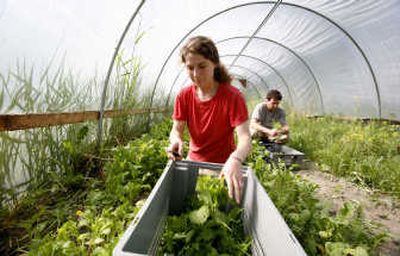
SEATTLE – Siri Erickson-Brown kept 27 chickens this spring in her Capitol Hill apartment, where the closet doubled as a grow operation for hundreds of tomato seedlings.
Two summers ago, she was one of dozens of interns apprenticing on local farms, learning to snip slugs, handpick lettuce, raise pigs, fertilize soil and chat up customers.
When she was done, she faced a daunting challenge: finding affordable farmland near Seattle.
Despite zoning laws and millions spent to protect King County farmland, those programs haven’t always achieved a key goal of keeping land in agricultural production.
Erickson-Brown got lucky. She found a partner near Carnation who already owned farmland and tractors but didn’t want to spend time selling at markets.
“It’s a good time to be a farmer in Puget Sound, but we really need a lot more to meet the demand,” said Erickson-Brown, 29, who farms roughly five acres as co-owner of Local Roots Farm in the Snoqualmie River Valley.
Now in its second season, rows of onion sprouts grow next to last year’s flowering kale. The tomatoes are taking off inside greenhouses, while chickens peck weeds and fertilize beds outside.
“There sure aren’t a lot of new farms like us showing up at the markets,” she said. “Without this special relationship with our landowner out here, there’s not a chance we could do it.”
A matchmaking program run by the Cascade Harvest Coalition has 300 people looking for land to farm. That’s six times more than the number of people in the database with acreage to rent or sell.
Although King County has established agricultural production districts covering 42,000 acres, only 2,200 of those are used to grow crops that feed people, according to a survey two years ago.
The rest of the land is wetlands, dairies, livestock crops, animal pastures, horse arenas, roads, houses, lawns, flower farms or nurseries. At least 5,000 acres that could be farmed aren’t.
Even on land where the county has bought development rights – which permanently protect and keep it available for farming – there’s little to prevent a landowner from building one estate home and essentially using the rest of the property as lawn.
“Basically, someone can put up a big house on a property and not disturb the soil and be in compliance,” said Kathy Creahan, who manages the county’s forestry, agriculture and incentive programs.
As a result, farmland throughout Western Washington has seen a steady surge in value, often selling now for tens of thousands an acre.
Opportunities for young people graduating with agricultural degrees today are boundless: restaurants looking to source locally; wineries starting edible gardens for cafes; organic processors who need employees.
Meanwhile, long-standing efforts to help farmers market their produce to urban consumers have been wildly successful.
“We’re sort of getting to the point where there is a gap … between the number of neighborhoods interested in having a farmers market and the number of farmers who can supply that demand,” said Chris Curtis, director of Seattle’s Neighborhood Farmers Market Alliance.
King County is already tweaking policies and programs to support more agriculture, loosening some restrictions on farming and debating whether to limit house sizes on agricultural land where development rights are bought.
In the fertile Snoqualmie Valley, a coalition of growers has been brainstorming about bigger ideas to encourage or even require land in their specially designated agricultural area to be farmed.
One possibility, some argue, would be to fairly compensate landowners to not only permanently restrict development on their property, but also attach a condition saying it should continue to be farmed, hopefully keeping land prices affordable for those who want to grow food.
“It would take a very self-conscious effort by those in power to make this land available for farming,” said Erick Haakenson, owner of Jubilee Farm outside Carnation. “The laissez faire approach to land-use that’s been practiced in this agricultural production district … is a guarantee to wipe out farming.”
Despite the challenges, people still find ways to launch new farms there.
Erickson-Brown, with a graduate degree in public administration, and her husband, an attorney turned farmhand, are bridging generations and lifestyles with their business.
They commute from a tiny Capitol Hill apartment, with no hope of buying or building a house anytime soon. Some nights they sleep in an 18-foot trailer, surrounded by a jumble of farm equipment, cooking meals on a propane grill.
As farming shifts in the Snoqualmie Valley – from large dairies and livestock forage to smaller vegetable or flower producers – divided land parcels may have no irrigation rights, no buildings, not even a single patch of high ground.
Only after devastating floods two years ago did King County loosen flood plain development rules to allow some farmers to construct or improve “critter pads,” artificial mounds that allow farmers to move livestock and equipment to dry ground during a flood, averting catastrophic losses.
The King County Council is now considering whether to allow sheds or nonresidential farm buildings in flood plains, as long as they wouldn’t increase water levels on other properties.
Matt Tregoning, 35, searched for more than two years to find a plot of land to start a farm with his wife, Deanna. They first started trading labor for free vegetables at Jubilee Farm and fell in love with the work.
But every piece of land they saw was far above their $300,000 price range. His job at a Seattle title insurance company gave him more advantages than most: access to real estate listings, lenders, Realtors and attorneys.
“I had all the tools to look through all the public records and was staying on it every day, and there was nothing,” Tregoning said. “I can’t imagine if you had only half of those resources what it would be like.”
They finally find found an 18-acre parcel with an old house. They unloaded their Issaquah condo and were the second family to use a new state program allowing beginning farmers and ranchers to qualify for low-interest loans and other benefits. They joked about calling their business “Three Mortgage Farm,” because of all the borrowing they had to do.
Now the Tregonings have onions in the ground and transplants ready to go. They plan to start selling at the Issaquah, Sammamish and Mercer Island farmers markets in July as Sol to Seed Farm.
“We were given this opportunity, and we know there are other people who wish they were in our shoes, so we don’t want to squander the chance and say we’re just going to farm a little,” Tregoning said.
“We really want to do this.”