
State scholarship paves way to college
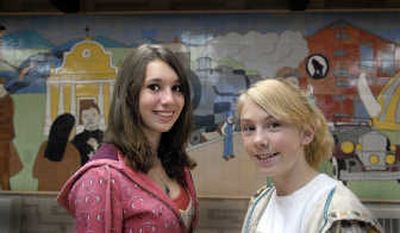

Aley and Sydney Roberts want to go to college.
The sisters, eighth- and seventh-graders, respectively, at Spokane’s Shaw Middle School, might not know what they will study four or five years from now, but thanks to the state Legislature they do know how they will pay for it.
Both girls are signed up for the Washington College Bound Scholarship program, available to this year’s seventh- and eighth-graders who qualify for free and reduced-price lunch.
The students agree to get good grades and stay out of trouble in high school, and, in return, the state agrees to pay for their college tuition, fees and books at the university of their choosing.
“It’s really a once-in-a-lifetime opportunity,” said Christine Lynch, the principal at Shaw, where more than 80 percent of students come from low-income families.
Tonight the state Higher Education Coordinating Board and Spokane Public Schools will host an event at Rogers High School for families of seventh- and eighth-graders throughout the Spokane area in an effort to sign up students for the scholarship.
About 56,000 middle school students statewide qualify for the scholarships, including more than 2,000 middle school students in Spokane.
The deadline, previously set for the end of this school year, has been extended to the end of the school year in 2009 for this year’s eighth-graders, officials said. Seventh-graders face the same deadline.
“We are encouraging families to sign up even if they don’t think they qualify,” because their family income could change before students are ready for college, said Terren Roloff, Spokane schools spokeswoman.
Family income must remain at 65 percent or less of the state’s median income when students graduate from high school for them to qualify for the scholarship.
So far, about 400 Spokane students have signed the pledge. Statewide, about 7,000 qualifying students have signed up.
While the Legislature has appropriated money only for current seventh- and eighth-graders, officials hope it will become available to all qualifying students.
“The college bound program is set up to be an added incentive to low-income students to start preparing for college early,” said Bob Burdick, Higher Education Coordinating Board spokesman. “This program provides hope and incentive for students and families who otherwise might not consider college as an option because of its cost.”
Most students who qualify for the scholarships would also qualify for a state needs grant for college, Burdick said. The College Bound program is intended to bridge the gap.
Burdick said an event similar to the one planned tonight in Spokane was held last weekend in Tacoma. It drew 700 people.
“I was wondering how in the heck I was ever going to afford to send my girls to college,” said Mary Del Pizzo, Aley and Sydney’s mother.
A college graduate herself who is pursuing a graduate degree in education, Del Pizzo has watched the cost of college balloon to more than $15,000 a year at some state universities.
“I just want them to have the same opportunities that I had,” Del Pizzo said. “But we are not made of money. We are barely able to keep the house around us and our bills paid.”