
Alpaca owners gather to shear
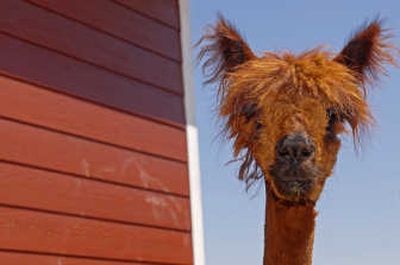
BOZEMAN – Standing over a squirming alpaca, Brian Denstedt sheared off its fleece while avoiding the animal’s kicks and sudden jerks.
“You’re right over the top of them, you’re right in their armpits, you’re right in their necks,” Denstedt said Friday after shearing 8 pounds of fleece off one alpaca. “I’ve got lots of war wounds. I’ve got lots of scars.”
Denstedt was in Bozeman recently, helping local alpaca owners shear the fleece off about 130 of the domesticated South American herd animals. About five alpaca owners from Southwest Montana gather every spring at Alpacas of Montana for the task.
The alpacas were brought into a barn, one at a time, and placed on their sides. All four legs of the animals were tied down, with their bodies stretched out.
The alpacas kicked and wriggled as they were being tied, but eventually settled down and the shearer began to cut. About 7 to 10 pounds of fleece comes off each alpaca, depending on its size. The fleece is then stored in plastic bags.
“They start getting really hot because their fleece is 5 to 6 inches long,” said James Budd, owner of Alpacas of Montana. “We need to shear them so they don’t overheat. The older ones wait in line. They’re ready to get it off.”
Alpaca fleece is used for yarn and clothing, such as hats, gloves and sweaters, Budd said. The fiber has a reputation for being strong, water resistant and soft. A sweater made of American alpaca fleece sells for $400 to $700.
Karen Swink, of Whitehall, started with five alpacas two years ago. After breeding the animals, she built a herd of 16 of the llama-like animals.
The money her family makes on the animals will pay for the college educations of her four sons. The boys help take care of the animals.
“They clean poop every single day, and they make an allowance on what they do,” Swink said. “I hope one of them will keep at it, so I can keep doing it.”
Denstedt shaves the animals’ legs, bellies and backs. He practices a style of shearing used in New Zealand.
He said it took five years to learn how to handle alpacas, another five years to learn the shearing style and it will take the rest of his life to refine it.
“It’s all about learning a traditional style of shearing,” Denstedt said.