
Dudes won’t do
Calving season. Pasture rotation. Haying season.
Every spare hand either mows, or bucks bales, or keeps the crew fed, or moves stock, or finds missing colts.
A day’s work for the cowboys of the Lazy E-L Ranch near Roscoe, Mont., a 90-minute drive south of Billings, begins at 5 a.m. with a pre-breakfast fenceline check.
On that four-wheeler ride, the cow-boss keeps an eye out for stray calves, scans the pre-dawn horizon for a glimpse of a 200-member wild elk herd, and listens for the resident wolf pack denned-up on a remote hillside of the 12,000-acre spread.
The cowboy’s day may end by 9 p.m. after doctoring a sick calf, rewiring a solar-powered electric fence and checking e-mail – all with the help of paying guests who want to cowboy for a summer’s week.
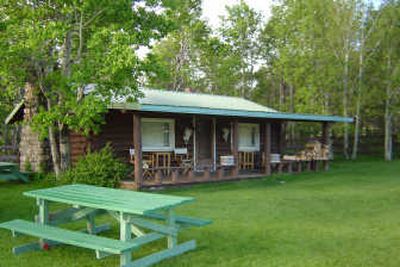
Visitors find real people working a real livestock operation in a spectacular setting. Guests stay in historic cabins, and the ranch provides horses, tack and meals.
There’s also hiking and flyfishing on East Rosebud Creek and numerous snow-fed streams that crease the ranch lands, which spread out under the rugged Beartooth Mountain Range.
While portions of a guest’s day at the Lazy E-L sound like a traditional vacation, such as a horseback ride through aspens, there’s no swimming pool – though anyone can take a dip in the stream, or the watering trough.
There’s no masseuse, no spa and no saloon, either.
“The Lazy E-L is not a dude ranch. We are a working guest ranch,” says Jael Kampfe, who with her family runs the historic ranch.
“A dude ranch is a ranch entirely dedicated to the dude experience,” she explains. “A working guest ranch still has its primary business, cattle, but takes in outside guests to be part of that working experience.
“For us, opening the ranch to guests is about sharing a way of life that’s disappearing. Ranching is a strong tradition and heritage that we are proud of. We enjoy sharing the last best place with people.”
Kampfe and her aunt, Julia Childs, bristle when they think of neighboring ranches: subdivided, wildlife fenced out and urban lifestyles fenced in.
“We hope to keep the ranch as it is,” Childs says of the Lazy E-L. “I like the emptiness here. … I love living in the wilderness.”
•
As the 21st century sidles up next to cowboys like a favorite dog covered in prickly burrs, the leather-booted, Stetson-topped crowd learns to deal with the affection the world has for a lifestyle both true and mythical.
It’s a world that attempts to redefine the cowboy with mechanical bulls, $1,000 custom alligator-skin cowboy boots, winsome art and romanticized duties.
In reality, as ranch guest Chuck Wolfe from Washington, D.C., discovered, working cowboys have little time for the faux image because they are rebuilding fences, rewiring stock trailer lights and wrestling fugitive calves.
“I was very much surprised at how much the ranch included us in all the ranch work,” said Wolfe, who has vacationed with his partner at the Lazy E-L for five summers.
“I’ve ridden in every pasture now, moved cows and even helped flush out a bull from a thicket. I had to be brave enough to let the horse guide us.”
The favorite ride for the saddle-savvy Wolfe was a pre-dawn trot to the farthest portion of the ranch.
“We rode to one of the old cabins on the West Rosebud River,” says Wolfe, who heads a political action committee in the capital. “We had to ride up and over a mountain range to the river.
“We got to the top just as the sun came up behind us. Perfect.”
“When I look at the pace of lives in the big cities, I see a real need to slow down, to connect with people,” says Kampfe, whose great-grandfather, Malcolm Mackay, bought the land in 1901.
“Most of our guests have some form of office job. They love the pace at the ranch and they love it that they can do something real, from something as lowly as mucking out a stall to something as lofty as moving 2,300 yearling Angus heifers. They get real results.”
Guests arrive on Sunday afternoon, stash their saddlebags (aka luggage) in one of the guesthouses and pull on riding boots, wide-brimmed hats and leather gloves.
A neighbor’s bull calf and his mama have ambled onto the Lazy E-L’s easternmost pasture. Guests are welcome to jump in the saddle and help corral the wayward stock.
The cowboys and guests aboard quarter horses spend an hour finding the strays, and another calf and heifer, in angular, boulder-strewn terrain. One pair needs doctoring, so the cowboys push the cattle into a remote corral to be loaded into a trailer headed for ranch headquarters, then to their respective herds.
•
Wandering strays are not new to the Lazy E-L, named for its assigned cattle brand: an “E” on its side – thus “Lazy” – and an “L.”
Mackay wrote in his memoirs that one time a “big, scrubby, short-horned bull had broken down wire fence and let himself into our grass.”
When he tried to send the bull back through the fence hole, his spur tangled with the bull’s tail.
“The bushy end of his tail was tangled in the rowel of my spur,” Mackay wrote. “We were going at terrific speed, and I saw myself being dragged off my horse and mangled to death.
“I swung my horse clear around in the opposite direction, shut my eyes and … two feet of the bull’s tail was hanging from my spur and I was saved.”
Later, the famed cowboy artist Charlie Russell, a friend of Mackay’s, penned a famous drawing from the tale, titled “The Odds Looked About Even.”
Evening up the odds today, says Kampfe, begins with reviving the lands through holistic resource management, and doesn’t end when the last cowboy – or cowgirl – tugs boots off for the night.
Pressure to sell large tracts of land, to allow extractive industries to dig into the soil, and to kowtow to Mother Nature all haunt the midnights.
“Land in the West is brittle,” she says. “The land needs animal impact to break the crust, to trample the seed casings to open and to fertilize the soil. We know how to tell when the land is recovered, and only then do we allow the herd onto that pasture.”
Montana’s grasslands and pastures host approximately 2.4 million head of cattle, considerably more than the state’s human population of 935,670.
Agriculture leads the state’s economy. Montana Department of Agriculture statistics show that agriculture generates $2 billion annually, led by beef and dairy cattle, wheat and barley, sheep, swine, hay, honey, mint, potatoes, corn, cherries and sugar beets grown or raised on Montana’s 56.5 million acres of farmland.
The Treasure State’s cultivated terrain ranks second in the nation and comprises more than 90 percent of the private land in the state.
Earliest ranchers found seemingly endless grasslands when homesteaders began arriving in what would become central and eastern Montana in the 1870s.
By 1910, some 14 million farm workers nationwide helped feed America; however, a century later, the number of U.S. farm workers declined to about 3 million, according to the USDA’s National Agriculture Statistics Service.
Similar downward statistics define Montana’s agriculture worker profile. Motorized farming equipment, rural electrical service and contemporary transportation modernized ranching and farming and put more than a few wranglers out of business.
Then again, when it comes to moving a herd of 2,300 yearling Black Angus heifers, the Lazy E-L enlists two dozen riders and horses.
•
Inside the 1920s log cookhouse, Kampfe’s spur-heeled boot scraps the fir floor and the crowd silences as she explains the day’s activity: moving 2,300 yearling heifers.
From silver spurs to Wranglers, and an ironed and starched, striped, fitted, Western-yoked blouse, the trained professional dancer’s demeanor shouts “cowgirl.”
But it was Kampfe’s Yale University education, business acumen and ranch savvy that landed her the job as the Lazy E-L’s CEO. The board of directors includes her mother, Helen Mackay, and aunt Julia, as well as other family members who live at least one airline connection away.
Family members who reside on the ranch help out for the summer, but have their own jobs.
Kampfe’s husband, Gerald, brokers loans for Native American-owned businesses. A decade ago, she started a foundation to provide seed capital for Indians on reservations to start business ventures.
Brother Derek markets organically raised beef through his Montana Legend Natural Angus Beef. Another brother, Aaron, runs an adventure-tour company.
The extended relations, a total of 38 owners, return to the ranch each summer from afar.
Back in the cookhouse, in a flash of “champion rider” belt buckles and silk neckerchiefs, the two dozen cowboys, cowgirls and guests thank the cook and step outside.
They tighten cinches, checks saddlebags for rain slickers and mount steeds. Not a cloud clogs the sky, yet the wranglers know that a June hailstorm can blow up over the Beartooth Mountains faster than a wily colt can unload a greenhorn.
During the hour ride to the basin, a cowboy explains to another rider that pasture rotation, a sustainable ranching practice, is paying off.
“We plan ahead,” he says, shoving his black felt cowboy hat down to the eyebrows.
They ride with the sun on their backs, through boot-top green grass that bonds a good winter of moisture to strong southwest Montana sunshine for a promising summer of grazing.
“During the grazing plan meeting with the board of directors, we weighed in how to handle two herds: cow/calf pairs and yearlings,” the cowboy says, adding: “Well, the bulls, too. And the herd of horses.
“We plan ahead, through late fall when we need the cattle close to the ranch headquarters so we don’t have to bring them in during a snowstorm.”
•
The convoy of saddled horses, riders and dogs trots from ranch headquarters at 6,000 feet elevation through timothy, alfalfa and Idaho fescue grasses, past shimmering aspen groves and stocky cottonwoods.
The basin pasture’s verdant bowl spills out before the riders. Cowboy kids like Kampfe’s 12-year-old son, Luke, know better than to give in to the urge to gallop across the meadow of sweet grasses and startle the herd.
Wildflowers, Indian paintbrush and heart-leafed arnica dot the wasabi-green meadow like red and yellow exclamation marks.
Helen Mackay strikes an impressive figure aboard her leggy quarter horse colt. She sits in perfect equestrian erectness, wearing a cherry wood brown custom-made hat, handmade by a Billings hatter, Rand.
Her Western-yoked, sapphire-blue blouse competes with the sky for brilliance atop blue jeans, leather chaps and polished cowboy boots. Her lipstick matches her red silk bandanna that’s knotted at the neckline.
She could be headed for an evening of two-stepping with her husband, Duane Estelle, in Red Lodge, a 30-minute drive. Instead, she shakes out her 12-foot bullwhip.
A couple of whip cracks, and Mackay has the full attention of riders, horses, even the dogs. Without a word, the riders spread out like a human-and-horse-braided lariat to encircle the heifers.
Ebony-black and burnt-brown yearlings dapple the 290-acre pasture, one of the Lazy E-L’s two dozen pastures that are separated by fence, but more importantly by varying moisture levels from winter snowpack, spring rain and animal impact.
Riders aim to scour the meadow of the cattle. Cattle aim to stay put.
Then one heifer breaks into a trot and 200 heifers follow suit. They expect treats: 50-pound bags of mineral supplement, delivered by the ton and dumped into feed barrels twice a week. The animals hunger for the salty, grainy mineral compound.
Once a few black bodies begin jogging south, following a cowboy and horse, nearly the entire herd focuses and instigates a migration toward the intended pasture.
Yearling heifers remain curious and not fearful of the riders. Herd instinct works on this particular sunny morning – almost.
A boggy stream guts the pasture. Yearlings splash across, but a few turncoats shy away and dash for the northern timber.
Cowboys who had been riding in groups of three suddenly splinter: one continues with the herd’s southern slog; another chases the heifer; and another cuts north at a gallop to head off the escape.
Then another group of a dozen heifers balks, and another trio of riders spurs to action. Forty minutes of muddy splashing, coaxing and cajoling later, the last of the yearlings have joined the undulating mass of black backs.
Suddenly, like carbon-colored water pouring from a green pitcher, the entire herd swarms through the gate and into the next basin pasture – just in time.
A storm blows up and surges over the peaks to the west. Winds whip ponytails. Cowboys cram hats lower on brows and pull out rain slickers from saddlebags.
The herd will remain in the pasture for two weeks, until the next pasture rotation move. Gates are latched and saddle cinches secured for the hour-long lope back.
•
Riders and horses arrive at ranch headquarters having outrun the rain. But the day’s duties are only partly complete. Lunch and a nap precede the afternoon’s chores.
As Childs unwinds her scarf, she recalls her 1940s childhood on the ranch as growing up in paradise.
“There were cowboys of the English tradition,” she says. “Then buckaroos came in. Buckaroos of the Spanish tradition are all about the gear, the spurs and the artistry in the silverwork and leatherwork. Their dress was craftsmanship itself.
“We always had cowboys employed here. They move often, although we’ve had them stay on 15 or 25 years sometimes.”
Neighbor Mike Lorash, who trains horses and helped move the herd, adds that buckaroo cowboys “are still the boy. They haven’t found the knowledge, wisdom to become horsemen. …
“Actually it was Hollywood that showed the world that wearing cowboy boots and spurs made someone a cowboy. But it takes a man to have the wisdom to move cattle slowly, without stress, so they remain healthy.”
Childs concurs, saying something under her breath about horsewomen knowing all along about low-stress cattle ranching.
In a paddock near the cookhouse, some of the wayward cows and calves from the East Rosebud pasture have settled in. Luke Kampfe ropes the smaller calf. Guests try to toss a lariat, which he makes look easy.
As Jael Kampfe heads into her sixth summer running the ranch, she again looks forward to the guests’ visits and their refreshed ideals.
“People don’t know where their food comes from,” she says. “They’ll follow the cook out to the garden to pick lettuce for the dinner salad, or to the chicken coop, eggs for breakfast.
“We help the guests reconnect to what’s real.”