
Ex-aide says Bush misled country
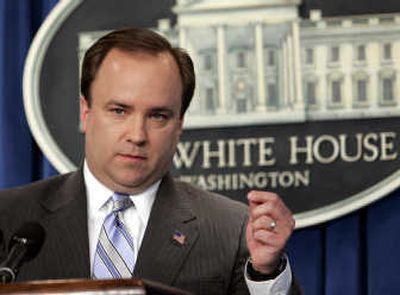
WASHINGTON – Former White House press secretary Scott McClellan writes in a new memoir that the Iraq war was sold to the American people with a sophisticated “political propaganda campaign” led by President Bush and aimed at “manipulating sources of public opinion” and “downplaying the major reason for going to war.”
McClellan includes the charges in a 341-page book, “What Happened: Inside the Bush White House and Washington’s Culture of Deception,” that delivers a harsh look at the White House and the man he served for close to a decade. He describes Bush as demonstrating a “lack of inquisitiveness,” says the White House operated in “permanent campaign” mode, and admits to having been deceived by some in the president’s inner circle about the leak of a CIA operative’s name.
The book, coming from a man who was a tight-lipped defender of administration aides and policy, is certain to give fuel to critics of the administration, and McClellan has harsh words for many of his former colleagues. He accuses former White House adviser Karl Rove of misleading him about his role in the CIA case. He describes Secretary of State Condoleezza Rice as being deft at deflecting blame and calls Vice President Dick Cheney “the magic man” who steered policy behind the scenes while leaving no fingerprints.
McClellan stops short of saying Bush lied about his reasons for invading Iraq, writing that he and his subordinates were not “employing out-and-out deception” to make their case for war in 2002.
But in a chapter titled “Selling the War,” he alleges that the administration repeatedly shaded the truth and that Bush “managed the crisis in a way that almost guaranteed that the use of force would become the only feasible option.”
“Over that summer of 2002,” he writes, “top Bush aides had outlined a strategy for carefully orchestrating the coming campaign to aggressively sell the war. … In the permanent campaign era, it was all about manipulating sources of public opinion to the president’s advantage.”
McClellan resigned April 19, 2006, after nearly three years as Bush’s press secretary.
A White House spokeswoman declined to comment on the book.
The criticisms of Bush in the book are striking, given that they come from a man who followed Bush to Washington from Texas.
Bush is depicted as an out-of-touch leader, operating in a political bubble who stubbornly refused to admit mistakes. McClellan defends the president’s intellect – “Bush is plenty smart enough to be president,” he writes – but casts him as unwilling or unable to be reflective about his job.
In another section, he described Bush as able to convince himself of his own spin and relates a phone call he overheard Bush having during the 2000 campaign, in which he said he could not remember whether he had used cocaine. “I remember thinking to myself, how can that be?” McClellan writes.