
Group helps those who’ve lost family members to violence
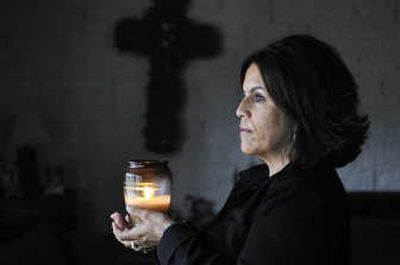
Lisa Morgan had spent more than two years grieving her younger brother’s death, and the AmeriCorps Vista volunteer was beginning to worry whether that was normal.
Complicating the healing process was the fact that her brother, Richard “Ricky” Morgan, didn’t die naturally. The 39-year-old was left for dead on a Spokane street in 2005 after being brutally beaten while trying to help someone.
“I had told myself that I was coping,” Lisa Morgan said recently at her Spokane Valley home. “I could function and do what I needed to, but when I had down time, I would fall apart.”
Morgan was looking for a group to join when she found Victims of Homicide or Other Violent Deaths. The therapy group, offered through Lutheran Community Services, is structured for those who have lost loved ones through traumatic circumstances, such as murder, and can’t seem to move beyond a certain point of grieving. Morgan and the other participants who completed the 10-week program recently had a reunion with facilitators Dan Fox and Mike Wilson last week to talk about how far they had already come.
The “homicide group sessions were amazing,” Morgan said. “Dan really delved into the deepness of the pain and did it with such compassion that I responded to it nicely. I simply wanted support of people who didn’t know me and to find out if how I was coping was OK.”
Fox, manager of the sexual assault and family trauma unit at Lutheran Community Services, started the therapy group about five years ago, but its publicity has been limited to word of mouth or referrals from the Spokane County prosecutor’s office, medical examiner’s office or support groups.
“We provide the group to help people overcome the death,” Fox said. “We are doing some heavy lifting, the biggest part of which is a ‘death image.’ And that doesn’t come from witnessing the death or even seeing it. The image comes from the first time they heard the story” about how their loved one was killed.
“For example, they read the police report that says blood was dripping from the ceiling,” Fox said. “Some of the other death images come from drowning – they think the person was gasping for breath.”
Talking about the death is the first step. During the following sessions, which last about 90 minutes to two hours, the group talks about its support system and how their lives have changed – they’re not sleeping or eating, for example, or they’re using drugs or alcohol. Then the group gears up for a commemoration.
“What we try to do is reintroduce them to all the lovely things that the dead person experienced when they were alive,” Fox said. “We have people bring photographs, food, music and belongings to help introduce folks to what that person was like when they were alive.”
For the people in the group, and even the clinicians, it brings everyone closer to the person who died, Fox said. “It brings people closer to the rainbow of that person’s life rather than the black finality.”
And “what we’ve done is set them up with those experiences, so they have it to lean on when they go into the next sessions – we have them draw their death image,” Fox said.
Morgan called it the “stuck zone.” She said her family felt a lot of guilt because for several hours after her brother was found her family didn’t know about it. A message had been left on their father’s home answering machine, but he was gone all day.
For Lisa Morgan, the image of her brother alone stuck with her.
“What we are doing is helping them unpack that image,” Fox said. “So they’ve brought it outside and are sharing it with people. It’s not trapped inside.
“Those left behind sometimes get stuck, in a room or a location,” Fox said. “And they keep re-experiencing what they think happened.”
Maria Joseph, whose son Peter Joseph was killed in the basement of a Spokane Valley home, also participated in Fox’s therapy group. She said she was “stuck” in the basement with him.
Fox “asked us to draw the death image, and I asked: Why would you do that to me?” Joseph said. “But I was stuck with Peter in that room – and I had to push myself harder than I ever had in my life to get that image out – I was blaming myself for not getting Peter out.”
Now, “I’m better than I’ve been since Peter died,” Joseph said. “Dan said because I took an honest good look at myself, I was able to help others.”
Morgan says she still has some rough times. Six months before her brother’s homicide, her mother had died of an illness. A candle on her coffee table burns for her mother and Ricky every day.
“I’m not afraid of death, but I’m afraid of losing someone else close to me,” Morgan said. “But I got a lot of tools out of this (therapy group).”