
Advocates seek federal injunction to halt planned wolf hunts
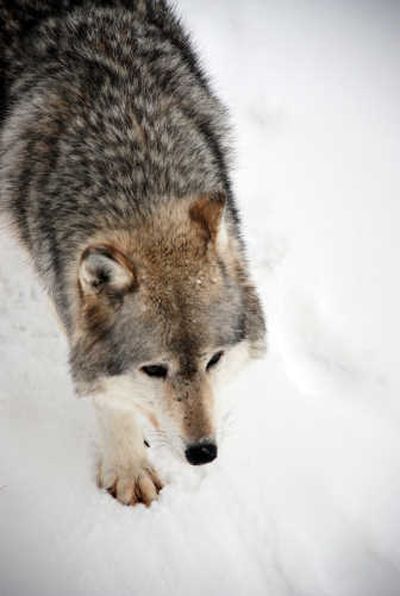
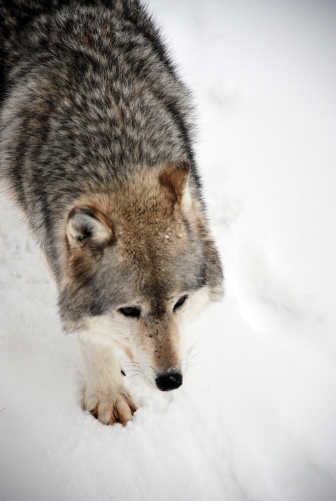
MISSOULA – The fate of gray wolves in the Northern Rockies is now in the hands of a federal judge in Montana, after advocacy groups argued in court Thursday that the animal’s recovery is threatened by a recent loss of federal protections.
Wyoming, Montana and Idaho plan public hunts for the region’s 1,500 wolves this fall – the first in more than three decades. Environmental and animals rights groups filed a lawsuit in April seeking to restore Endangered Species Act protections for the animals.
On Thursday, the groups asked U.S. District Judge Donald Molloy in Missoula for an injunction to block the planned hunts while the case is pending. With wolves already routinely killed by wildlife agents for attacks on sheep or cattle, the outcome will determine not whether wolves are shot, but how many and by whom.
An injunction also would suspend state laws that give property owners new latitude to kill wolves when they attack or approach livestock.
“There is virtually a blank check to livestock owners to kill wolves just for being in the neighborhood,” said Doug Honnold with Earthjustice, which is representing the advocacy groups.
Honnold cited a recent case in Ashton, Idaho, in which a ranch owner shot a wolf near his livestock then chased a second wolf on a snowmobile for more than a mile before killing it. Idaho wildlife officials said the rancher’s actions went too far, but a local prosecutor declined to press charges.
Attorneys for the federal government, the states and hunting and sporting groups countered that the region’s surging wolf population makes some killings inevitable. As wolves fill remote wilderness and move into more populated areas, livestock conflicts have grown sharply in recent years.
“These are bad wolves that we don’t need as part of the recovered population,” said U.S. Fish and Wildlife Attorney Lisa Russell. “While the plaintiffs may be against wolf hunting or find that they don’t like it, at the end of the day we’re talking about how many wolves will be left – not how many will be taken.”
It’s been six years since the number of wolves in the region hit the original benchmark set for recovery – 300 wolves and at least 30 breeding pairs for three consecutive years.
Nevertheless, prior to this year the federal government had denied attempts to take the animal off the endangered list.
It reversed course following months of political negotiations with officials in Wyoming, which had been the sole holdout among the three states in demanding greater leeway over wolves.
The Fish and Wildlife Service ultimately agreed to a plan that allows the animals to be shot on sight within a “predator zone” that covers almost 90 percent of Wyoming.
During Thursday’s arguments, Molloy zeroed in on the predator zone, saying he had “significant concerns” with the state’s wolf management plan.
Molloy also raised questions about statutes in all three states that permit wolves to be killed for harming or being near livestock.
“It seems to me all of these statutes allow unfettered taking of wolves,” he said.
Since wolves were taken off the endangered list in March, at least 63 animals have been killed by humans, including 24 in Montana, 22 in Idaho and 17 in Wyoming, according to tallies by the states and Earthjustice. That’s less than one-half of 1 percent of the total population.
By this fall, the Northern Rockies population is expected to approach 2,000 animals, said Ed Bangs with the U.S. Fish and Wildlife Service. The agency has projected public hunting would reduce that number to between 885 and 1,240 wolves.