
Powwow faces cash woes
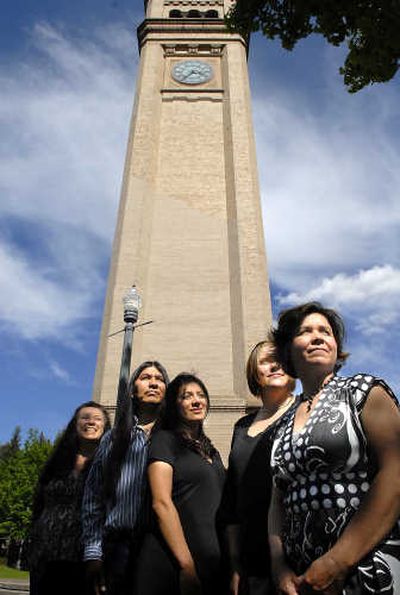
The sight of American Indians encamped in Riverfront Park each August – a signature event in Spokane – may be a thing of the past if powwow organizers cannot raise adequate funds within two weeks.
“The bottom line: There might not be a powwow,” said Sharon Ortiz, an event organizer for the past four years.
The Spokane Falls Northwest Indian Encampment and Pow Wow, which has drawn thousands of people, Indian and non-Indian, to downtown Spokane over the past 18 years, is paid for almost entirely with contributions from five local tribes and from urban Indian organizations, said Ortiz, operations manager for the Eastern Washington office of the state’s Human Rights Commission.
Last year’s powwow cost nearly $27,000, Ortiz said. This year, the committee has raised $82 for the Aug. 22-24 event.
Though the organizers expect the event’s traditional contributors to come through, their financial support alone may not meet expenses because of increasing costs, particularly for gasoline. This year, organizers hope to raise $40,000 to cover costs and combat declining attendance, organizing committee Chairman David Williams said.
Ortiz said the free powwow draws many more non-Indian spectators than Indian participants.
“With the rising costs, it shouldn’t just be the responsibility of the tribes to support an event that is for everyone,” she said.
Major contributors include the Spokane, Kalispel, Coeur d’Alene, Colville Confederated and Kootenai tribes, as well as Spokane’s Native Project and American Indian Community Center. In addition, the Spokane Regional Task Force on Human Relations and the Community Colleges of Spokane have contributed to past powwows.
“I feel like the tribes and the urban Indian organizations have done more than their share. It’s time for the Spokane community to step up to the plate if it wants to see the powwow continue,” Ortiz said.
To that end, the committee this week sought the help of Spokane Mayor Mary Verner, who said she is convening a meeting early next month to discuss ways to save the powwow.
In attendance will be a representative of the Spokane Regional Convention and Visitors Bureau and members of the business community who could contribute financially or logistically to the event, Verner said.
“Of course, I absolutely support it. This has become a very important tradition for us each summer,” said Verner, who is of Native and European ancestry. Verner was executive director of the Upper Columbia United Tribes before being elected mayor.
She said the Riverfront Park powwow draws visitors from far away, boosting the Spokane economy. Just how much it helps the economy could determine whether the powwow qualifies for part of the city’s share of lodging tax proceeds next year, Verner said.
Whether the business community responds to the powwow committee’s plea will depend on the case it makes, said Rich Hadley, president of Greater Spokane Inc.
“The powwow is an awesome event and something we take great pride in,” Hadley said.
Williams, the committee chairman, hopes to add a tepee contest this year as well as a drum contest and bigger cash payouts for competitions in hopes of drawing more participants. Last year’s contest payouts totaled $14,500. Williams would like to raise that to $20,000, a step he believes is necessary if the powwow is to succeed along with the Coeur d’Alene Tribe’s larger Julyamsh powwow at Greyhound Park in Post Falls and the Spokane Tribe’s Labor Day powwow in Wellpinit.
The powwow at Riverfront Park, attended by Native Americans from across the Northwest and Canada, is important to Spokane, said Williams, a Umatilla Nez Perce. It is a reminder of the historical significance of the Spokane River to the many bands of Northwest Indians that lined its shores during annual salmon runs for thousands of years.
“It’s such a beautiful thing,” Williams said of the powwow. “It brings everyone together to share culture.”