
Leftover harvest helps feed hungry
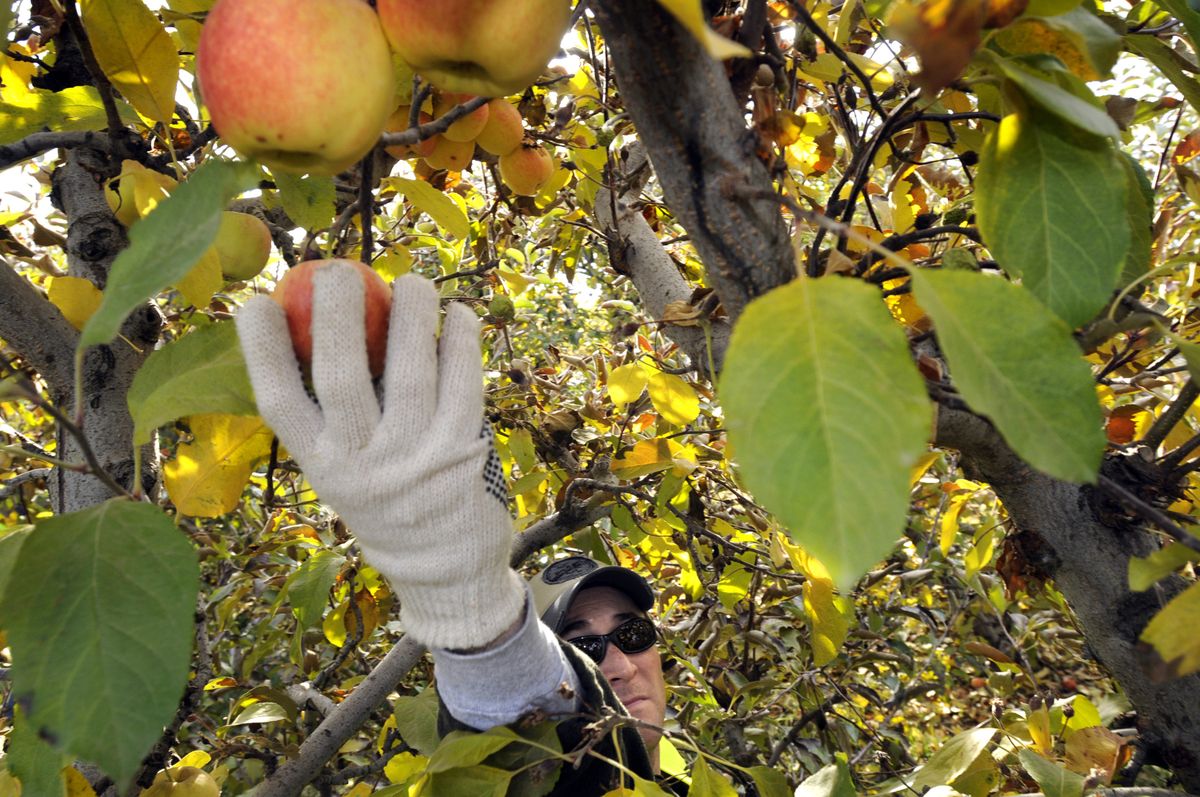
Volunteers glean at Green Bluff
Sometimes the simplest idea can yield the most amazing results. Such is the case with the Rotary Home Harvest program.
Bob Slyter was troubled by the amount of fruit he’d seen rotting on the ground each autumn. He asked his Spokane-West Rotary club if they’d be interested in gleaning fruit from private residences and area orchards and donating it to Second Harvest.
They agreed and launched the Rotary Home Harvest program. According to Second Harvest’s Rod Wieber, “Last year, two dozen volunteers gleaned nearly 8,000 pounds of produce from participating orchards.”
But that wasn’t enough for Slyter. Because of the lack of volunteers, they couldn’t get to every tree. As he surveyed the ripened fruit that was left untouched last year, Slyter said, “I felt helpless. The sense of waste totally took away the sense of gain I’d felt.”
He didn’t stay discouraged long; instead, he got busy. Over the course of the year, Slyter presented his idea to service groups. He talked about hunger and the abundance of fruit that could feed so many.
And people listened. Rotary member Jim Roeber said, “It’s a phenomenal thing. It just exploded.” Suddenly, Slyter had teams of people eager to help.
It couldn’t come soon enough. “Some of our area food banks saw a 10 to 30 percent increase in demand this spring and summer,” according to Wieber. Additionally, their annual survey revealed that one out of five clients was visiting a food bank for the first time.
Along with rising need came rising expenses. “The increased cost of fuel has challenged us,” Wieber said. Last year it cost $1,200 to bring in a truckload of produce. This year it costs $3,600.
For many families, fresh produce is beyond their budget. That’s why Lloyd Thorson, owner of Thorson’s County Farm and Nursery, was glad to help spread the word about the Home Harvest program to his fellow Green Bluff growers. More than a half dozen orchards agreed to donate all of the unpicked fruit that remained after the Apple Festival. “One of the things that makes the growers really happy is they’re helping people who need it,” Thorson said.
On Saturday morning more than 300 volunteers gathered at participating farms hoping to fill a semitruck with apples and other produce. In Spokane Valley, Central Valley High School students worked with Kiwanis members to glean a private orchard. Earlier in the week volunteers had already harvested more than 7,300 pounds of winter squash.
At Green Bluff, members of local Lions, Kiwanis and Rotary groups worked alongside chapter members from Thrivent Financial for Lutherans. Carrying donated gallon buckets and canvas shopping bags, they picked bushels of apples. Fueled by the coffee and donuts served at the Grange, they worked tirelessly, spurred on by the sight of that empty semitrailer.
By the end of the day they’d not only filled that trailer, but half of another one for an estimated total of 45,000 pounds of produce. Even better, Slyter said, “The Lions and Kiwanis have agreed to join with the Rotary Clubs and make this an annual joint service project.”
But even before the gleaning was complete, a smaller truck from Second Harvest took several pallets of apples and squash to the food bank run by Airway Heights Baptist Church. Andrew Austin, who coordinates the program at the church, said their food bank is the only one in the West Plains area. He too has seen an increased need. The food bank is open the first and third Saturday of each month. “Almost every Saturday we have 30 new families,” Austin said.
Earlier, Rod Wieber had noted, “The food bank lines are going to get longer before they get shorter.” And sure enough, by 10 a.m. the line at the church stretched around the building.
Sixty-two-year-old Airway Heights resident Mary Swineheart is thankful for the help. “If they weren’t here, I’d have to drive all the way into Spokane,” she said.
Sheree Bates and her cousin Beth Rushing say they plan their family meals around the groceries they get at the church each month. Rushing said the only produce her children generally eat is frozen or canned. “You can’t afford fresh fruits and vegetables,” she said.
That’s the main reason Slyter launched the Home Harvest program. His simple idea has blossomed into a community-wide effort to feed the hungry.
“My heart and soul is in this,” he said. “This is really for a lot of kids who have no source of fruit in their diet.”
One of those kids is 3-year-old Sam McMurturey. He walked patiently through the line at Airway Heights Baptist with his parents, Sam and Elisha McMurturey, and his sister, Sadie. As his parents prepared to load their groceries, Sam reached into the box of just-picked fruit. He held up his juicy, red prize and grinned.
“I got a apple,” he said.