
Bus blast, then another kill 31 in Baghdad
Onlookers rushing to help are victims

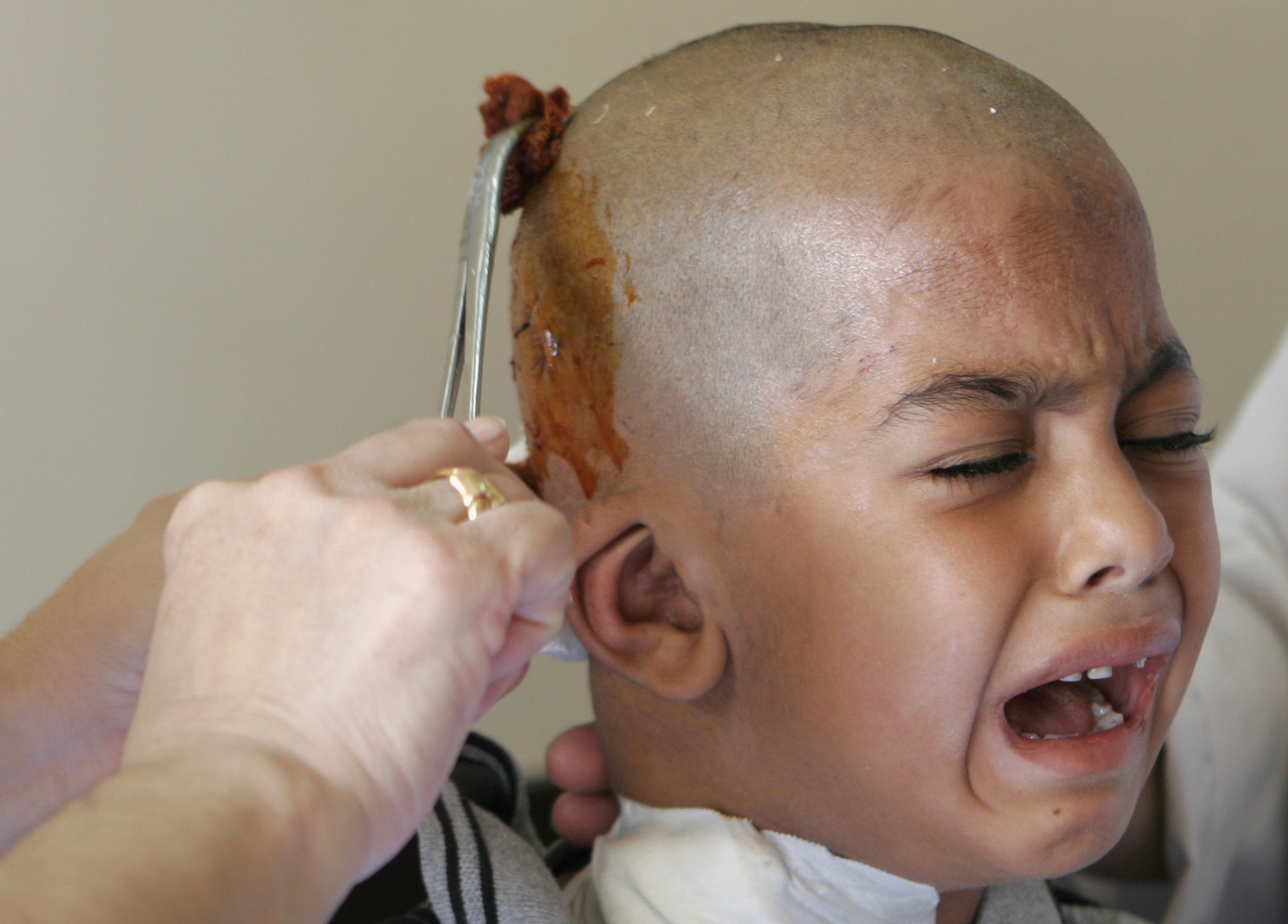
BAGHDAD – A suicide bomber Monday struck a crowd rushing to help schoolgirls trapped in a bus by an earlier bombing. The Interior Ministry said at least 31 people were killed – the deadliest in a string of blasts that raise doubts about Iraqi security forces as the U.S. prepares to reduce troops.
The ministry said another 71 people were wounded in the twin blasts, the deadliest attack in Baghdad in six weeks. A third bomb exploded about 130 yards from the scene in the mostly Shiite Kasrah section of north Baghdad but caused no casualties, police said.
No group claimed responsibility for the attacks during the morning rush hour. But suspicion fell on al-Qaida in Iraq, which has made suicide bombings against Shiite civilians its signature attack.
In recent weeks, there has been an uptick in small-scale bombings in Baghdad. An Associated Press tally showed at least 19 bombings in the city this month as of Sunday, compared with 28 for all of October and 22 in September.
At least 44 people were killed in Baghdad bombings between Nov. 1 and Sunday, compared with 95 for October and 96 in September, the AP count showed.
Most of the bombings occurred during the morning rush hour – targeting Iraqi police and army patrols, government officials heading for work, or commuters, in an attempt to undermine public confidence.
The neighborhood where Monday’s bombings occurred is predominantly Shiite, but it is part of the largely Sunni district of Azamiyah, which had been an al-Qaida stronghold until Sunni tribes broke with the terror movement last year.
The Iraqi army command gave a much lower casualty figure – five dead and 37 wounded. It was not possible to reconcile the difference.
Col. John Hort, who commands U.S. troops in Azamiyah, called the attack a “despicable, cowardly act of terrorism against peaceful people” with “absolutely no military connotation.”
An Interior Ministry official speculated that extremists may have sought to “send a message” to President-elect Barack Obama about “the real situation in Iraq,” pressure the government not to sign a new security agreement with the United States, or embarrass the ruling parties ahead of regional elections in January.
The official spoke on condition of anonymity because he was offering speculation.