
Daybreak helps teens struggling with addiction
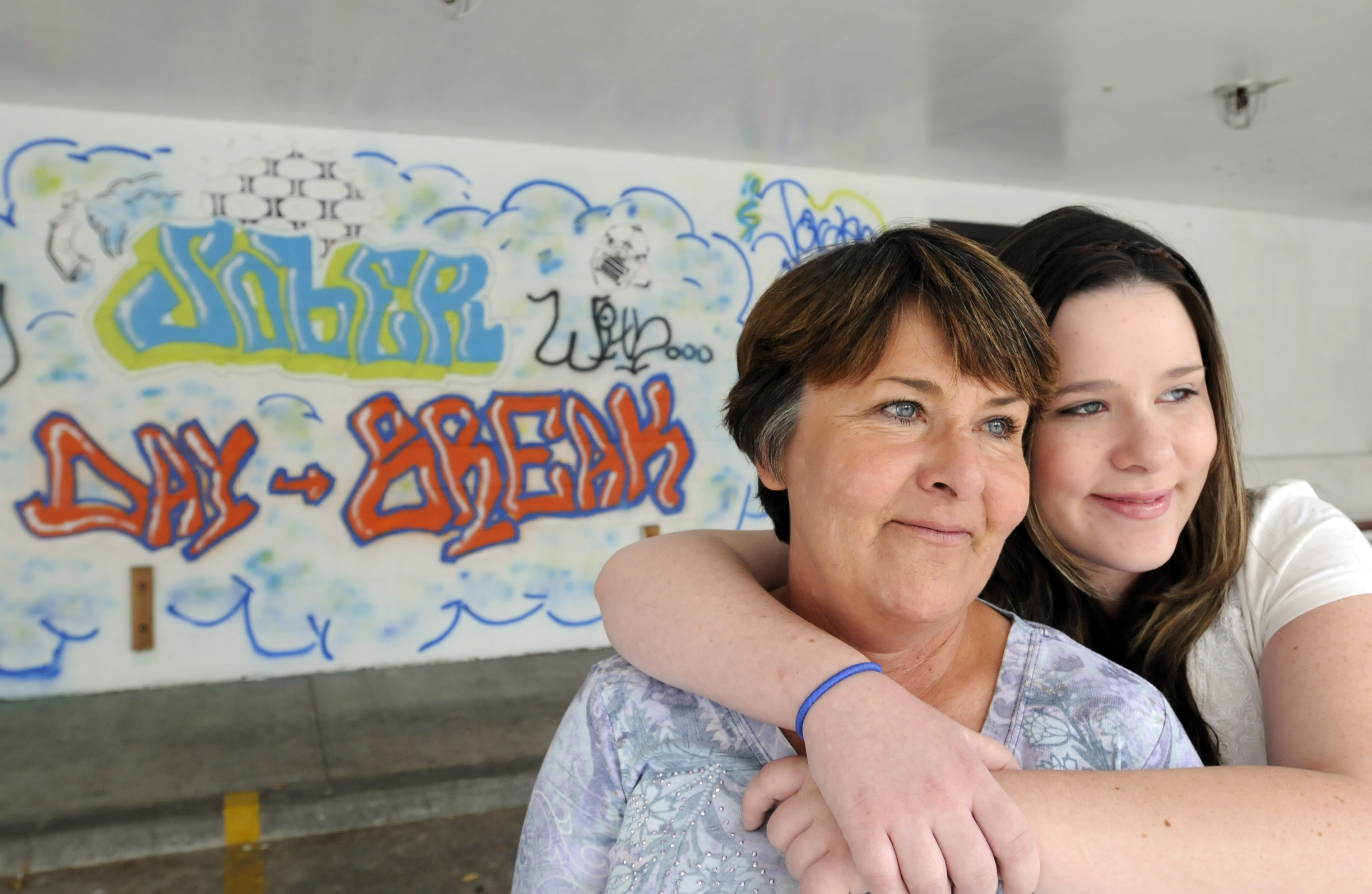
Kelsey Bartels’ fair skin glowed with health, and her eyes sparkled as she gave a guest a tour of her temporary home.
With her dark hair smoothed into a ponytail, she frequently rubbed her “baby bump.” Bartels, 18, is seven months pregnant and a recovering heroin addict. Her “home” is a two-person room at the Daybreak inpatient facility on the lower South Hill.
“I decided to come here because I was stressed,” she said. “I was worried about relapsing.”
Daybreak is a nonprofit organization that treats children ages 12 to 18 who struggle with drug or alcohol addiction. Founded 30 years ago by a group of concerned citizens from Whitworth Community Presbyterian Church, the program has grown to encompass outpatient treatment, an inpatient facility and a secure crisis residential facility.
Since 1980, Daybreak has served more than 13,000 teens from Eastern Washington and 10 North Idaho counties. In addition, in 1999 the organization opened an inpatient facility in Vancouver, Wash.
The need is great. Kathy Kramer, development director, said studies have shown that “75 percent of all teens are going to use alcohol or drugs before graduating from high school. Fifty percent of them will use repeatedly and 9 percent of kids are going to need some kind of help.”
Old stereotypes don’t apply. “It’s not only in bad neighborhoods with bad kids,” Kramer said. “And alcohol and drug use isn’t related to economics.”
For instance, Bartels comes from a middle-class working family. Her mother, Trina Bartels, said, “I never expected Kelsey to do something like this – the lying – the cheating – the stealing.” Kelsey Bartels’ older sister is also battling drug addiction. Bartels sighed deeply when speaking of her daughters. “It’s kind of a sad place to be. It’s a hard thing to face up to.”
Kramer said many parents find it difficult to acknowledge their children have a substance-abuse problem because they think it means they’re bad parents. “This isn’t true, addiction hits randomly.” Daybreak’s Executive Director Tim Smith said, “The irony is that the parents who are now speaking up are parents who’ve already lost their child.”
Trina Bartels is well aware of that risk. “I have friends whose kids have died from overdoses.”
Her daughter’s journey into heroin addiction was swift and painful. Kelsey Bartels had struggled in school. “It just didn’t work for me,” the teen admitted. She started taking the painkiller OxyContin at 15. “My tolerance built up,” she said. “I eventually started using heroin.” She ended up in Daybreak’s outpatient program when a teacher saw needle tracks on her arm and notified Child Protective Services.
“I got clean after outpatient,” Kelsey Bartels said. “I saw where I was headed. I was going to get myself killed.”
Unfortunately, she had several relapses. “Eventually it became easier to get heroin than ‘oxies.’ ”
But for Kelsey Bartels the news that she was going to be a mother was a turning point. “I quit the day I found out I was pregnant,” she said. And when stress started mounting, she checked herself into the inpatient facility. “My counselor listened to me and gave me information. I journaled a lot.”
Through group sessions and individual counseling, Daybreak equips teens with tools to help them manage their emotions and deal with anxiety in healthy, positive ways. Teens learn to identify their triggers – the things that cause them to want to use. Kelsey Bartels listed hers: “Having money, my old friends and stress.”
In addition to attending recovery classes and 12-step programs, teens are expected to keep up with their schoolwork. A teacher from Spokane Public Schools is on hand daily to supervise their work and assess their progress.
Kelsey Bartels received her GED while at Daybreak and is planning to attend college in January. “The fact that I’m going to be a mother has matured me a lot,” she said.
As a nonprofit organization, Daybreak is committed to helping kids regardless of their ability to pay. Recent changes in employer health benefits mean higher deductibles and fewer parents being able to get their kids the help they need.
On Oct. 24 Daybreak will host its Community Challenge at the Davenport Hotel. Kramer said the event is about making a paradigm shift in the community. “Drug abuse and addiction is no respecter of persons.”
Organizers hope to raise funds to reach even more troubled teens. Last year Daybreak helped 700 kids in the Inland Northwest but data provided by the state of Washington estimates 4,000 teens in the area are in serious trouble and need professional help.
Twenty years ago Angela Wenzel was one of those teens. “I was out of control. I thought I knew everything,” she said. She lived just outside of Kettle Falls, and said the boredom of rural life led her to experiment with marijuana and cocaine. In desperation her mother packed Wenzel’s suitcase and drove her to Daybreak in Spokane. Cocaine use had whittled the petite 5-foot 3-inch blonde to 87 pounds.
She said her mother told the intake counselor, “I’m done. I’m finished. You take her.”
Though she was furious with her mother, Wenzel now realizes intervention was the best thing that could have happened to her. “I learned a lot about myself,” she said. After several relapses she was able to use the skills she’d learned at Daybreak to finally end the cycle of addiction. On Oct. 24 she’ll be speaking at the Community Challenge, and on Halloween she’ll celebrate her 15th year of sobriety.
Trina Bartels looks forward to celebrating drug-free years with her daughter as well. Kelsey was recently released from inpatient care and is now enrolled in outpatient treatment. “I feel very hopeful for Kelsey,” she said. “But I also know it’s in her ballpark now.” She paused. “I think drugs can be kicked – I do.”