
Living proof
Mike Sacco, who survived a near-fatal accident, will speak at chronic pain retreat
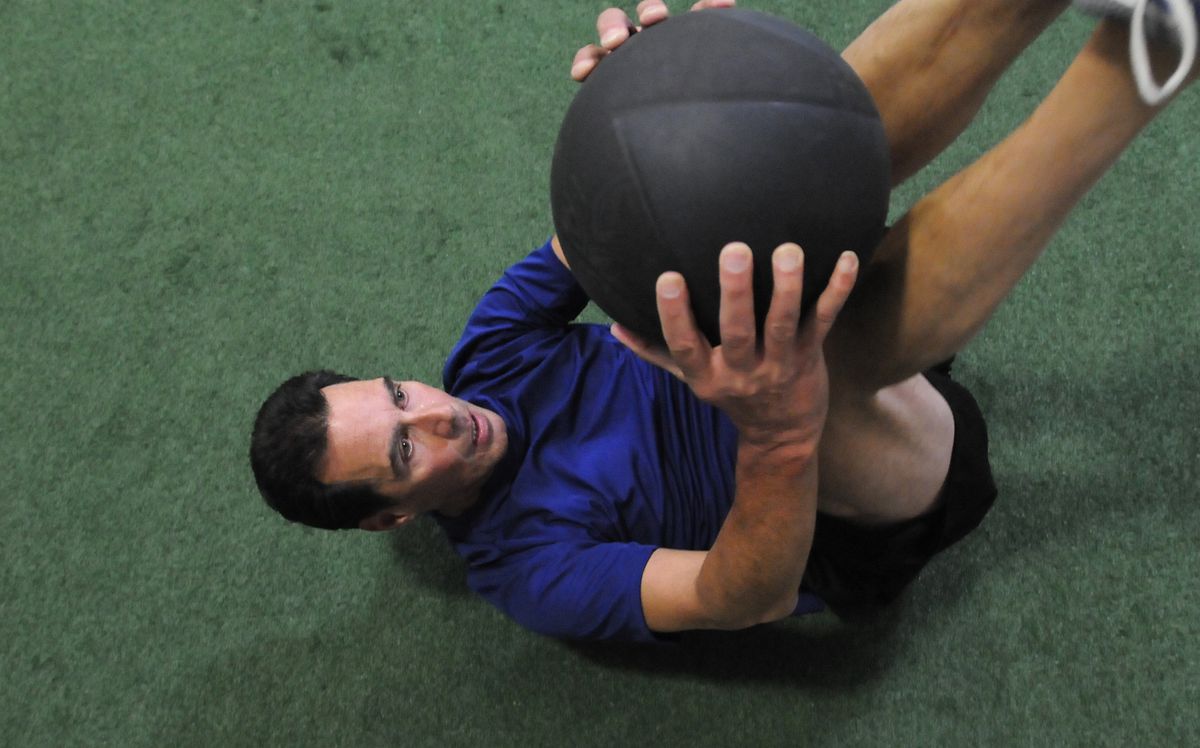
Physical suffering and emotional drain makes living with chronic pain an everyday struggle.
Mike Sacco understands this struggle. The 56-year-old Spokane Valley resident lived with chronic pain for years after a near-fatal accident in 1999.
“It’s unbelievable that I survived at all,” said Sacco, a triathlete and retired Washington State Department of Transportation employee. “It still gives me a sense of awe.”
Sacco’s experience never became an excuse to give up. Rather, his remarkable recovery refocused his life into a desire to help others.
Today, the Shadle Park High School graduate inspires those dealing with chronic pain to lead “lives rich with activity, meaning and joy.”
Relating the lessons learned during his recovery, he reaches out to others at speaking engagements, including an upcoming chronic pain retreat.
“It’s like the best story,” said Sacco, who returned to competing in triathlons just 15 months after the accident. “Somebody doesn’t have a chance and they do it. I lived that.”
His painful journey began while on the job for WSDOT. Sacco was 47 at the time, and a crew leader for high-speed routes in the Valley. He was working at the Interstate 90 Argonne Road freeway exit. A motorist veered off and hit Sacco at 50 mph.
“I tried to avoid him but my foot got caught in the wheel well,” Sacco said. “That had the effect of a sling shot; it bounced my body back into his car. I bounced off the side of the car and traveled through the air 60 feet.”
Sacco suffered a fractured pelvis, near-severed foot, broken hip, shattered left leg and internal bleeding.
“My left leg was a train wreck,” Sacco said. “It was like shattered glass.”
Enduring seven surgeries in 23 days, Sacco believes the advocacy of his wife Cathy played a major role in saving his foot and leg.
“I believe my wife saying he’s an athlete and he needs both legs is what got them started,” Sacco said. “They went to work on my leg.”
Prior to the accident, Sacco competed in area triathlons, logging more than 1,000 miles on his bike. He also coached volleyball at Gonzaga Prep from 1992 until his accident as well as coaching club volleyball.
A key turning point in his decision to take full responsibility for his recovery came after one of his many surgeries. Sacco, hallucinating from the medication, thought they were keeping him against his will. He tried to escape but as soon as he stood up, he realized the nature of his injuries.
“It was like every cell in my body was screaming,” Sacco remembers. “I couldn’t fight this anymore.”
Sacco told his doctor he wanted to start working that day.
“Why he didn’t laugh at me was amazing,” Sacco recalls. “I was completely shattered. I had three maybe four surgeries to go, but he didn’t even blink. He said ‘I’ll have physical therapy up this afternoon.’ ”
Sacco began restoring his upper body strength with weights attached to his bed.
“It was the only part of my body I could work that didn’t hurt,” Sacco said.
His doctor eventually began setting workout goals for his legs.
“The method he used, setting hundreds of small daily objective goals, added up to my complete recovery,” Sacco said.
Because of his attitude, he became an inspiration to others in the hospital.
“People would say, ‘You’re the guy,’ ” Sacco said. “The context for people became, ‘You should never have survived. They should never have been able to save your leg. Is it true you’re lifting weights in bed?’ That is all people needed to see. They, too, started doing a little extra.”
Sacco left the hospital and spent another year and half in physical therapy. Through his exploration for alternative methods of pain control, he met Kelli Pearson, a chiropractor, who was inspired by his incredible recovery.
“I was so impressed with his discipline,” Pearson said. “I somehow knew he was a very spiritual person and had a can-do attitude from the moment I met him.”
Pearson encouraged Sacco to share his story with others who are dealing with chronic pain. With her support, Sacco began speaking at Pearson’s pain management clinics.
While debriefing their latest clinic, Sacco presented the idea of a retreat. Pearson enthusiastically agreed.
“Our attendees will discover they are not alone,” Sacco said. “They will see that they can manage their pain and have more resources than they previously believed.”